
On Tuesday, February 17, the final hearing in the case concerning the illegal issuance of “golden” passports in Cyprus took place at the Nicosia Criminal Court. A large number of journalists and relatives of the accused were present. This indicates a high level of public and political interest in the proceedings. As a result, former Speaker of the Cyprus Parliament Dimitris Syllouris and former MP Christakis Giovani were fully acquitted.
Corruption charges not proven
The court concluded that the corruption charges were not supported by sufficient evidence. In particular, it was established that Syllouris did not act with corrupt intent, and therefore the relevant charge was not legally substantiated.
The court also pointed out the absence of several key witnesses who were not called by the prosecution without a convincing explanation. In addition, pressure on a former minister to promote naturalization applications to the Council of Ministers was not proven.
Special attention was given to the testimony of an employee of the Ministry of Interior who supervised investor citizenship matters. She confirmed that she was well familiar with the application review procedure, although due to the large volume of cases she could not recall individual details. According to her, she received phone calls from the then Speaker of Parliament requesting information about the status of applications and also communicated with his secretariat. The court did not find signs of unlawful influence in these actions.
The role of Andreas Pittadjis and investigation materials
During the hearing, lawyer Andreas Pittadjis was mentioned separately; the charges against him had been dropped at an earlier stage of the proceedings. The court noted that messages allegedly sent by him to an investor and a witness in the case were not presented as evidence.
Notably, the Al Jazeera investigation video materials, which became the starting point for the review of the Cyprus Investment Program, were not officially admitted as evidence in the case. Thus, the prosecution was not based on the published audiovisual content.
The defendants were charged, among other things, with influence peddling, violation of European convention provisions, and conspiracy to commit fraud in accordance with the Cyprus Criminal Code. However, the court concluded that the presented evidence did not allow them to be found guilty.
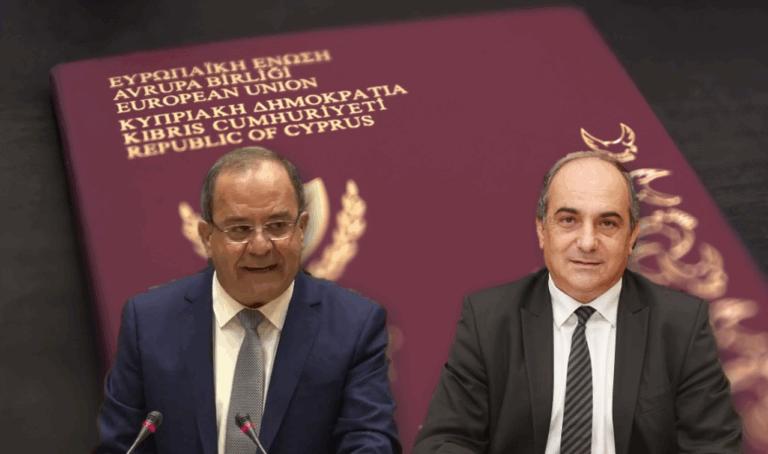
Context of the investment citizenship scandal
The scandal surrounding the “golden” passport program became one of the most widely discussed in modern Cyprus history. After publications by Al Jazeera in 2020, the citizenship-by-investment scheme was effectively terminated. In November 2020, the government officially stopped accepting new applications under the Cyprus Investment Program.
Later, reviews of already issued passports were initiated. Following the reassessment, some naturalization decisions were revoked, and the authorities announced their intention to tighten control and transparency mechanisms. The European Commission also increased pressure on EU countries that had implemented similar schemes, emphasizing risks to security and financial transparency.
Against this background, the acquittal of former high-ranking officials does not mean the end of all legal and political discussions around investment citizenship. However, the first-instance court decision effectively concludes one of the most significant stages of the investigation and draws a line under a process that seriously affected the country’s international image.
Thus, the “golden” passport case remains an important chapter in the recent history of Cyprus, and the verdict marks a new stage in assessing the responsibility of officials and the role of state institutions in implementing investment programs.