
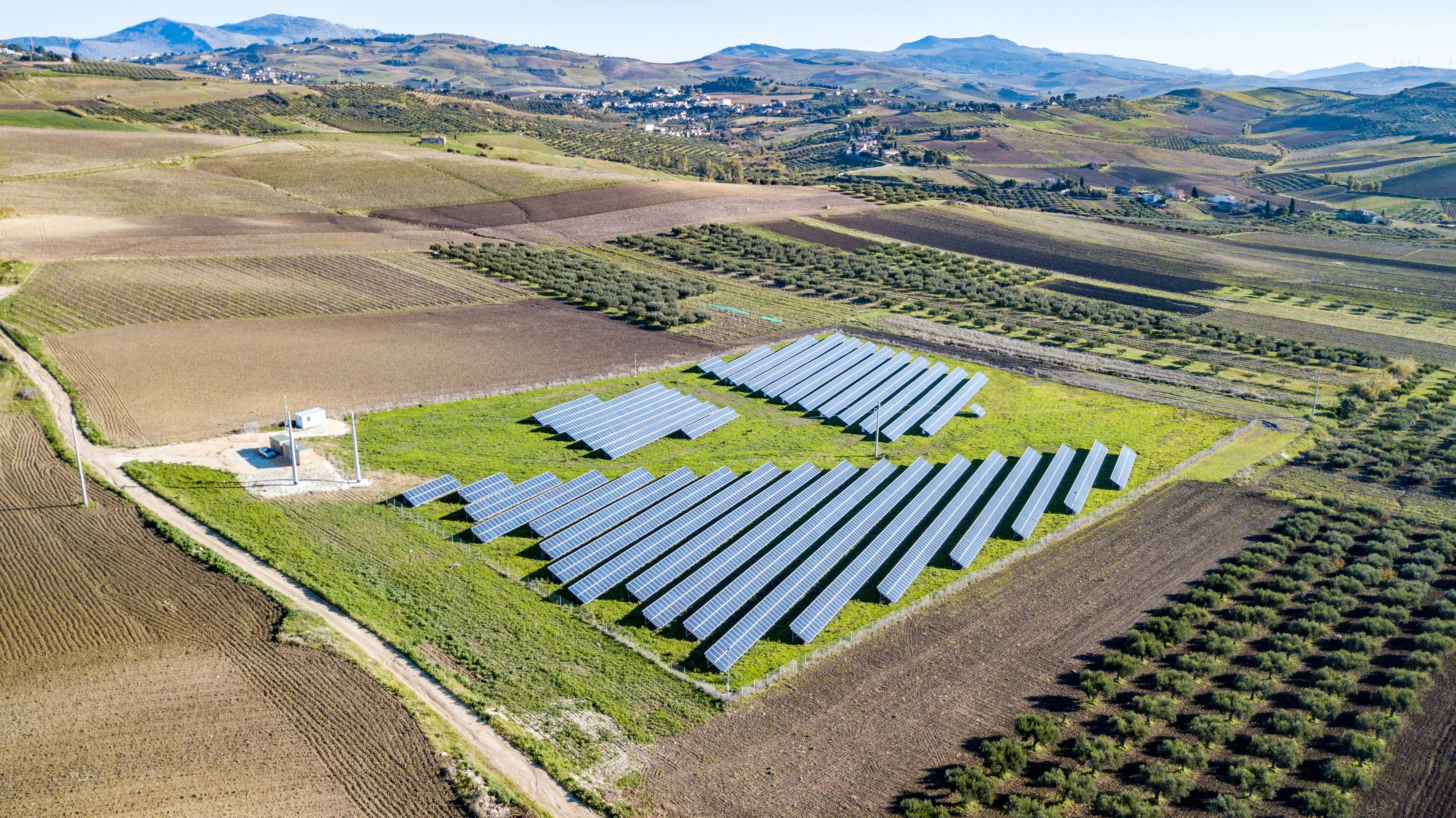
Commercial solar power plants can no longer be developed on irrigated agricultural land and other protected areas. However, applications submitted at least three months before the publication of the new law may still be reviewed under the previous rules. The decision has sparked a dispute between the government and the lawmakers who introduced the amendments.
The Cyprus Department of Lands and Surveys has clarified how the new law restricting the development of commercial solar parks on agricultural land should be applied. The department’s circular concerns applications submitted before the law came into force.
The amendments to renewable energy legislation prohibit the development of commercial solar parks on fertile and irrigated agricultural land, land consolidation areas, and protected natural sites. However, the ban does not apply to solar panels installed by farmers for their own use.
The bill was proposed by MPs from AKEL. On March 26, 2026, the Cyprus Parliament unanimously approved it. The purpose of the amendments is to protect agricultural land and prevent the expansion of solar energy projects from reducing the amount of land available for food production.
Why Did the President Oppose the Law?
Cyprus President Nikos Christodoulides returned the adopted law to Parliament, citing possible constitutional concerns. His objections included issues related to the separation of powers, protection of property rights, and compliance with European Union law. On April 23, Parliament rejected the president’s objections by 26 votes to 15 and approved the law again. It was expected that the president might refer the matter to the Supreme Constitutional Court. However, this did not happen: the law was published in the Official Gazette of the Republic of Cyprus and subsequently came into force.

Why Can Older Applications Be Reviewed Under the Previous Rules?
After the law was published, the Department of Lands and Surveys sought clarification from the Legal Service. The department issued a circular stating that applications submitted no later than three months before the publication of the law will be reviewed under the legislation that was in force at the time of submission. This approach is based on the principle of legality: a decision on an application should take into account the legal rules that applied when it was filed.
However, restrictions on the development of solar parks on fertile agricultural land already existed before the new law was adopted. Environmental assessments, planning rules for licensing renewable energy projects, and rural development policies already imposed restrictions on such developments. Each application therefore had to be assessed individually, taking into account the characteristics of the land and the potential impact on agriculture. On October 21, AKEL MP and chairman of the parliamentary Agriculture Committee Yiannakis Gavriel said the circular effectively attempts to circumvent the new law. He called on the government to ensure that it is properly enforced.
The dispute therefore concerns not only the ban on new solar parks, but also which rules should apply to projects whose applications were submitted before the law came into force.