
On Thursday, July 2, a ceremonial opening of the new building of the Cyprus Institute of Neurology and Genetics took place in Nicosia. The event was attended by the President of Cyprus, Nikos Christodoulides, who officially inaugurated the state-of-the-art research complex, describing it as a symbol of the country's progress in science, medicine, and innovation.
The opening of the new facility marks one of the most significant developments in healthcare and scientific research in Cyprus in recent years. The expansion will substantially enhance the institute's capabilities, reinforcing its long-standing reputation as one of the leading research centers in the Eastern Mediterranean in the fields of neurology, genetics, and biomedicine.
How the Ceremony Unfolded
The official inauguration was attended by the Ministers of Finance, Health, Interior, Defence, and Education, deputy ministers, members of Parliament, representatives of the diplomatic corps, universities, research organizations, and various government agencies.
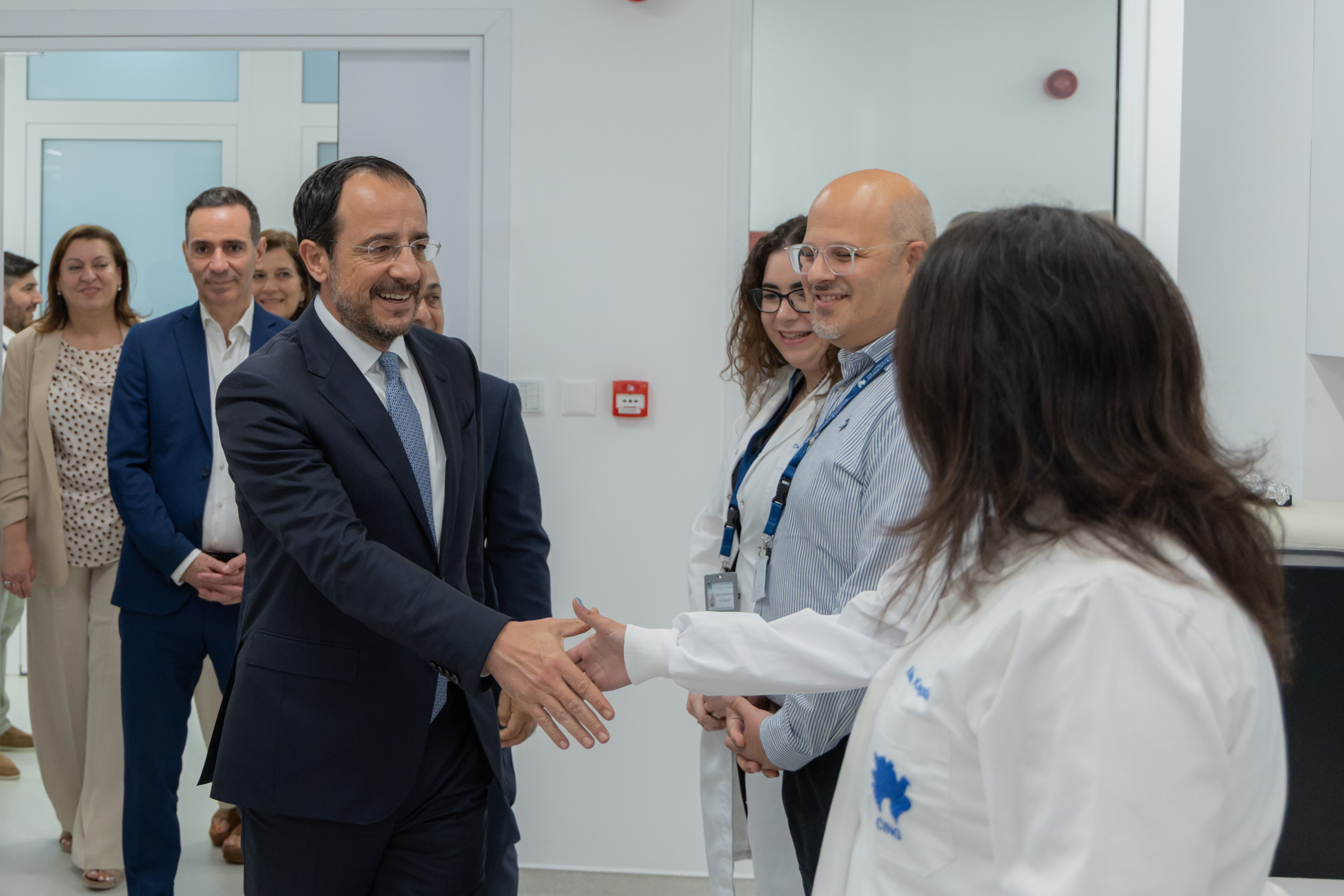
Following the official ceremony, the President unveiled a commemorative plaque marking the opening of the new complex. Together with members of the government, he then toured the facility's modern laboratories, educational spaces, and research centers, which have already begun operating in the new building. During the visit, the institute's leadership presented the President with its latest scientific projects, advanced technologies, and research initiatives in genetics, neurology, and biomedicine.
Project Details
Covering an area of 11,400 square meters, the new building is the largest development project in the history of the Cyprus Institute of Neurology and Genetics. The total construction budget amounted to €31 million. The project was jointly financed by the Republic of Cyprus and the European Investment Bank. In addition to the construction itself, funding was allocated for the acquisition of cutting-edge scientific equipment, the expansion of research programs, and the support of the institute's educational activities.
The new complex houses high-tech laboratories, modern research departments, lecture halls, facilities for international scientific projects, and collaborative workspaces for specialists from around the world.
Speaking at the ceremony, President Christodoulides emphasized that the new building represents far more than modern infrastructure—it symbolizes the country's confidence in the strength of its scientific community. According to him, the project strengthens Cyprus' healthcare system, supports world-class scientific research, and creates new opportunities for young scientists, physicians, and researchers. The President also reaffirmed the government's commitment to supporting the Cyprus Institute of Neurology and Genetics, highlighting its crucial role in advancing medical science and introducing innovative technologies into the healthcare system.
A New Chapter for Medical Research
Professor Leonidas Phylactou, the institute's Chief Executive and Medical Director, described the opening of the new complex as the largest investment in the institution's history. According to him, the facility was designed not merely as a modern building, but as a place dedicated to generating new knowledge, fostering international collaboration, and driving scientific discoveries. He emphasized that the institute's greatest asset is not its buildings or equipment, but the people who work every day to develop new methods for diagnosing and treating disease.
Professor Michalis Komodromos, Chairman of the Institute's Board of Directors, also noted that the new complex opens additional opportunities for expanding research, improving patient care, and educating future generations of specialists.
With its new laboratories and advanced equipment, the Cyprus Institute of Neurology and Genetics will be able to significantly expand its scientific research, increase the number of international projects, and attract leading experts from across Europe and beyond.
Today, the institute is already recognized as one of Cyprus' leading centers for molecular diagnostics, genetic research, and the study of rare hereditary diseases. It employs internationally renowned specialists, while its research findings are regularly published in leading scientific journals.
The opening of the new complex will further strengthen Cyprus' position as a regional hub for biomedical research, improve the quality of specialized healthcare, and accelerate the introduction of innovative technologies into clinical practice. The project also creates new opportunities for international scientific collaboration, investment in research, and the training of highly qualified professionals, making it one of the country's most significant healthcare and research infrastructure projects of recent years.