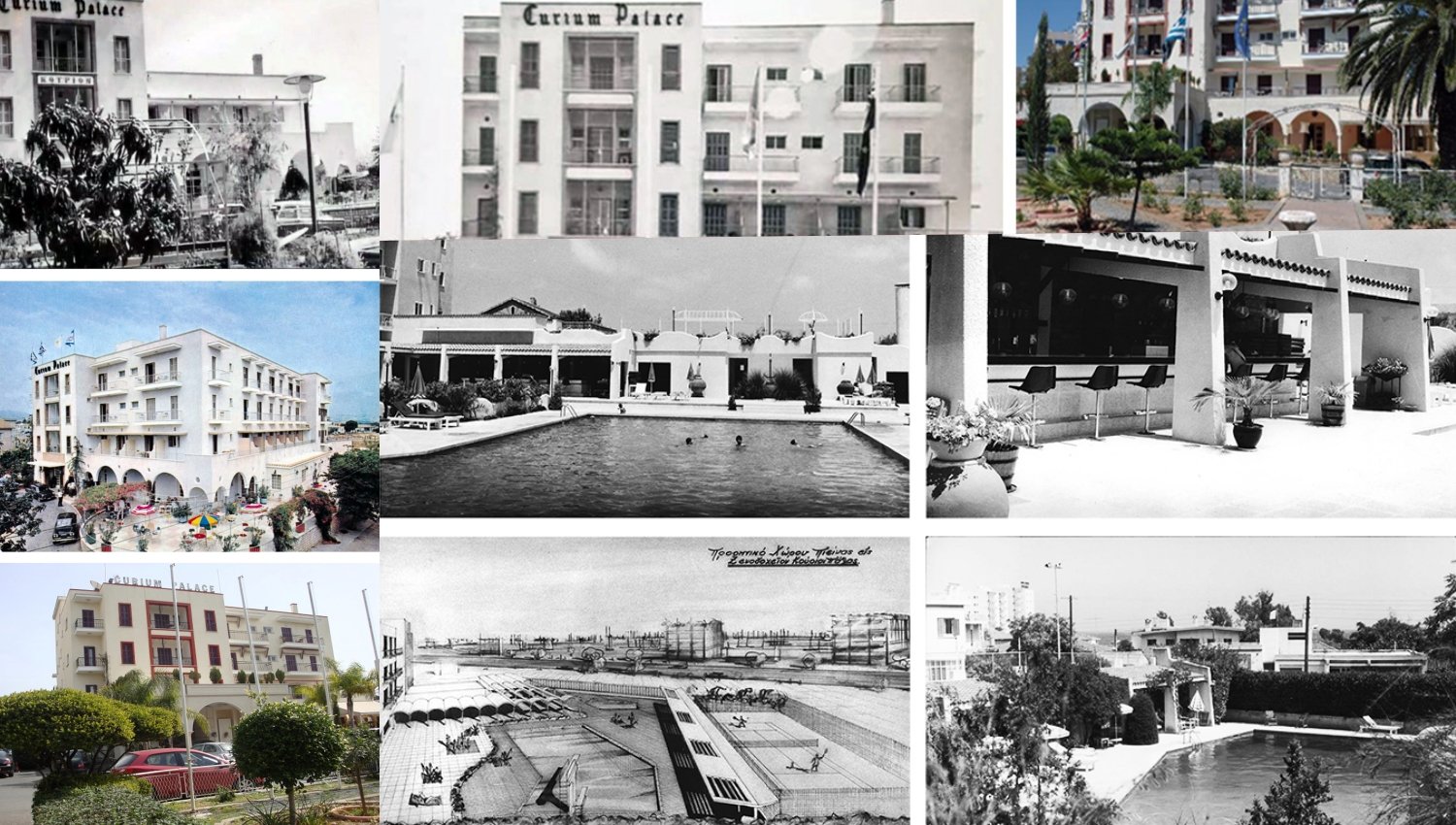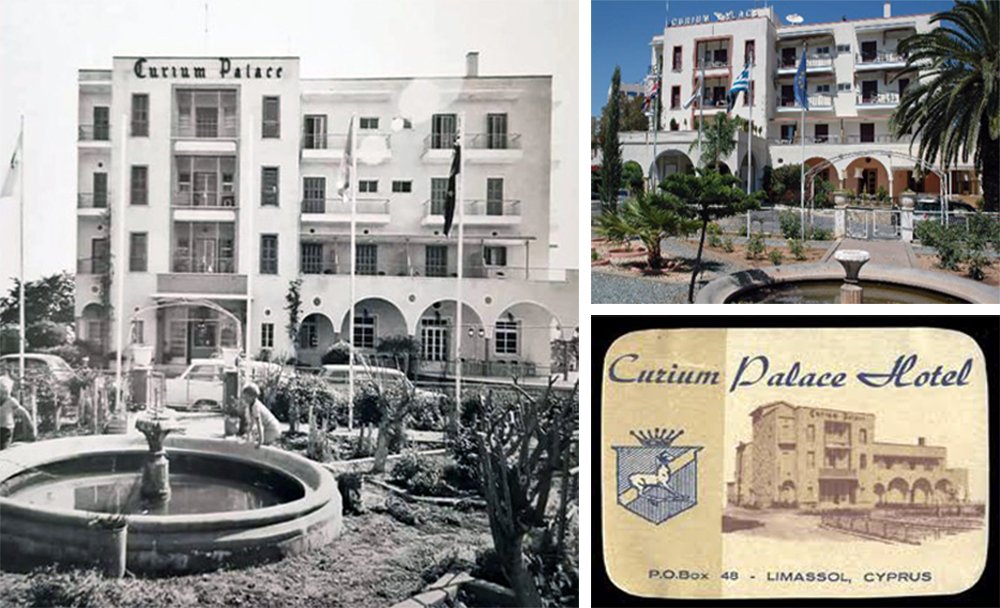
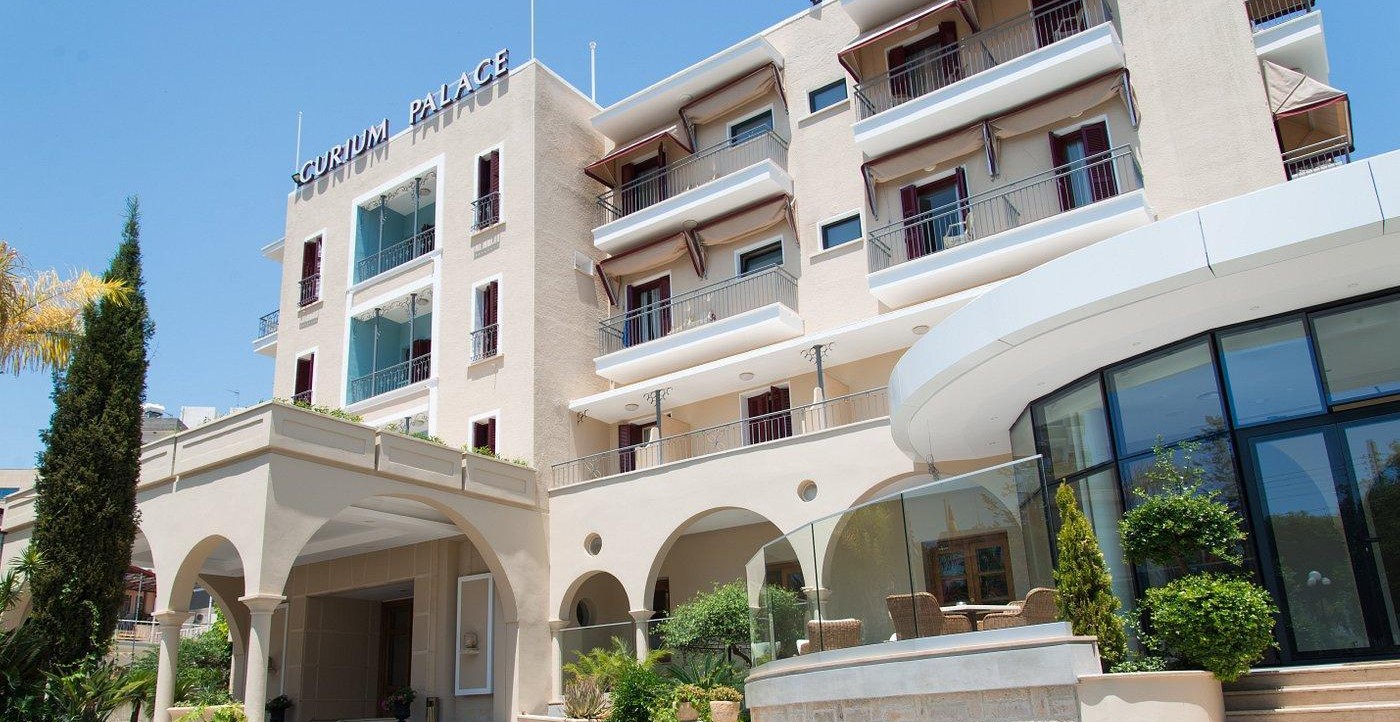
There are buildings in Limassol that are impossible to see simply as walls, windows and concrete. They become part of the city’s collective memory. People remember them not only for their architecture, but also for the people and events that once seemed completely ordinary. Curium Palace Hotel was exactly this kind of place, and many Limassol residents simply called it “Curium.”
The hotel stood on Byron Street, next to the Municipal Gardens and the Limassol Archaeological Museum. It occupied a particularly important location in the city: practically in the center, close to the sea, shops, public spaces and major urban routes.
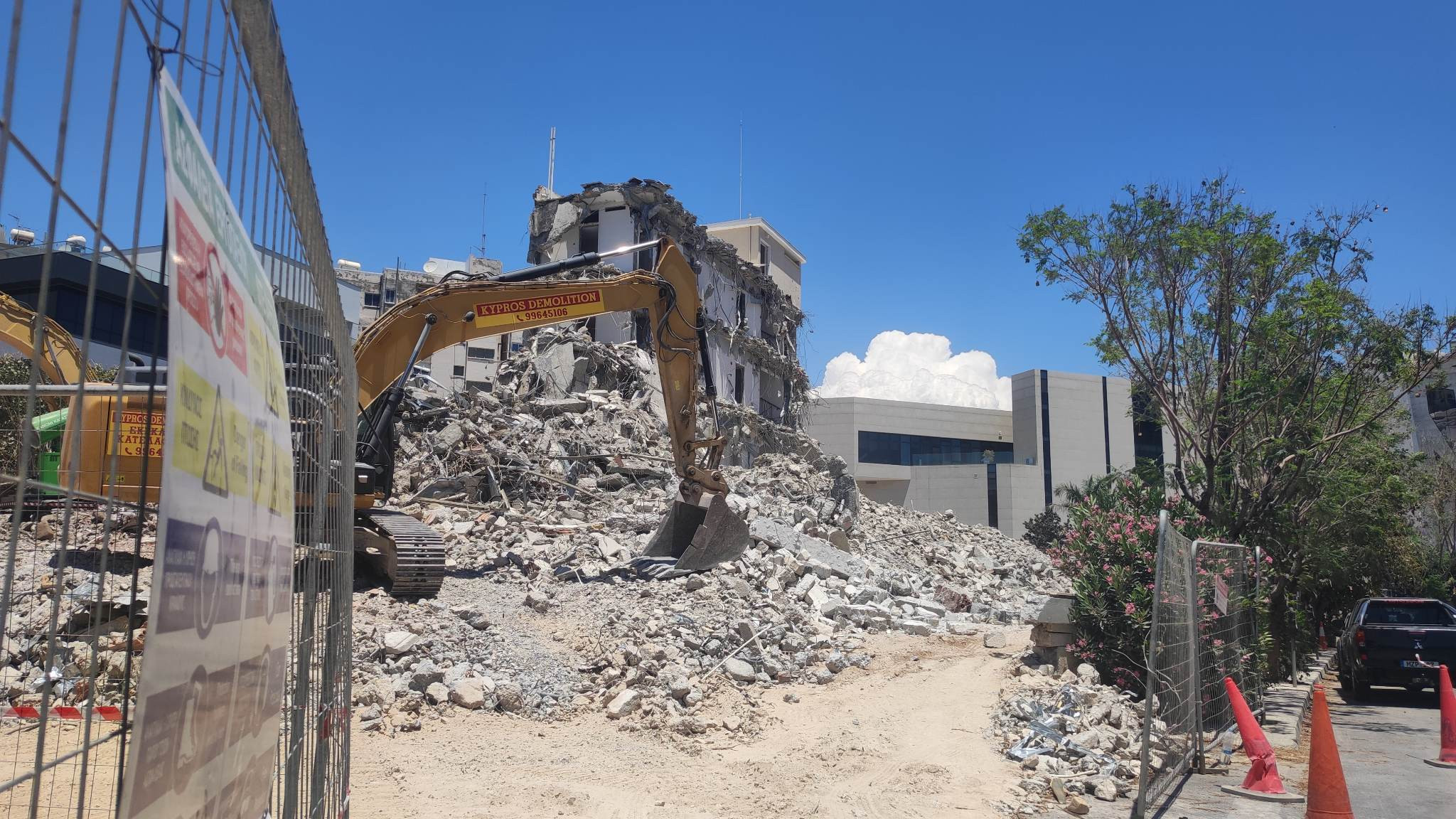
Today, the hotel is gone. After closing in 2022, the historic building was demolished. The Limassol Municipality issued the demolition permit on February 17, 2023. The decision sparked controversy and protests, with architects and activists making repeated efforts to preserve the building. However, it was not officially listed as a protected monument. As a result, by the summer of 2023, Curium Palace had permanently disappeared from the cityscape.
A completely different development is now planned for the site — a modern office and commercial complex called Kourio. But before looking at the future, it is worth remembering why Curium Palace meant so much to Limassol residents.
The hotel that opened just before Cyprus gained independence
The story of Curium Palace began in the mid-20th century, during a period when Limassol was gradually transforming from a primarily commercial and port city into a modern tourism and business center. According to historical publications, the hotel opened shortly before 1960, when Cyprus gained independence. Its owner was Christos Mylonas, who at the time also operated the Continental Hotel on the Limassol seafront. Construction of Curium Palace cost approximately £80,000. For that period, it was a large and expensive project. The original building had 35 rooms. Guest rooms were equipped with telephones, radios, central heating and either a bathtub or shower. Curium Palace also included:
- a large ballroom;
- a restaurant;
- spacious terraces;
- gardens;
- parking;
- and even a garage for 5 cars.
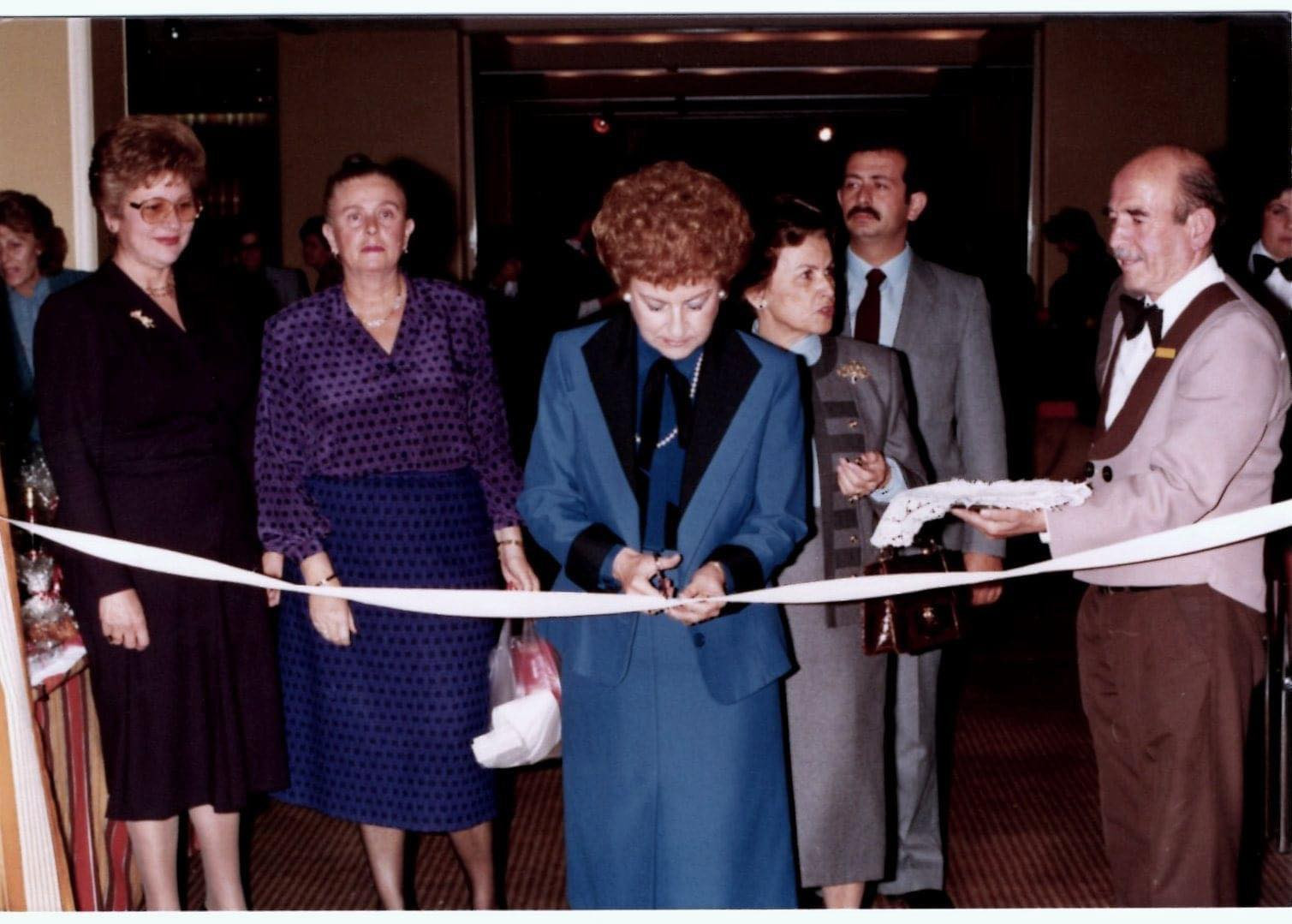
Today, a five-car garage may sound like an ordinary detail. At the time, however, it was part of the image of a modern and prestigious hotel. Curium Palace quickly became a popular gathering place for city residents. Various events, celebrations and receptions were held there, while the large ballroom became an important venue for Limassol’s social life.
Over time, the hotel expanded. Additional floors were added in 1962, while new recreational facilities appeared around the property in the 1970s, including a swimming pool, bar, tennis court, shaded structures and a separate children’s pool. Curium Palace gradually became more than just a hotel. It developed into a complete urban venue for leisure and events.
The number of rooms later increased to 60, and Curium Palace became one of Limassol’s best-known 4-star hotels. Interestingly, different historical sources describe individual stages of the hotel’s history differently. Some materials mention an earlier starting date, but archival information about the original building indicates that construction was completed in 1959. For this reason, the late 1950s can be considered the starting point of the architectural history of Curium Palace remembered by Limassol residents today.
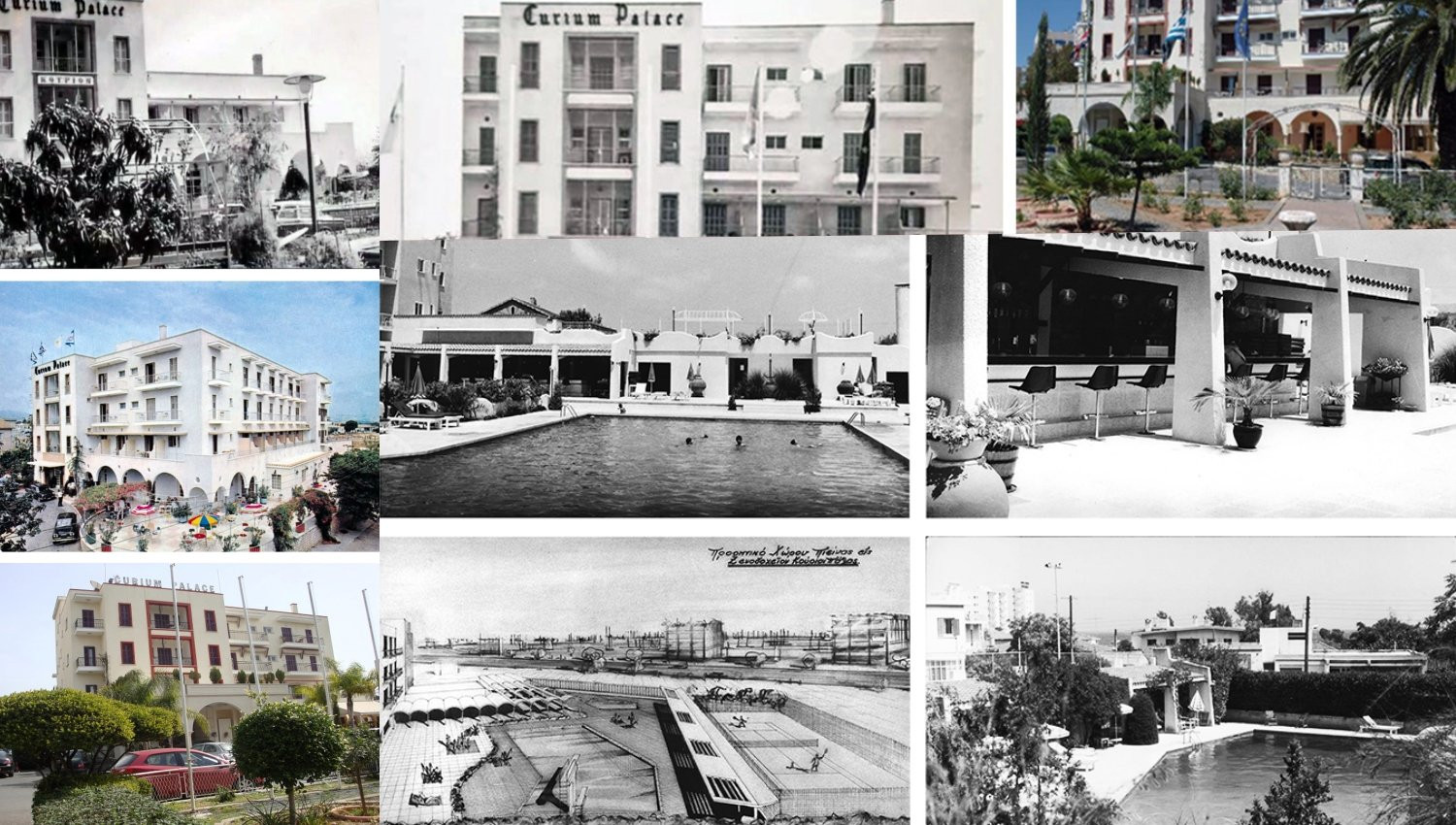
The architecture of Curium Palace: why the building mattered to Limassol
Curium Palace was notable not only because of its age. The building was connected with one of the most interesting periods in Cypriot architectural development — mid-20th-century modernism. The hotel was designed in the early 1950s by German-Jewish architect and engineer Benjamin Ginsburg (1891–1956). At the time, he lived in Tel Aviv but regularly traveled to Cyprus to work on architectural projects. Ginsburg was a prominent architect of his era. Several well-known buildings in Cyprus are associated with his name:
- Forest Park Hotel in Platres (1932–1936);
- Rialto Theatre in Limassol (1930–1933);
- Limassol Town Hall (1938–1943);
- the home of Lefkios and Hypatia Zenon in Limassol, now the Municipal Art Gallery (1938);
- Ledra Palace in Nicosia (1946–1949).
In other words, Curium Palace emerged alongside architectural projects that are now themselves part of Cyprus’s history. Ginsburg, however, did not live to see the completed hotel. He died in 1956, after which Cypriot architect and artist Charilaos Dikeos (1912–2009) took over supervision of construction and completion of the project.
The building is generally considered to have been completed in 1959. Curium Palace represented a form of European neo-monumental modernism rooted in the interwar period, with certain elements referring to local architectural traditions. The building had a distinctive U-shaped layout. The central section containing the main entrance projected forward and became the visual focal point of the facade.
The entrance composition was particularly interesting. The main entrance was recessed, with balconies above it. Originally, a small projection protected visitors from sun and rain. It was later replaced by a more prominent porte cochère — a covered entrance where vehicles could stop to drop off guests. Today this may seem like a minor architectural detail, but in mid-20th-century hotel design, such elements emphasized status and prestige. The original facade displayed the name Curium Palace in Gothic lettering. Beneath it was the Greek inscription “Κούριον.”
After the 1962 expansion, the architectural composition changed.
An additional floor was added above the northern wing and central section, while two floors were added above the remaining wings. As a result, the building became taller and visually more unified. Its original modernist character, however, was largely preserved. This is why Curium Palace is now remembered not simply as an old hotel, but as one of Limassol’s notable examples of modernist architecture. In 2023, the building even became the starting point of an architectural walking tour focused on modernist Limassol, during which participants were introduced to other important buildings and the architects who designed them.
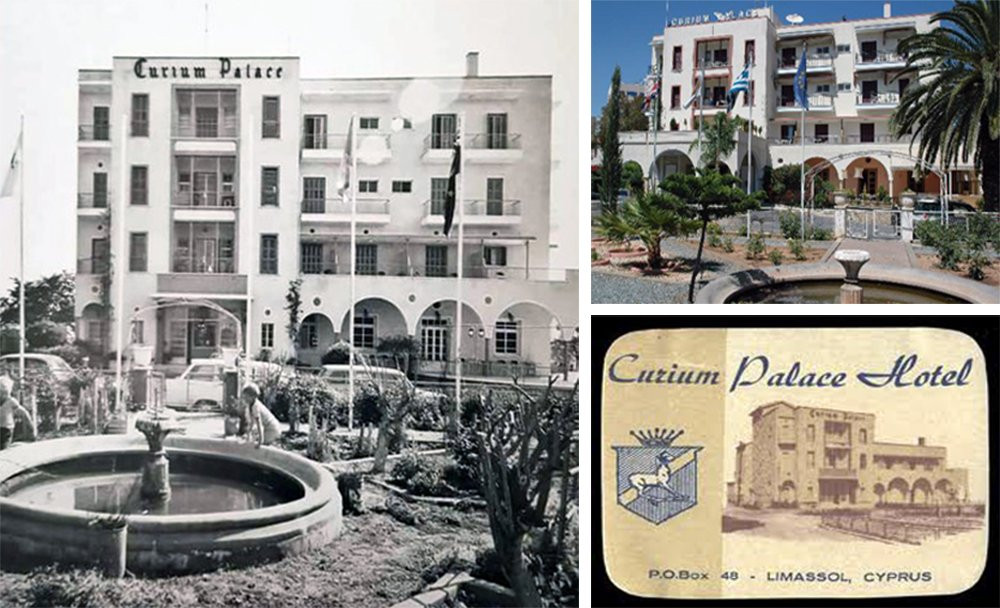
The swimming pool that also became part of the hotel’s history
The swimming pool at Curium Palace also deserves special attention. In the early 1970s, architect Fotis Kolakidis (1923–2009) designed the pool and its surrounding area. In addition to the main pool, the project included a bar, tennis court, shaded structures and a children’s pool. The main pool was unusual. Instead of a conventional rectangle, Kolakidis created a geometric composition that resembled the letter V in plan. The pool was completed in 1974, just before the tragic events of that same year.
Its appearance later changed. During one renovation, the depth was substantially reduced — from approximately 4 meters to 1.5 meters. The change was made because of new safety requirements. The overall character of the space also changed. Strict modernist lines gradually gave way to more organic shapes and decorative elements associated with a different architectural era. In this way, Curium Palace preserved several layers of Limassol’s history: the original modernism of the 1950s, the 1962 expansion, the open-space architecture of the 1970s and later renovations.
Carnivals, balls and Limassol’s “golden” social life
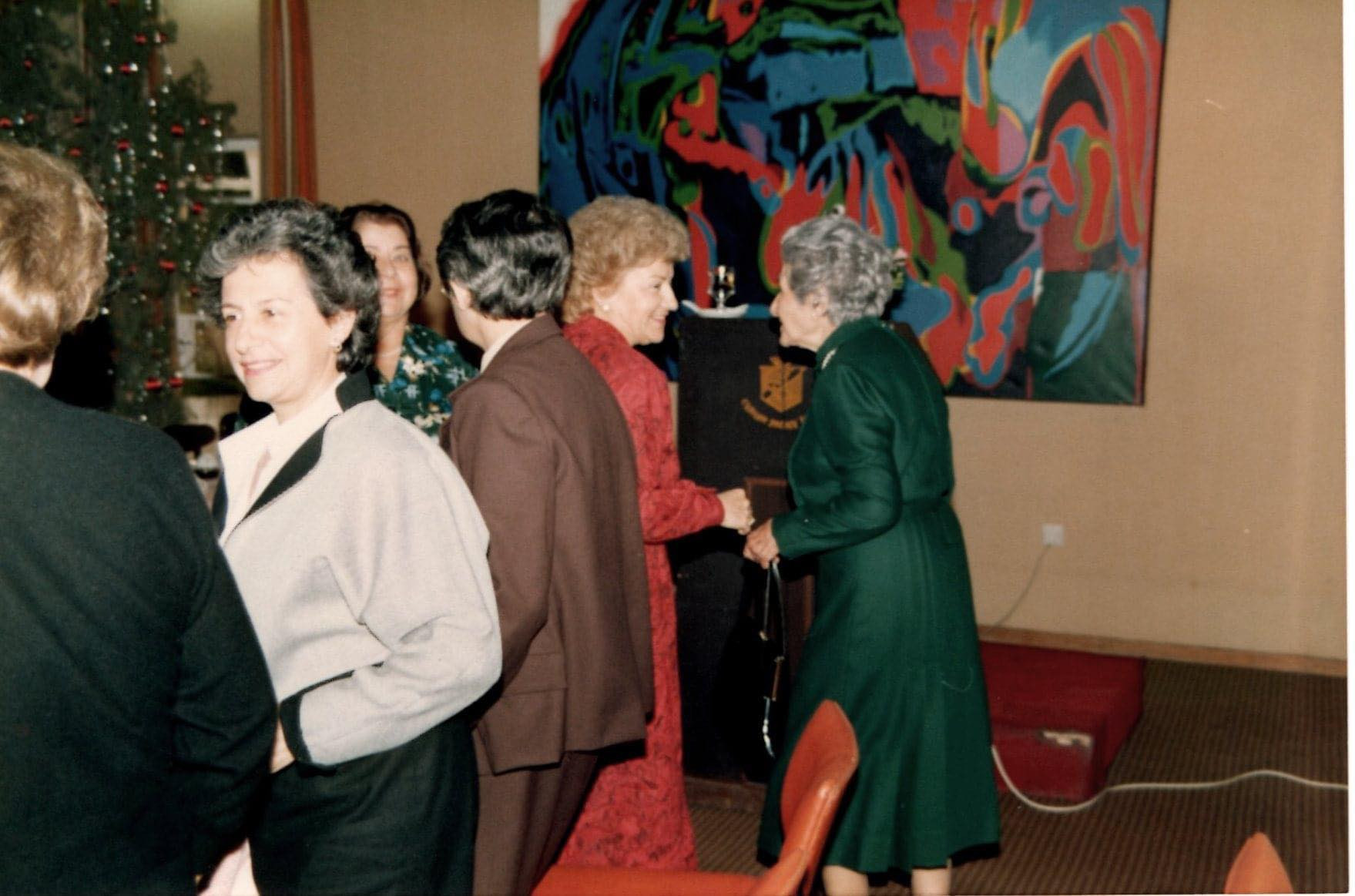
If the architecture explains why Curium Palace interests historians, the memories of local residents explain why its disappearance was felt so deeply in the city. The hotel was one of the centers of Limassol’s social life. Its history was especially closely connected with the city’s carnival. During the period between Cyprus’s independence and the events of 1974, Curium Palace became one of the main venues for carnival parties. Wealthy Limassol residents, visitors from other cities and members of Cyprus’s political and social elite gathered there.
Hotel owner Stelios Mylonas personally organized themed balls. The theme applied not only to guests: hotel staff were also expected to wear costumes matching the chosen concept. Today, themed parties are common, but at the time the idea was considered quite unusual. Carnival events organized by the Ladies’ Union held a particularly important place in the hotel’s social calendar. This ball became especially closely associated with Curium Palace.
According to memories collected in Stelios Georgiades’s book “Limassol Carnival — A Magical Story,” well-known people even traveled from Nicosia to attend these events. Among those mentioned are politicians Spyros Kyprianou, Tassos Papadopoulos and Alexis Galanos. Curium Palace therefore became a place where many different aspects of city life intersected: hospitality, tourism, politics, culture, social events and, of course, carnival.
These are the kinds of stories that rarely appear in official architectural catalogs. Yet they are precisely what turns an ordinary building into a city landmark. This may explain why many Limassol residents saw Curium Palace not simply as another old hotel, but as a place connected with their own youth, family celebrations and the history of the city.
The final years of Curium Palace and the decision to demolish it
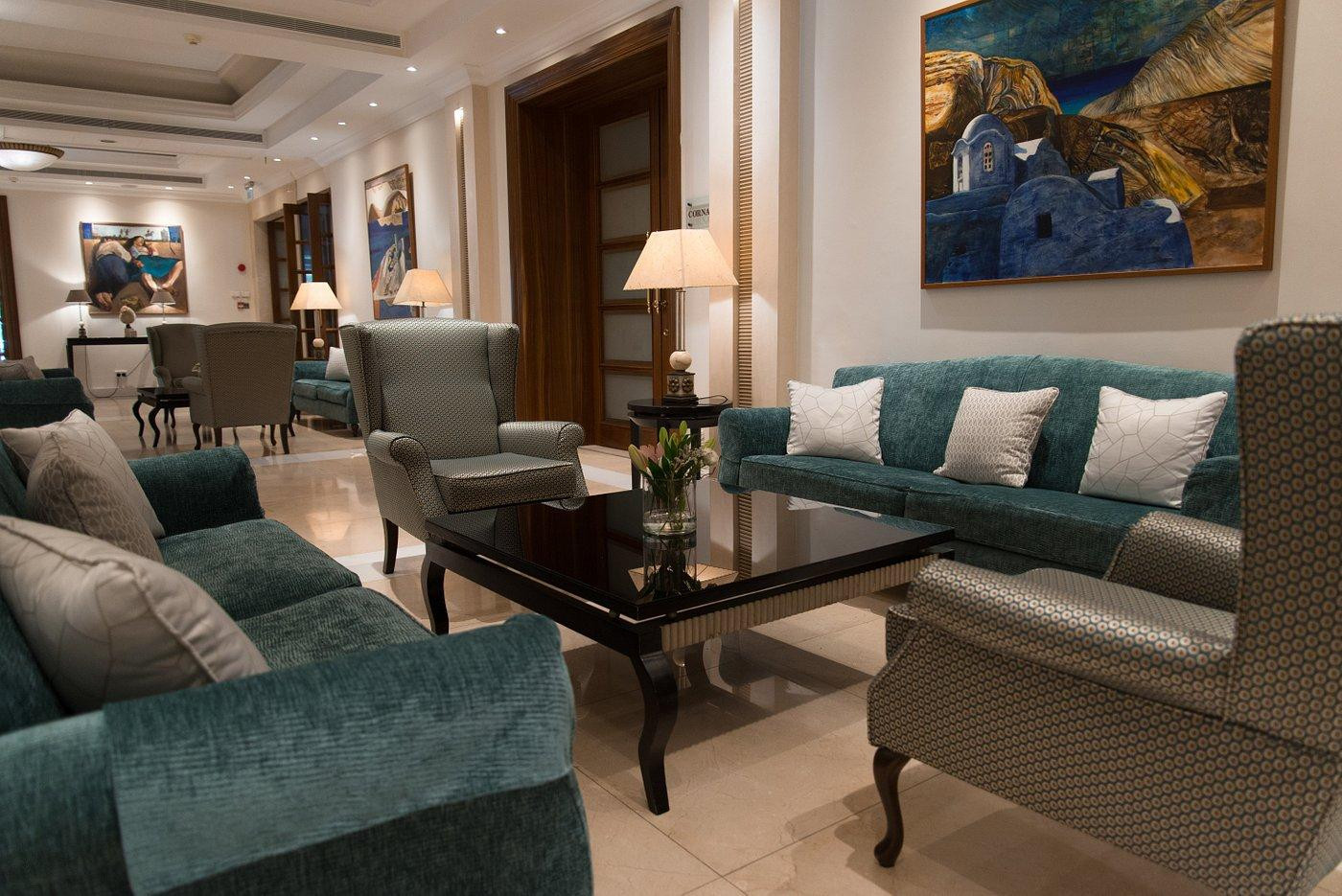
By the beginning of the 21st century, the hotel already looked different from how it had appeared during the first decades of its history. In the early 2000s, Stelios Mylonas sold Curium Palace to new owners. The hotel continued operating for about another 20 years. During this period, another major renovation was carried out by the architectural firm of Yanos Anastasiou. Interestingly, efforts were made to preserve the building’s exterior modernist shell, while the interior was completely transformed. Many modernist and Art Deco elements disappeared and were replaced by a heavier classical-style interior.
The swimming pool was also altered. Its strict geometry gave way to a more organic shape. Shortly before the final closure, the architectural office of Yiannis Armeftis was also involved in certain works and renovations. Overall, more than 5 architectural firms worked on Curium Palace throughout its history, each adding something of its own.
The hotel closed permanently in 2022, ending a life cycle of approximately 65 years. A very different story began after that. The fate of the building became the subject of serious debate. Architects and activists argued for its preservation and regarded Curium Palace as an important part of Limassol’s modernist heritage. However, in December 2022, municipal authorities concluded that the building did not have protected heritage status and would not be included on the list of protected properties. This allowed the owner to move forward with demolition.
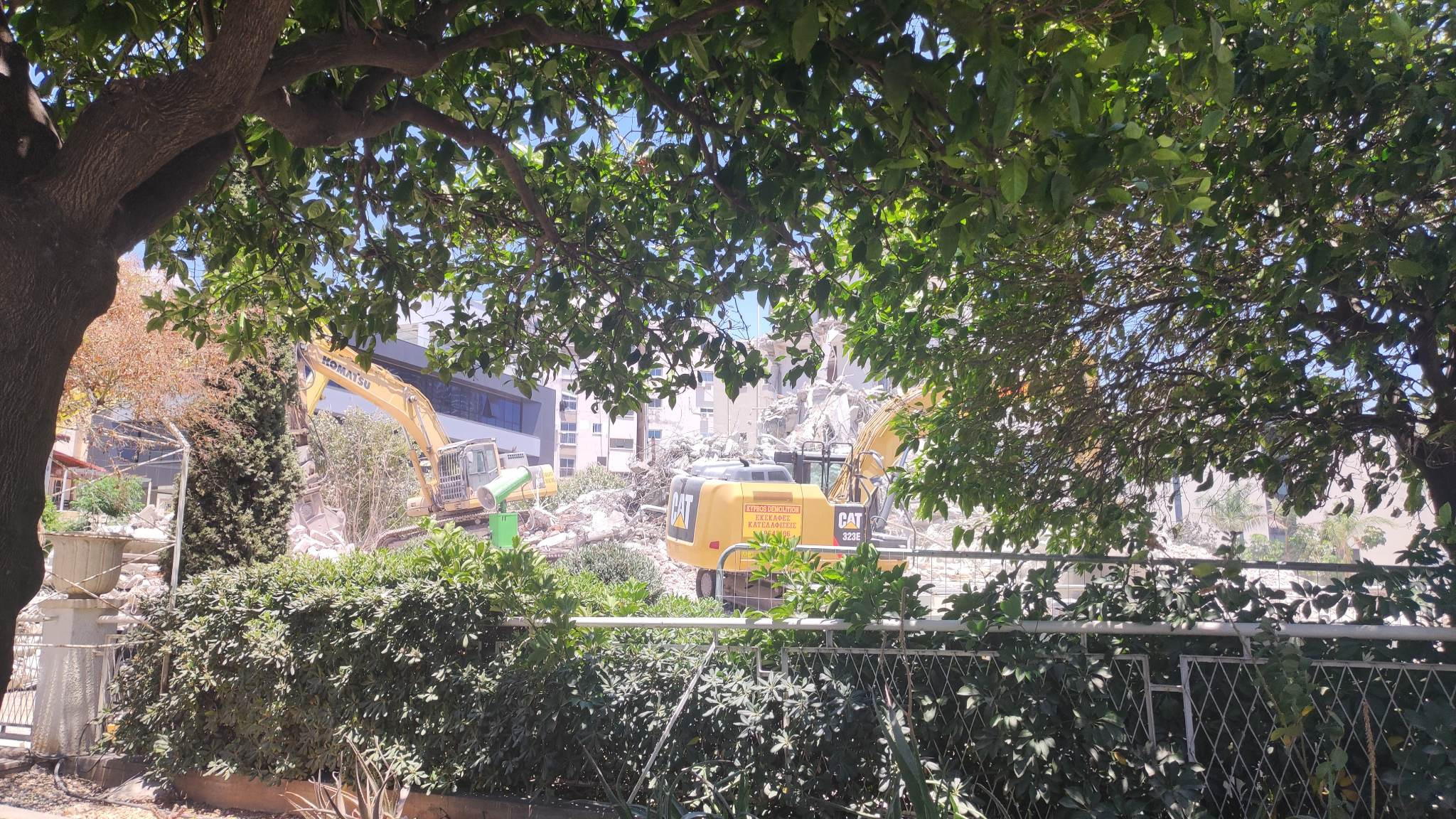
The demolition permit was issued on February 17, 2023. By June 2023, demolition was underway. Despite protests, Curium Palace was torn down. This marked the end of one of Limassol’s most recognizable hotels. The main question then became: what will replace it?
What will be built on the site of Curium Palace?
The answer is already known. A modern mixed-use development called Kourio is planned for the former hotel site. The project belongs to Curium Palace Hotel Ltd and received a positive environmental opinion, subject to certain conditions, from the Department of Environment in October 2025. The estimated cost of the project is €22 million. The new building will be very different from the historic hotel.
The project calls for a building approximately 54 meters high. Its primary use will be office and commercial space. According to published project information, the development will include:
- one underground level;
- a ground floor;
- a mezzanine;
- a mechanical floor;
- 9 above-ground office levels;
- commercial premises;
- a rooftop garden.
The site covers approximately 3,339 m2. Office space is expected to total 6,075 m2, while commercial space will cover 210 m2.
The building footprint will cover 1,204 square meters, while the underground level will cover approximately 2,817 square meters. The project also provides for 103 parking spaces. Of these, 4 will be reserved for people with disabilities, while another 5 will be designated for bicycles. The designers propose a more vertical building form in order to avoid occupying too much of the site. The building mass will be visually divided in several places.
Once completed, the building is expected to accommodate approximately 500 employees, while daily visitors could number around 40. The location of the new complex is particularly notable. To the east of the site are parking areas and commercial development. To the west is the Limassol Archaeological Museum. Approximately 50 meters to the southwest are the Municipal Gardens. In other words, the new project will rise directly within one of Limassol’s most recognizable cultural areas.
When will construction of Kourio begin?
It is important here to distinguish between an approved concept and the actual start of construction. Environmental authorities issued a positive opinion on the project, subject to conditions, in October 2025. However, this did not automatically mean construction could begin. In December 2025, the Limassol Chamber of Commerce and Industry reported that the project was at an advanced stage of the licensing process, but certain changes requested during the approval procedure still had to be reviewed. Members of the project team emphasized that no specific construction start date had yet been set and that it depended on obtaining the necessary permits. Once all approvals are secured, construction is expected to take approximately 30 months.
For this reason, it is more accurate to say that a new 13-story office and commercial complex is planned on the former Curium Palace site, rather than that Kourio is already under construction. This distinction is particularly important for those following development activity in Limassol and changes taking place in the city center.
From Curium Palace to Kourio: what Limassol loses and what it gains
The story of Curium Palace is more than the story of a single old hotel. It illustrates how Limassol itself has changed. In the mid-20th century, the city needed hotels, restaurants, ballrooms and places for social gatherings. Curium Palace was perfectly suited to its era. Located next to the Municipal Gardens and museum, it became one of the symbols of modern urban life and welcomed tourists, business travelers and local residents for decades. Carnival balls, weddings, business events and everyday meetings all took place there. For several generations of Limassol residents, it was a familiar and important place.
Today, the city’s needs are different. Limassol has strong demand for modern offices, commercial premises and new business spaces. Central plots are becoming increasingly valuable, while older buildings are gradually giving way to denser development. The new Kourio project reflects exactly this process. But it will represent a very different Limassol.
Read also: