

Entering 2026, the local real estate scene in the Republic has seen a shift in momentum, particularly with the full abolition of Stamp Duty fees on property contracts that came into effect at the start of this year. While these regulatory updates have streamlined the administrative side of property sales, a more traditional problem continues to weigh on the minds of many: the failure of builders to meet their agreed timelines. Whether an investor has committed to a commercial property in a business district or a holiday villa by the sea, the emotional and financial strain of a missed delivery date is significant. When a property developer overruns a schedule, the property owner often finds themselves caught between rising rental costs elsewhere and the uncertainty of a half-finished site.
Successfully navigating these delays is less about waiting and more about a calculated strategy. In the current property market, a passive approach can lead to months of wasted time. Instead, those who understand the legal mechanisms of the island can turn a frustrating situation into a manageable one by asserting their rights early and often.

Assessing the Foundation: The Contract as a Shield
Every resolution path begins with the Sale and Purchase Agreement (SPA). In a diverse property market like this one, the SPA is not just a formality; it acts as the buyer’s primary defense against negligence. It is quite common for property buyers to realize too late that the contract they signed was weighted heavily in favor of the builder, particularly regarding "estimated" delivery windows.
Legal experts, whose insights often appear in the cyprus mail, emphasize that a robust contract should include a fixed "long-stop date." If the property itself is not handed over by this specific milestone, the builder is generally considered to be in material breach. It is also essential to scrutinize the developer’s interpretation of "Force Majeure." While it was once common to blame global logistics for every delay, the standards in 2026 have become much stricter. Courts now look for genuine, unavoidable catastrophes rather than simple poor planning or local labor shortages.
The Sale and Purchase Agreement is not just a formality; in Cyprus, it is the legally binding document that outlines every right and obligation. Any ambiguity or omission in the contract will be the first point of contention in a dispute, — As one prominent Cypriot property lawyer recently noted.
Gathering Evidence: The Power of a Paper Trail
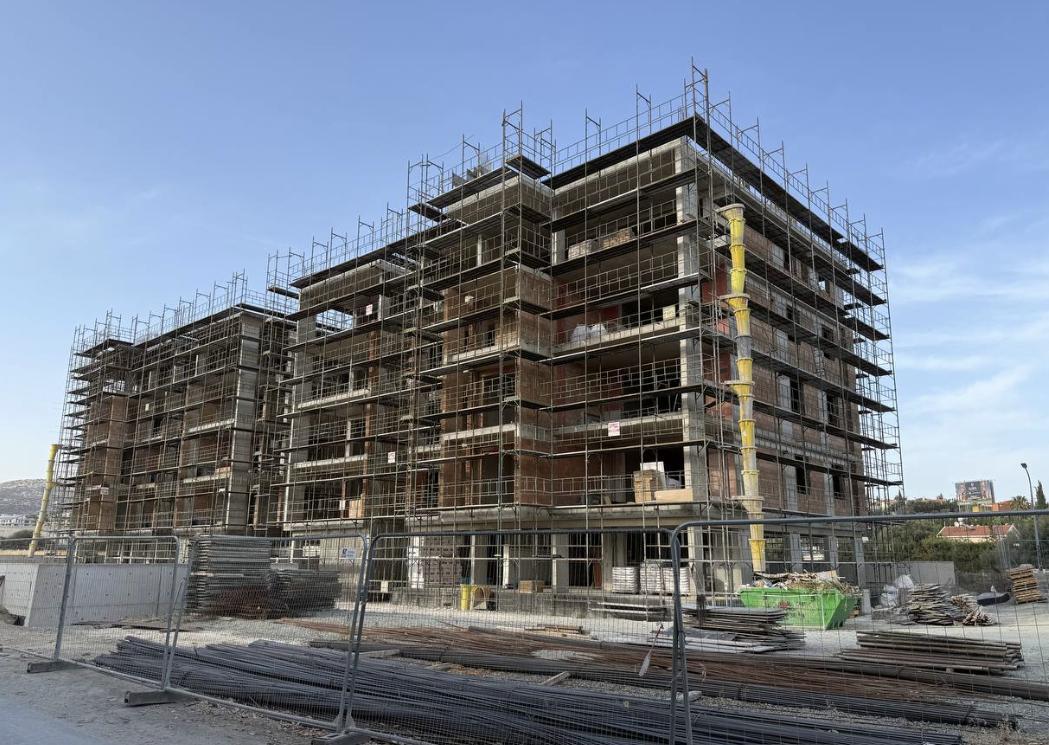
For any property owner, the delay represents a quantifiable loss. This might be the cost of alternative accommodation or the missed property resale profit from a project that should have been on the market months ago. In property hotspots where the residential property price remains high, these losses can escalate quickly.
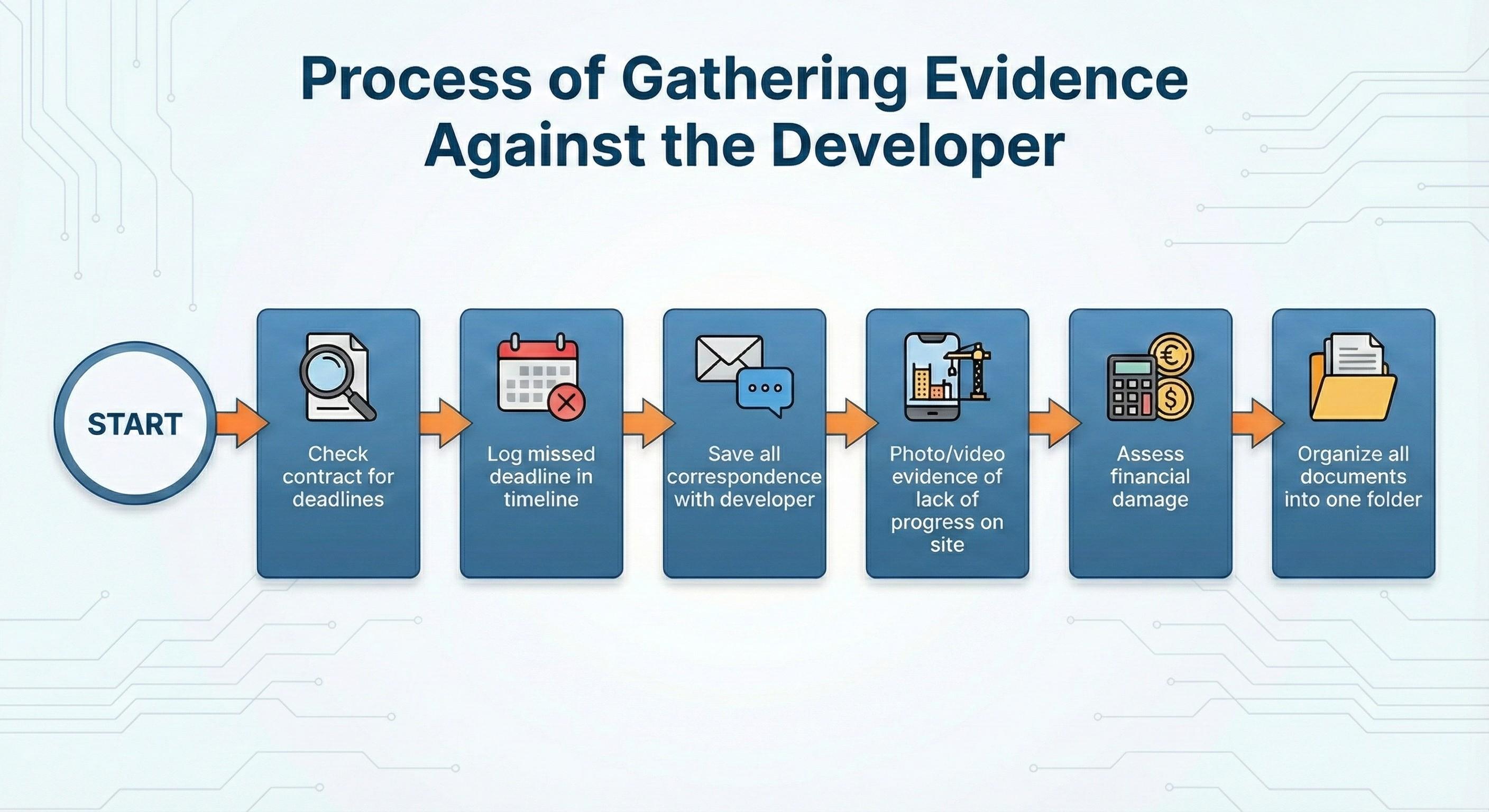
Building a successful case — whether for negotiation or litigation—requires an unshakeable evidence log. This record should not just be a collection of grievances but a professional timeline. It should include every email sent to the builder, dated photographs of the construction site showing a lack of progress, and receipts for all additional expenses incurred. By documenting how the delay affects the overall property investment, the owner creates a leverage point that is hard for any builder to ignore.
From Dialogue to Legal Intervention: A Phased Approach
The first real step toward a solution should be a formal letter of demand. This is a structured document, sent via registered post, that references specific clauses in the SPA. This letter does more than just ask for an update; it clarifies whether the developer’s issues are temporary or if they are facing genuine insolvency. Often, this initial pressure is enough to move a project up the builder's priority list.
If the response is unsatisfactory, the situation moves into a more formal phase. According to cyprus property news, builders are significantly more likely to prioritize clients who are represented by reputable legal counsel. A "Notice of Breach" drafted by a specialized law firm serves as the final warning before proceedings begin in the District Courts.
When dialogue fails, a choice must be made regarding the resolution method. In 2026, the focus has shifted toward speed and privacy, as seen in the following comparison:
Method | Timeframe | Binding Nature |
Mediation | 2–4 Months | Only if a settlement is signed |
Arbitration | 8–18 Months | Legally binding and enforceable |
Litigation | 3–6+ Years | Legally binding, subject to appeal |
While litigation provides a public record, many involved in property news disputes now favor arbitration for its relative speed. However, one must always consider the practicalities: a judgment for a significant sum is only useful if the builder has the liquid assets or residential properties available to satisfy the debt.
Proactive Protection in a Maturing Market
The best way to handle a delay is to prevent it before the first payment is made. Before committing to coastal properties, thorough due diligence is non-negotiable. This includes checking the builder’s history of delivery and ensuring that the land is free of any existing mortgages or encumbrances.
Furthermore, any right property deal should involve a bank guarantee. This ensures that the property price paid is protected even if the project fails entirely. For those seeking cyprus citizenship or long-term residency through their purchase, the stakes are even higher, as a delayed completion can stall the entire immigration process.

Frequently Asked Questions
Can I withhold payments if the developer is delayed cyprus property?
This is a risky path. Generally, stopping payments without a court order or a specific contractual right can put the property owner in breach of contract. This might give the builder a legal excuse to terminate the deal. Always seek legal advice before taking this step.
How do low property taxes in Cyprus affect my situation?
While the island offers low property taxes, a delay can push the official delivery into a different tax year, potentially affecting VAT refunds or other incentives. Since the 2026 tax updates, it is even more important to have a tax specialist review the timing of your investment.
What is the "Trapped Buyers" law?
This legislation was designed to help those who have paid for their new properties but cannot obtain title deeds due to the builder's debts. While it offers a layer of safety, it highlights why having an independent lawyer is vital from day one.
Is arbitration always better than court?
Arbitration is often faster and more private, making it a popular choice for high-value luxurious properties. However, the costs can be higher upfront compared to the initial filing fees of a District Court.

The conclusion cyprus buyers should draw is that while the market offers incredible opportunities — from luxurious properties to quiet coastal retreats — the risk of delay is a manageable factor. By keeping a close eye on the residential property price dynamics and acting the moment a milestone is missed, an investor can ensure their lifestyle goals and property resale value remain intact. As the market continues its growth through 2026, the most successful owners will be those who combine an optimistic outlook with a rigorous, evidence-based approach to their new properties.
Read also: