Cyprus's history is not counted in centuries but in millenia. So, it is not surprising that Cypriots know a thing or two about good jewellery. In fact, the island's first jewellery pieces go as far back as the Chalcolithic period (3900-2500 BCE). During the Bronze Age, when Cyprus became a major copper producing region, the jewellery making techniques were further refined. Since then the innovation was continuous, reaching its peak during the Ottoman rule. Despite being subject to many conquerors and influences, the island’s artisans have developed their own unique visual language, reflecting rich symbolism, sense of aesthetics and national identity of Cyprus. So, let's dive deeper into the fascinating and mysterious world of Cypriot jewellery!
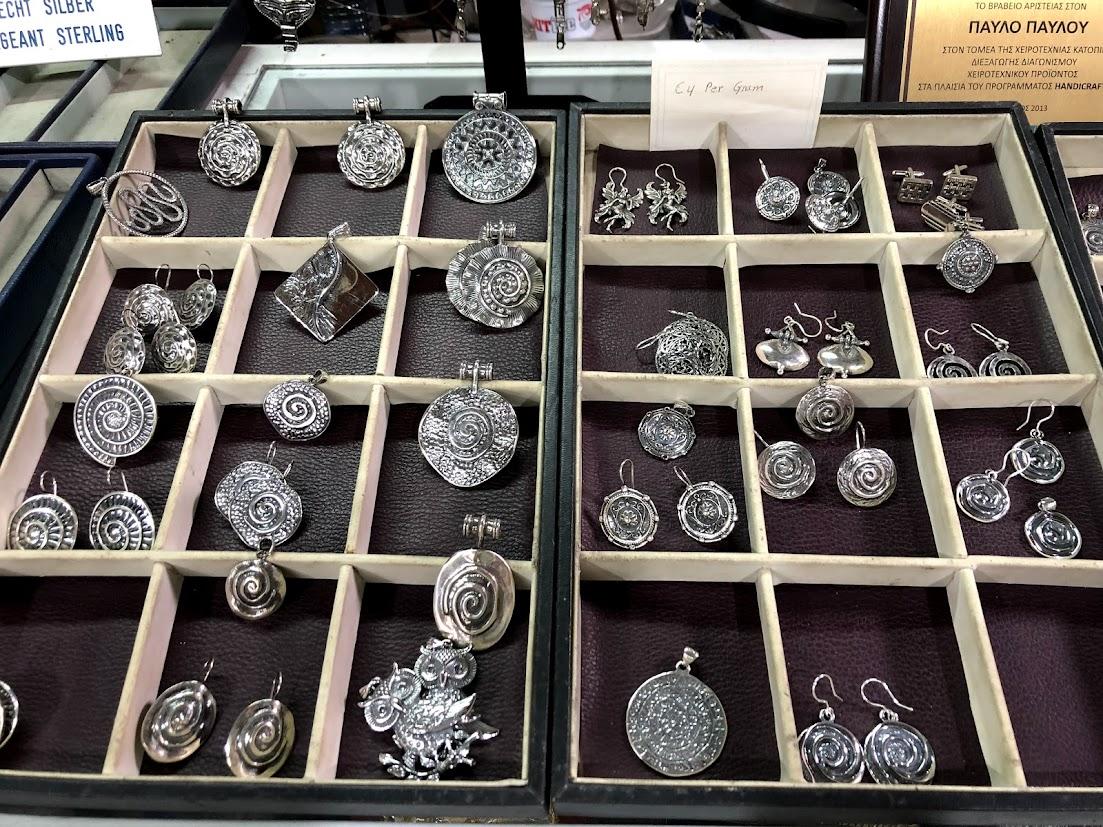
The art of filigree: the art of Cypriot craftsmanship
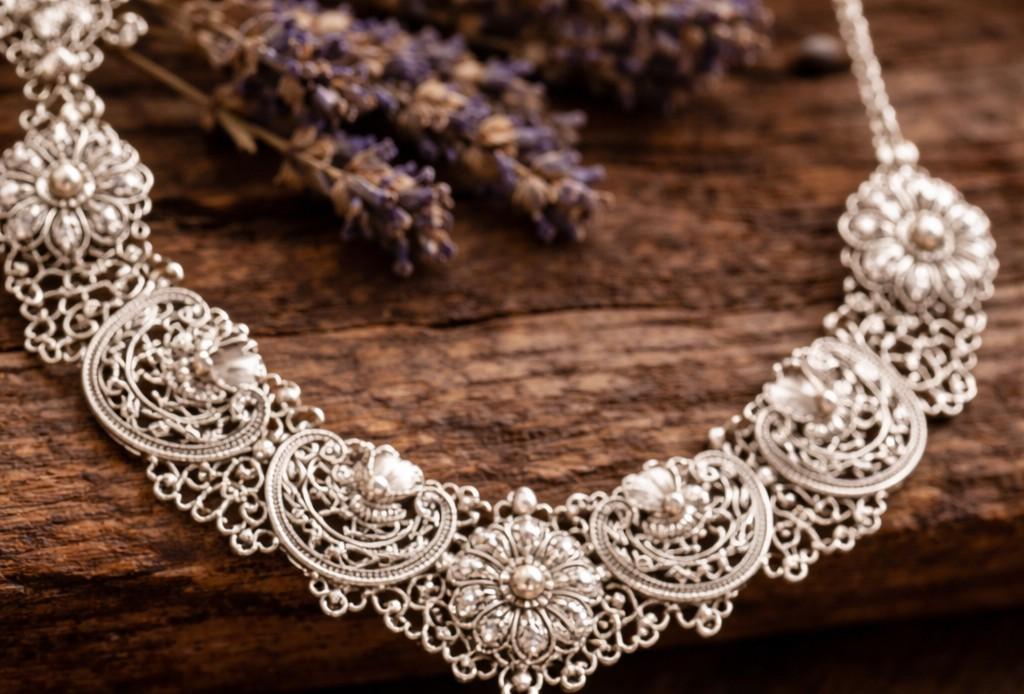
What is a filigree (filigrana)? The dance of silver threads
A filigree technique, colloquially known as «triphorenia», is truly the pinnacle of jewellery making. Creating a filigree piece requires a great deal of artistry and skill, often acquired by years of practice.
The process starts by creating and shaping fine gold or silver wires, which are then heated so they can be folded or twisted and assembled one-by-one in the desired shape or pattern. Once the intended form is complete, they are carefully soldered together, cleaned in a pickling solution and polished.
The final result is sophisticated light and «airy» creations, almost like an intricate lacework in a metallic form.
Lefkaritiko: the epicentre of Cypriot silverworks
The art of Lefkara lace and silver jewellery are truly inseparable as they have flourished around the same time.
In fact, there was a clear distinction of labour — with the local village women engaging in lace-making, whilst the men established silversmiths workshops. The art of silver jewellery reached its peak towards the 17th century. The local artisanal creations have been largely influenced by the Venetian and Oriental techniques with a local touch. Lefkara silversmiths have developed their own unique designs inspired by the geometry and intricate patterns of «lefkaritika» lace.
The silversmiths have used a variety of techniques: filigree, chasing and repoussé, casting, engraving and granulation. Apart from jewellery, they have also produced dowry items, homewares and religious items. The fame of «Lefkaritiko» silver jewellery has gone far beyond the island's shores. Today, thanks to Cyprus government initiatives, this precious craft continues to live on. A handful of local silversmiths still operate in the village, conducting workshops and selling their stunning creations.
Other key jewellery making technologies
Granulation: the art of tiny spheres.This is one of the oldest jewellery-making techniques. Just like filigree, it starts from gold or silver wires heated over a piece of charcoal so they turn into tiny droplets. After they are quickly placed into cold water, which results in small perfectly rounded spheres. Later the spheres are placed in the solution of a gum resin or copper salts for colloidal soldering. Now they are ready to become a part of the design by being placed on top of the gold or silver base and heated to solder them into place. Once cooled, the final piece gets gently brushed for a soft glow. This is a beautiful technique to create texture jewellery pieces or a specific pattern.
Chasing and engraving: creating texture and story. Chasing is another interesting decorative method used on softer metals like copper and silver. It is quite popular in Cyprus and is often used to add sculpted shape and volume to the final piece.
Quite often, chasing is used in conjunction with another technique — reppousé, which involves hammering the metal from the back in order to raise the surface at the front in order to create a shape or a pattern. Whilst chasing technique uses small punches (chasers) to shape and texturise the surface from the front, without cutting into it. The work is usually done in a pitch bowl for a better control of the process. Engraving, on the other hand, involves cutting into the metal with special instruments, such as tiny drills or gravers, in order to carve out the desired patterns or letters (initials) on the jewellery piece. The main difference between these two techniques is that the chasing method does not remove any of the metal, whilst engraving does.
Intaglio: ancient gem carving. Initially brought to the island from Mesopotamia and Syria during the middle Bronze Age, intaglio has become one of the island's most ancient and prized jewellery making techniques. Intaglio is an art of carving a surface of a gemstone with a particular image or design. Quite often hematites, carnelian or agates have been used amongst other soft gemstones. The most precious and rare pieces were made out of lapis lazuli — one of the most expensive gemstones of the past. In ancient Cyprus the most common intaglio pieces were rings and pendants. They served two distinct purposes: administrative — the carved out area was filled with wax in order to create a seal, which was especially common for rings; and, esoteric — images carved into gemstones were considered to be potent protection from black magic.
In fact, quite a few intaglio finger rings were discovered by archeologists amongst some of the late Bronze Age Cyprus artifacts. The process of creating intaglio jewellery is pretty straightforward, but requires mastery and experience. First, the gemstone is polished to a smooth flat surface, then the design is drawn onto the stone. The image is then cut out using a small drill or bur, dipped in a blend of diamond dust and oil. Once carved, the stone is polished until smooth and shiny. This artisanal technique allows one to create one-off jewellery designs and to transform a gemstone into a work of art.
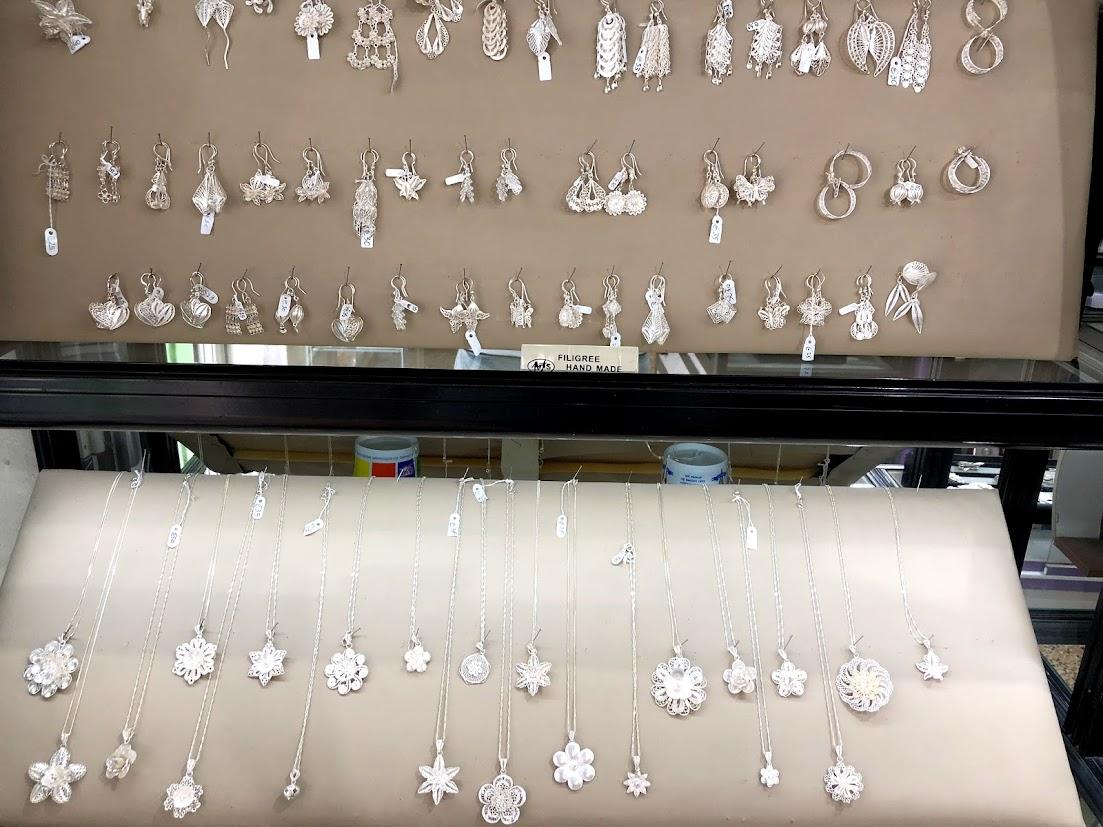
The rich history of jewellery in Cyprus: a timeline
Ancient roots: Mycenaean and Greek influences
During the late Bronze Age the Mycenaean Greeks arrived on the island, taking control of Cyprus from 1400 to 1100 BCE. With them Mycenaeans have brought many sophisticated jewellery making techniques, such as filigree, granulation and repoussé as well as intricate patterns like spiral and rosette designs. During this time religious and symbolic motifs: animal heads, sacred ivy, papyrus, became popular.
From 325 to 31, Cyprus fell under the rule of the Ptolemaic Kingdom of Egypt and the local jewellery has become increasingly more cosmopolitan, displaying a mix of Greek and Egyptian characteristics. During this time many new design elements have been introduced: large hoop earrings with zoomorphic details, wreath diadems and coiled snake motifs. It was also the time of the rise of Aphrodite’s cult, so many pieces featured the image of the goddess, as well as dives and shells, which were often associated with her. This Hellenistic period has brought advanced filigree goldwork methods and the use of coloured enamel in jewellery making.
The Byzantine era: the rise of religious symbolism
Arrival of the Byzantine era around 330 AD has created a major shift in the spiritual life of the island — from pagan influences and polytheism to Christianity. Conversion to Christian faith has strongly affected the Cypriot jewellery aesthetics by introducing new elements, such as:
- Crosses: from simple to elaborate «crux gemmata» (jewelled crosses)
- Medallions and pendants, depicting saints, the Virgin Mary (Theotokos), or Christ. They were considered protective amulets (enkolpia).
- New symbolic imagery: peacocks — symbol of immortality, the vine referring to the Eucharist, and, of course, the fish (ichthys), synonymous with Christ and the first Christians.
The Byzantine era has brought a new interesting jewellery-making technique — «Cloisonné Enamel», which was similar to a filigree goldwork with tiny gold wires (cloisons) being soldered onto a base. The gaps were filled by colorful powdered glass and then fired, resulting in luminous and vivid jewellery pieces.
Byzantine society was extremely hierarchical. The jewellery expressed not only religious affiliation of the wearer, but also their social and wealth rank, with more sophisticated and elaborate jewellery being worn by aristocracy, whilst poorer classes wore simple pieces. Quite often, the jewellery wasn't a mere testimony of faith, but also a form of spiritual protection from evil — an amulet of a sort.
Venetian and Ottoman periods: the flourishing of a filigree
The Venetian rule (1489–1571) brought to the island the opulence of Medieval Europe. The jewellery pieces of those times was decorated with precious or semi precious gemstones and the innately
Italian Renaissance motifs such as elaborate floral patterns and mythical griffins. The Venetians also introduced a more advanced filigree technique and elaborate patterns.
The Ottoman rule (1571–1878) was the longest in the island's history, which affected many aspects of life and aesthetics: from architecture to fashion and jewellery. In fact, the quintessentially Cypriot folk jewellery styles that we see today are remnants of the Ottoman period.
During this time silver has become increasingly popular and the filigree technique has been further refined — that's when the famous «lefkaritiko» jewellery flourished. Whilst crosses were worn by the Greek Cypriot population, traditional Ottoman-style protection symbols such as «matia» (the eye) and the «hand of Fatima» became increasingly popular. In this period the island saw the rose of the coin jewellery with coin headdresses, belts and necklaces, which were both a woman's status symbol and her dowry. Such coin jewellery has become an integral part of the traditional Cypriot women's costume that we can see today.
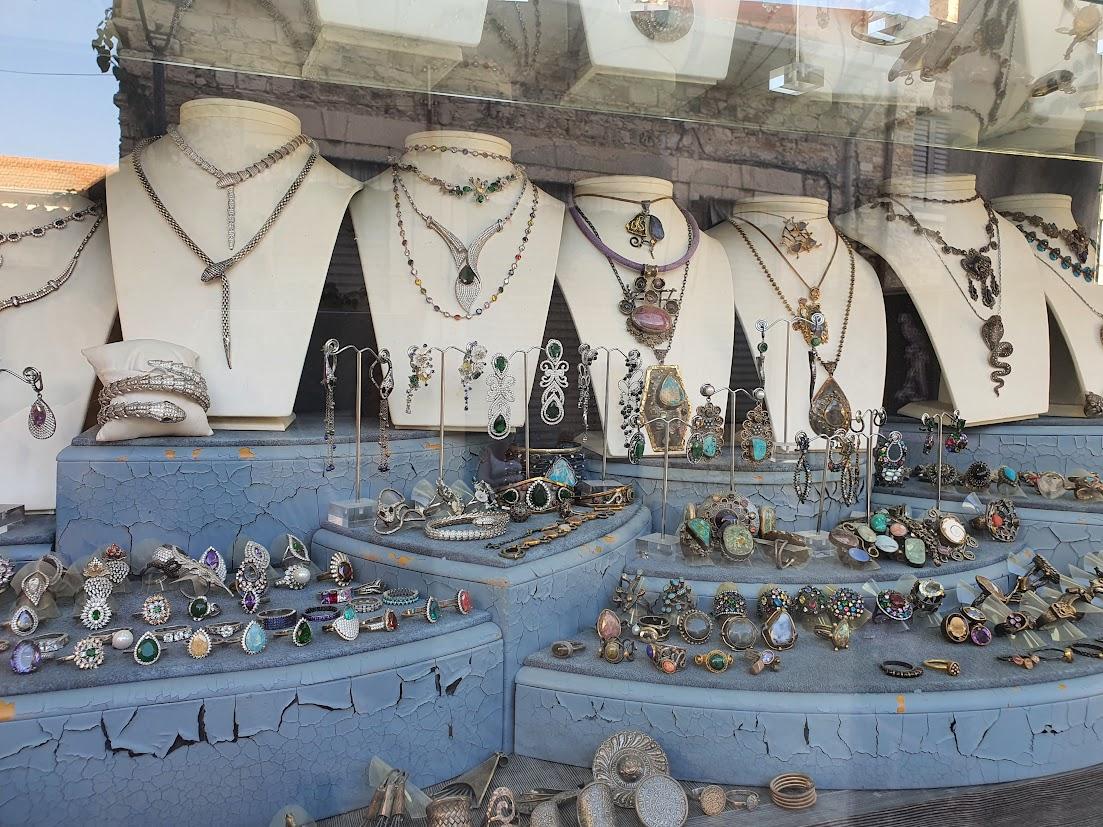
Iconic types and symbolism in Cypriot jewellery
Common pieces and their forms
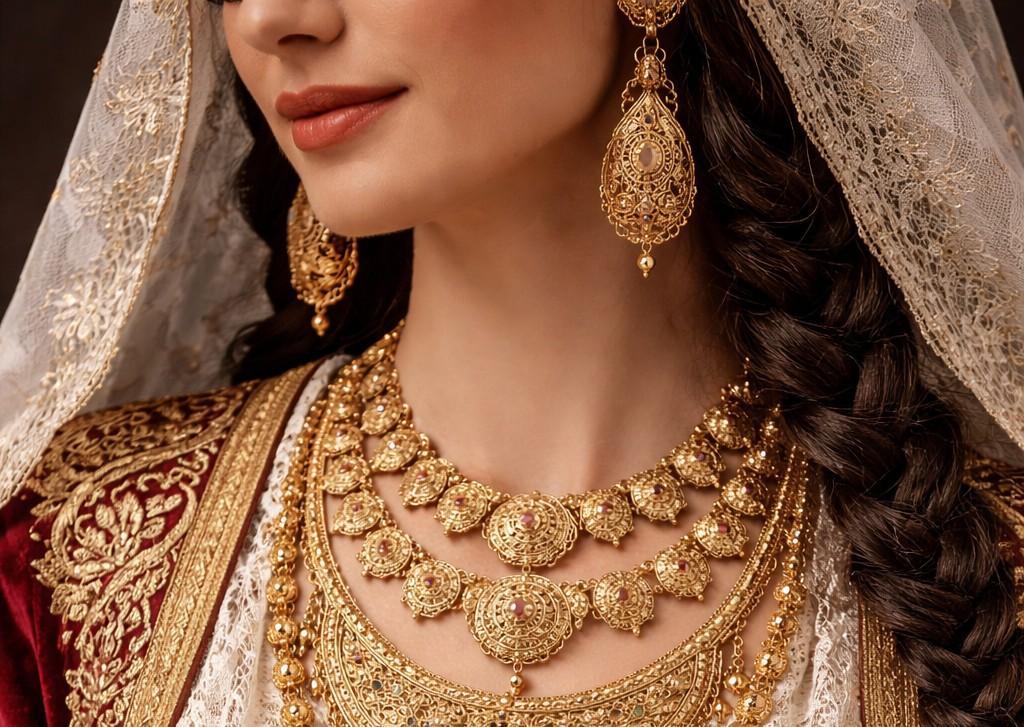
Earrings— The most famous ubiquitous Cypriot earrings are so called «Kypriaka» or Byzantine earrings. They usually represent large disks made out of solid gold with a decorative pattern in the middle. A double-headed eagle is quite a popular motif, alluding to the island's Byzantine heritage. But, the «tree of life» imagery is also common. Around the edges these earrings are typically decorated with granulation or filigree ornaments. These traditional earrings make a part of a national folk costume.
Due to their large size, up to 5—8 cm in diameter, and heavy weight, «Kypriaka» earrings were also attached to the special headpiece in order to distribute the weight properly.
The most peculiar local type of earring designs are «sfinga» earrings, literally translated as «sphinx». These are pendant-style earrings with an amulet or charm attached to them. Usually it was a sphinx or another mythical chemerian creature. The double sphinx motif with two sphinxes sitting back to back, was the most popular.
The structure of these earrings is also rather complex, consisting of three sections: they start off with a loop, followed by the «sfinga» amulet, from which stem three or more fine golden chains with a tiny charm at the end. With each part carrying a deep symbolic meaning, «sphinga» earrings were considered a powerful protective charm in the past. They were usually worn by married women on special occasions, such as festivals, weddings and family celebrations.
Other types of earrings included «voukania» — pendant earrings, which were somewhat similar to «sfinga», but less complex in design, as well as various tassel earrings and «yerakotes» — medium sized earrings in the form of a crescent or hawk wings.
Bracelets and buckles:
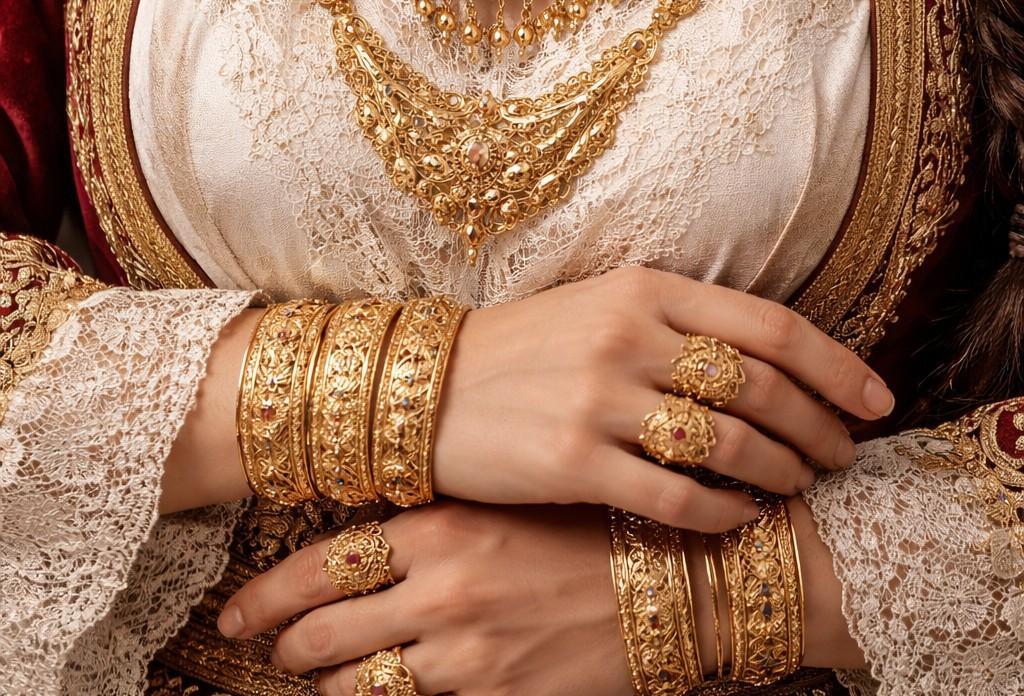
- Kourdoules are the most iconic quintessentially Cypriot designs, featuring chunky golden hinged bracelets with a central ridge, decorated with a filigree, granulation or engravings.
- Fylla are cuff bracelets generously decorated with a repoussé technique, featuring floral ornaments or hunting scenes. They can be rather colourful thanks to different enamels used.
- Snake bracelets feature ancient Hellenistic designs with spirals, twisted and coiled forms that resemble a snake.
- Charm bracelets are light chain bracelets with small charms attached to them. Usually they are small crosses, fish, or, a «hand of Fatima» (hamsa) symbols.
Large decorative buckles also form a part of a traditional women’s folk costume. Large and chunky, they were made out of solid gold, and, sometimes, silver. Such buckles are beautifully decorated with patterns in repoussé and chasing techniques. Some of the most common symbols included: Byzantine double-headed eagle, a «tree of life», birds or animals and floral patterns. A buckle was a central part of the woman’s outfit and served as a powerful status symbol and a protective element.
The meaning behind the motifs — a symbolism guide
Here are some of the most common traditional Cypriot motifs and their meanings:
- The eye «mati» — protection from evil eye
- The hand «heri» — divine protection
- The fish — symbol of early Christians
- The Sphynx — protection, power
- Double-headed eagle — high social rank/status, a symbol of Byzantine Empire
- Pomegranate — fertility and abundance
- Grapes/vines — fertility, joy
- Seeds/pods/acorns — growth, prosperity and fertility
- The «Tree of Life» — eternal life, ancestry
- Sun — life power
- The filigree knot — family ties
- The spirals — cosmic energy
- Shells/doves — Aphrodite connection
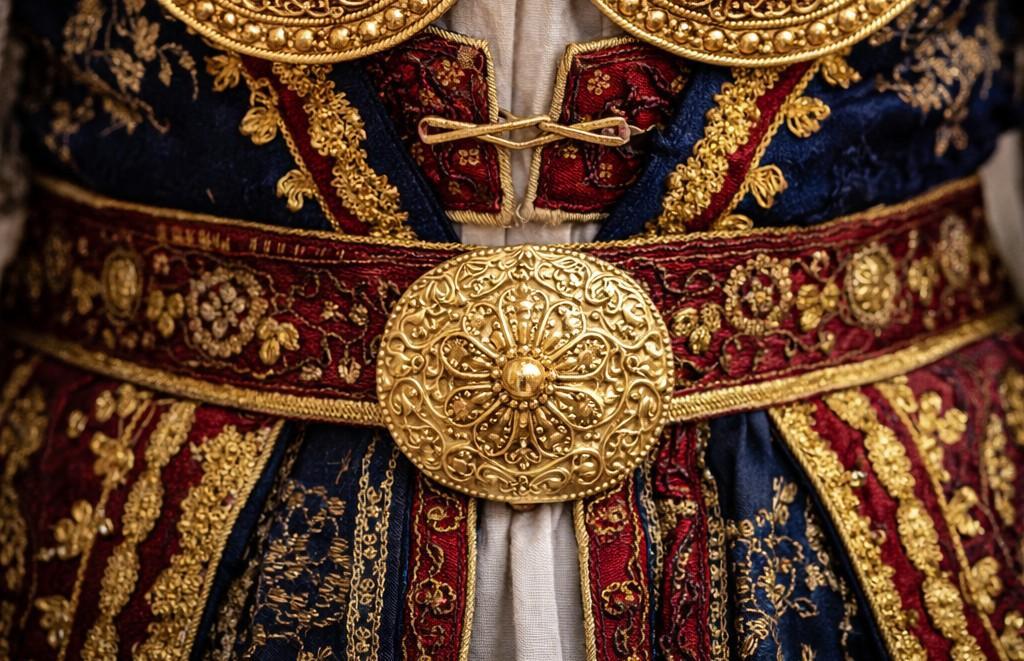
The enduring role of jewellery in Cypriot culture
Wedding traditions and the dowry — «proika»
In the past, jewellery played a central role in the island's wedding rituals. It was not merely an accessory, but a display of the bride's financial status and societal standing. In fact, in Cyprus the bride's dowry or «proika» consisted mainly of jewellery pieces made of solid gold and silver. A dowry was the main source of the bride's future financial security and it had remained her personal asset even after the wedding. A typical «proika» included several jewellery sets, consisting of many solid gold pieces, some of which were family heirlooms, passed down from generation to generation. These are just some of the essential components of «proika»:
- The main set consisted of solid gold pieces: the buckle «porpa», «Kypriaka» earrings, the chunky bracelets — kourdoules.
- A kondilomachla necklace — a long chunky necklace with a pendant or charm.
- Poukamiso necklace — a collar piece made out of multiple rows of fine golden strands.
- Several coin jewellery pieces.
Many local wedding traditions highlight the importance of «proika». For instance, the bride's dowry was on display during the bed-making pre-wedding ritual, or, «krevati». Also, the best jewellery set had to be worn during the dressing of the bride ritual. These traditions were meant to show off the bride's wealth. In times when assets were kept in solid gold, a good dowry was the foundation of the bride's future financial security and helped to gain respect from the family of the groom.
Amulets and talismans for protection — «mati»
Cypriots always took spiritual protection seriously — they believed that an «unprotected» person could easily fall victim to a spell and experience misfortunes. In order to prevent that, jewellery has been used. The locals believed that precious metals like gold and silver repel evil and possess healing properties. In addition, they thought that the clinking sound of metal would scare away the evil spirits.
The woman, especially the bride, would wear multiple jewellery pieces for protection. It was believed that earrings would fend away spells from her ears, the headpiece would guard the mind, the bracelets would protect the limbs, the belt would safeguard her fertility and the necklace would shield her vitality from possible spiritual attacks.
In order to increase the apotropaic properties of jewellery, a variety of symbols had been used. The cross, the fish or the double-headed eagle, referred to the Christian faith. Also, the Ottoman symbol of the eye — «mati» and the hand of Fatima — «heri» have become a universally accepted protection from the evil eye throughout the island. Some other symbols, such as the sphinx — «sfinga», the snake and the «tree of life» were also quite popular. So, as we can see the Cypriots always considered jewellery to be more than a mere fashion accessory, and have attributed it with magical, healing and protective qualities.
A practical guide for collectors and buyers
Where to see authentic Cypriot jewellery
Before buying authentic jewellery, it is a good idea to see what traditional Cypriot jewellery looked like in the past and familiarise yourself with the local styles and techniques. The best place for that would be the island's museums and private collections. If you're in Nicosia, visit Cyprus Folk Art Museum and Leventis Municipal Museum, located right at the heart of the Old Town. For an eclectic silver jewellery, don't miss the Museum of George and Nefeli Giabra Pieridi Collection.
In Larnaca, visit the District Archeological Museum. And, of course, check out the village museums of Omodos and Lefkara — home of the island's best silversmiths. You can also see traditional Cypriot jewellery being worn during the local festivals and events, such as «Kataklismos».
Finding authentic artisans
Lefkara village still keeps the jewellery making tradition alive with several local silversmiths workshops still up and running. To find them, simply stroll along the less touristy streets just off the centre of the village. If you see one open, just walk in — the silversmiths might even offer you a Cypriot coffee and show you around their work area.
Alternatively, visit Nicosia’s Old Town precinct and walk around the historical streets of Ledra and Onasagorou. There you will find some family-run goldsmiths «Chrysochoos», selling traditional pieces, including miniature «Kypriaka» and «sfinga» earrings, as well as granulation and filigree jewellery.
If you are into something modern, head to Makarios Avenue in the capital's centre, where you can find some innovative jewellery designers offering exclusive pieces which combine traditional motifs with contemporary aesthetics. And, of course you can always hop online and search for local traditional jewellery designers or artisans.
How to distinguish authentic handmade pieces from fakes
- Check out the metal quality — look for warm yellow gold colour and avoid bright brassy shades. The local silver quite often develops a rich patina.
- Consider the jewellery weight — chunky pieces, like the buckle or «Kypriaka» earrings, should be rather heavy. Avoid items that feel too light or hollow inside.
- An authentic handmade jewellery might have minor imperfections in shape. Avoid items that look too «perfect» or precise. Handmade granulation might have spheres of different sizes. A uniform granulation is a red flag.
- An authentic filigree should have well-defined metal wires as each wire is hand-twisted and soldered. Whilst a fake one is cast as a single piece and doesn't show good definition.
- A suspiciously low price tag is another «red flag» as authentic handmade jewellery is rather expensive.
Caring for your Cypriot jewellery
For golden pieces, you can use a soft make-up brush to add more shine. In order to remove grime or tarnish, use a mild dish soap diluted in lukewarm water and apply it gently with a cotton bud, run gently and clean with a cotton pad dipped in clean water.
For silver, if you want to remove a light tarnish, use a special silver polishing cloth. For heavier tarnish, use a mixture of baking soda and water and apply gently to a desired area and after rinse it with water immediately.
Filigree pieces, especially antique ones, are extremely fragile, so extra care is needed. For a light clean, try using a sable brush gently — simply dust the surface lightly, avoid rubbing. For a deeper cleaning, it's best to consult a professional.
Frequently asked questions (FAQs)
What's the most famous type of Cypriot jewellery?
Cyprus is famous for its gorgeous filigree (filigrana) jewellery — the local artisans have been mastering this technique for centuries.
What material is traditional Cypriot jewellery made from?
Silver is a signature metal for Cypriot jewellery — it is perfect for refined designs with filigree or granulation technique. And, many places around the island, especially in Lefkara and Nicosia focus almost exclusively on silver designs.
Is Cypriot jewellery a good souvenir?
Yes, you can find some really unique pieces that tell the story of the island. Besides, the jewellery is timeless and can be a perfect gift which can be passed down from one generation to another.
What's a «sfinga» earring?
«Sfinga» earrings are one of the most iconic local jewellery designs. They consist of three elements — the loop, the main part with the charm and thin gold or silver strands at the end. As the name suggests, they usually feature a charm or talisman in the form of a Sphynx.
Further resources and recommended reading
Although we have tried to make this guide as informative as possible, the Cypriot traditional jewellery and its history are like a whole separate universe. So, if you want to dig deeper and become a true connoisseur, we advise you to see some of the best historical examples at local museums, such as Cyprus Folk Art Museum in Nicosia, where you can find a complete dowry jewellery set from Karpassia.
Also, we recommend watching out for exhibitions from the «Costas and Rita Severis» Foundation. Despite not being on permanent display, the pieces are sometimes loaned for temporary exhibitions in the capital's museums and galleries. In addition, there are some comprehensive book titles worth exploring:
- «The Folk Art of Cyprus» by Ioannis Eliades, published by the Cyprus Folk Art Museum
- «Silver and Gold: The Jewelry of Cyprus», published by the Bank of Cyprus Cultural Foundation.
If you visit the Mouflon Bookshop in Nicosia, you might find even more dedicated editions on Cypriot jewellery.
You can also find some online research papers on Cypriot jewellery history in a PDF format. The local jewellery tradition is just as rich and fascinating as the island's history and it's certainly worth exploring.
Read also:
- Best High-Yield Rental Areas in Cyprus. Top Locations for Strong ROI
- Cyprus Wedding Traditions: Rituals, Symbols, And Local Celebrations
- TOP-10 new developments in the free areas of Famagusta to be completed in 2026
- TOP-10 new developments in Limassol to be completed in 2026
- 15 largest projects of 2025 in Cyprus