One of the best ways to learn about another culture is through their traditional costumes — every thread and detail has a meaning and a story behind it. Sometimes the rich symbolism of patterns and embroidery styles can be more informative than travel guides.
This is particularly true about the Cyprus costume — when we see its earthy tones and elaborate embroideries we instantly get transported to the island's natural landscapes and travel back in time to its fascinating lore and history. So, let's discover the beauty and mystery of the Cypriot folk costumes and learn more about their many elements in this comprehensive guide.
Traditional Cypriot clothing: history and features
With Cyprus being at the crossroads of ancient civilizations, its traditional costume had absorbed a variety of cultural references and stylistic influences. Throughout its history, the island has seen many conquerors with each bringing their own unique fashion features and embroidery styles: from subdued Byzantine elegance to opulent Venetian chic and Ottoman decorative richness.
It is fair to say that Cypriot traditional costumes are like a rich tapestry of history and cultures, where each layer and every thread has its own story to tell. The traditional Cypriot clothes shares a lot of similarities with the Greek national
costume, since the island has adopted ancient Hellenic and later Byzantine motifs. However, the Venetian and Ottoman influences also contributed their own unique elements, creating a distinct blend of forms, textures and styles that we see today.
A visual glossary: key components of the Cypriot costume
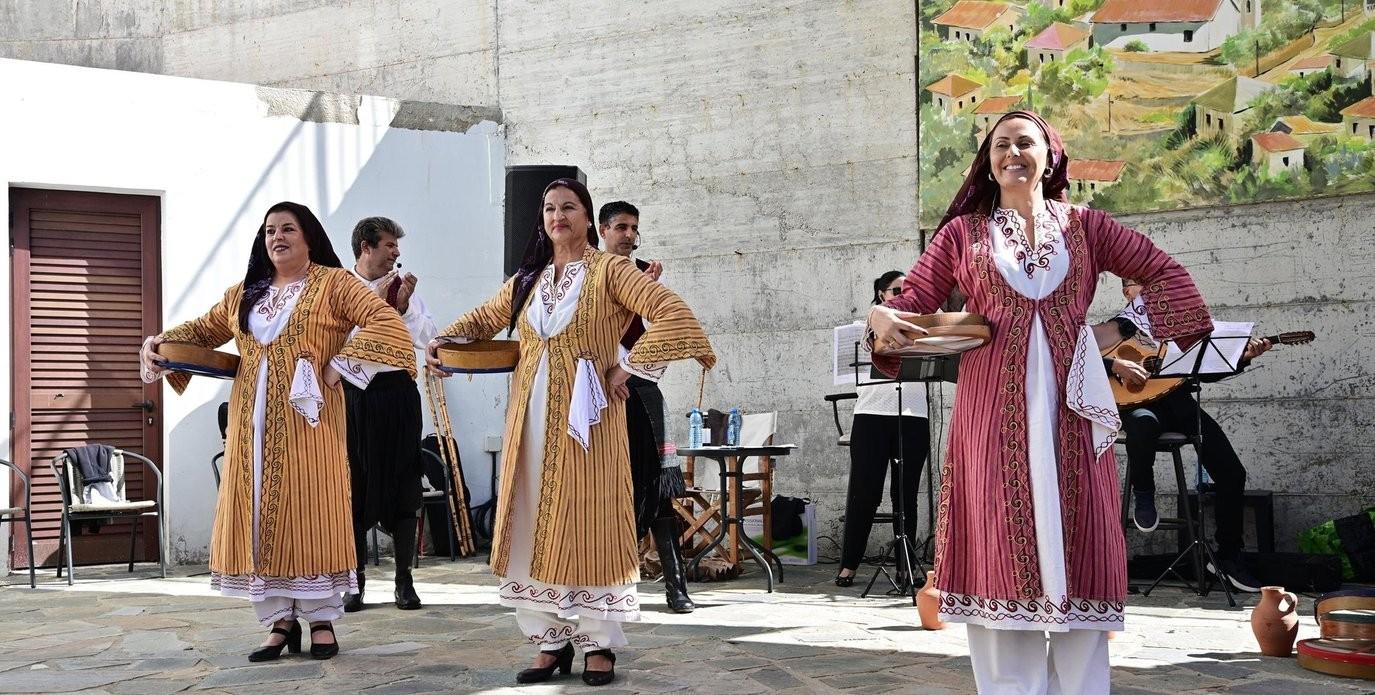
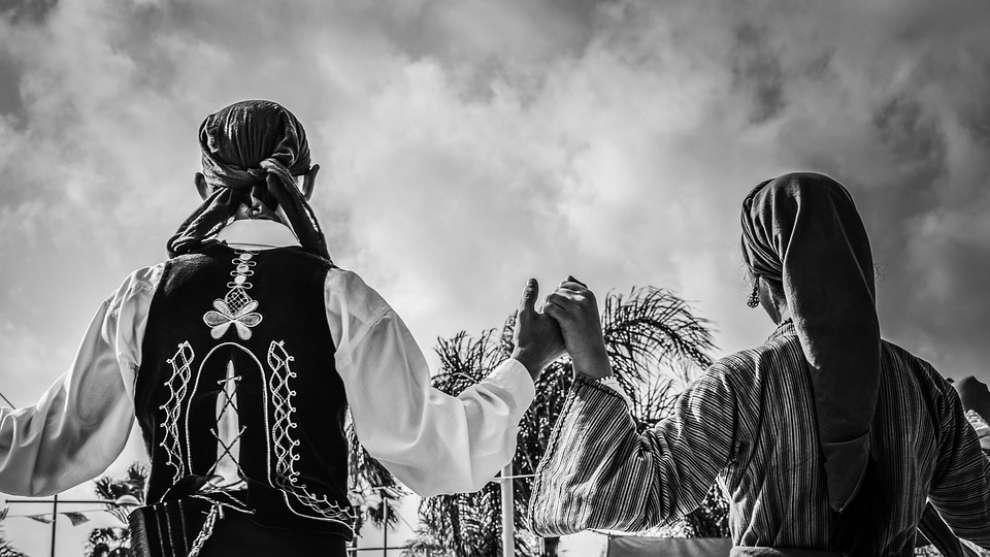
Both men's and women's traditional outfits consisted of an inner layer — «poukamisso». For men it resembled a white cotton long sleeved chemise, whilst women usually wore a longer underdress. On top of it, the women wore a special dress — «sayia» or «foustania», accompanied by a decorative apron — «podia» and an embroidered waistcoat — «sarca» or «gilekki». The men wore loose baggy Ottoman style trousers — «vraka» and a vest — «yilekkin». Both men's and women's outfits had a belt — «zoni» for women and «zostra» for men. And, of course, each had their own headpiece — a «mandili» kerchief for women and a «fesi» hat for men.
Traditional women’s clothing of Cyprus
The «Sarka»: the centrepiece of the female costume
Often referred to as a «living artifact», «sarca» vest is probably the most recognisable and the most visible element of a women's traditional attire. Made out of luxurious fabrics like fine wool, velvet, and, sometimes, silk, «sarca» serves as a decorative element of the garment. Tightly fitted around the waist, it added a structural and decorative touch to the outfit. Usually black or dark-red, «sarca» was lavishly decorated with dark-thread needlework, called «mavroplouma», as well as silver and golden embroidery. Striking in appearance, «sarca» emphasized the status of the woman, revealing her financial standing and embroidery skills.
Key components of the women's dress
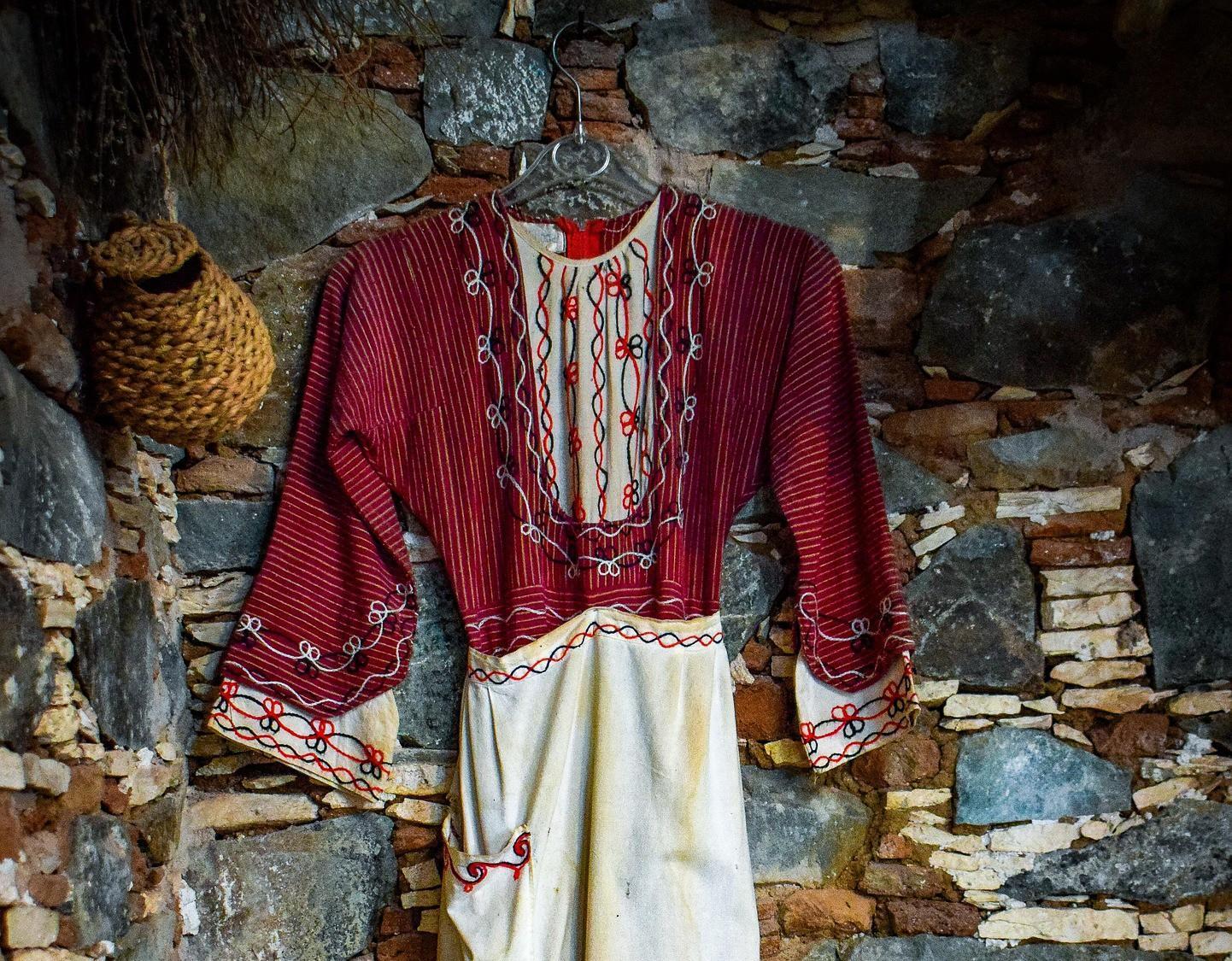
«Foustani/poukamiso» — the chemise or underdress. Made out of white linen or cotton, «poukamiso» is essentially the underdress, worn directly over the body. In ancient times it served two purposes: hygienic, by protecting the main garment from frequent washing, and aesthetic — by adding layers, decoration and modesty to the outfit. Only the hem, collar and cuffs of «poukamiso» could be visible from under the garment. For that reason they were beautifully embroidered using white threads with a traditional technique, called «asproplouma». In turn, a traditional dress — «foustani» is fitted and open at the front, which is similar to another Greek Cypriot dress — «sayia». Traditionally made out of expensive fabrics, such as silk, velvet or fine wool, «foustani» is one of the most decorative parts of the traditional costume. It is usually vivid in colour with striking silver or gold embroidery around the edges and sometimes decorated with sequins.
«Sarka/Gilekki» — the outer vest or waistcoat. Compared to a longer «foustani», «sarca» is a shorter outer garment, resembling a sleeveless waistcoat. Typically, it was made out of sturdy fabrics like wool, linen or cotton and intricately embroidered. Beneath the «sarca», most Cypriot women wore another layer — an inner long-sleeved vest, called «gilleki». Usually «gilekki» was made of wool, velvet or sturdy cotton and was less decorative, compared to the «sarca» vest. «Gilekki» was primarily used as a protective layer, adding structure and modesty to the whole outfit.
«Aproda/Podia» — the apron. Another essential part of the female costume is an apron. It is usually made out of white cotton and features two parallel lines of floral embroidery and a lace trim, and, of course, a pocket. «Podia» didn't only serve a practical purpose, it was also considered a status symbol for a Cypriot woman — the quality and richness of the embroidery were a testimony of the woman's sewing and homemaking skills, which were highly valued in the past.
«Mandili» — the headscarf. In the past, the Cypriot women all covered their heads with a decorative kerchief, called «mandili». Made out of fine cotton, this brightly coloured square piece of fabric was intricately decorated with patterns and embroidery. It accompanied women in daily tasks, such as cooking and harvesting. Whilst a more decorative «mandili» would be worn during festivities and on Sundays. Sometimes it was secured with a special decorative silver pin or crocheted flower, called «kaefitsa tou mandiliou».
«Zoni» — the belt. Worn over the outer dress, «zoni» is essentially a belt made out of luxurious velvet fabric, richly decorated with gold or silver thread embroidery. It is one of the most striking elements of the outfit that brings it all together and creates a streamlined silhouette.
Jewellery and accessories. «Gordini» coins on the head, part of dowry. «Komboskini» or «poti» — a choker necklace made of small gold beads or filigree spheres. «Kamelon» or «Zemeri» — longer necklaces with large gold coins with protective amulets and charms, called "Hamaylia" «Yerondika» or «kordoni» usually a long, heavy chain or braided cord with religious Christian elements, such as a cross or a small copy of the gospel. «Koumpoulles» or «almyra» — large golden earrings, traditionally they were round or made in a form of a crescent and sometimes decorated with filigree work and small precious stones. Bracelets and armbands — usually made of gold, these accessories were worn in pairs on the wrists, and, sometimes on upper arms over the sleeves.
Variations in women's attire: festive and every day
In the past there was a strong distinction between daily or working attire and festive costumes. Both versions were multilayered, however the everyday garments were made out of sturdy fabrics, like cotton and wool and tended to be quite modest in decoration and colour. The festive outfits, on the other hand, featured luxurious silks and velvet textiles, which were lavishly decorated with complex patterns and embroidery.

Traditional men's clothing
The «vraka» — the iconic baggy trousers
Known for their distinctive silhouette, «vraka» trousers are more than just a piece of clothing, they are an integral part of the national identity and culture. In fact, «vraka» is the key element that separates Cypriot men’s attire from the Greek national costume. These loose baggy trousers, made out of hand-made cotton, are the highlight of the men's traditional garment. Typically, «vraka» trousers are made from a large single piece of cotton fabric dyed in black. But they can also be made from light wool fabric for winter months. The fabric is folded into pleats and gathered at the top and at the bottom and secured with a cord — «vrakozoni» around the waist. In the past, «vraka» trousers were not only an
indispensable part of daily wear, they were also a status symbol for a Cypriot man. A looser silhouette with more pleats indicated a high financial standing of the wearer, since hand-made cotton was quite expensive back in the day.
Key components of the men's dress
«Poukamiso» — the shirt. Just like in women's outfits, men wore a base shirt or chemise, called «poukamiso». Made out of white cotton or linen, these shirts were more visible in men's garments and for that reason men’s «poukamiso» were more ornate, decorated with stitching or embroidery or puckered stripes.
«Yilekkin» — waiscoat. This brightly coloured striped or embroidered cotton waistcoat is an integral part of the Cypriot men's costume. Usually adorned around the edges with black lace trimming, featuring 4 silk thread buttons at the front and a decorative pocket, «yilekkin» is a true statement piece of the traditional men’s garment.
«Zostra» — the long belt. The men's garment was complemented by a wide woolen belt — «zostra». It was usually black with red stripes and long woven tassels. Whilst «zostra» was very striking in appearance, it was also practical — quite often Cypriot men would keep the dagger behind it, or tie a knitted purse to it.
«Fesi» — headwear. A «fesi» or «kypella» was usually black or dark brown and made out of felted wool. It resembled a shallow bowl with a flat top and slightly inverted brims, which protected the eyes from the sun whilst working in the fields. Its simplicity and practicality reflected the rustic Cyprus life. Sometimes, the Cypriot men would also wear a form of a kerchief or headscarf. But compared to a women's version, it is much plainer — usually it’s a black piece of cloth, without any embroidery, tied around the back of the head.
«Podines» — the boots. These rustic looking top-boots were usually made out of rough leather, such as pigskin or cowhide. Both practical and unassuming in appearance, «podines» were meant to be a working attire — perfect for agriculture or construction work. An interesting element of these boots were their soles with inserted iron rounded hobnails in the centre, which were used to create traction on slippery surfaces.

The tapestry of history and regions
Historical influences: Byzantine, Venetian and Ottoman threads
Just like the island's history, a Cypriot traditional costume presents an eclectic and vibrant mix of various cultural influences with Byzantine, Venetian and Ottoman imprints. Inspired by the Christian ideals of modesty and understated elegance, the early Byzantine era (330—1191 AD) has brought a multilayered aesthetic to traditional Cypriot costume. Underdresses and undershirts — «poukamiso», as well as flowy fabrics and a variety of layers are all remnants of this era. Even the name «sarka» is supposed to have been derived from the Byzantine tunic «sarkion». The headpieces for women (mantili) also echoed the Byzantine tradition of modesty and coverage. When the Venetians came to the island (1489—1571 AD), they turned it into a major
Mediterranean merchant hub. During this time Cypriot costume has gained opulence with luxurious fabrics: velvet, silk, brocade and lace. The Venetians have also introduced sophisticated embroidery techniques, such as «aurificium» — a gold-thread embroidery and Venetian lace, which has given rise to the infamous «lefkaritika» technique in Lefkara village. The silhouettes have also transformed: from flowy to more structured and fitted, accentuating the figure, especially in women's traditional costumes of the time. During the Ottoman rule (1571—1878), traditional Cypriot costume has gotten more ornate and decorative with lavish gold-thread floral embroidery, use of sequins, as well as coin jewellery and headpieces for women. The traditional loosely fitted baggy men's trousers — «vraka» also express these Middle Eastern motives. A traditional Cypriot costume is like a living encyclopaedia of history, culture and craftsmanship.
Regional variations across Cyprus (Karpassia, Paphos, Mesaoria)
As a marine hub, Karpassia was historically famous for luxurious garments, made out of precious silks and velvet and lavishly decorated with golden or silver thread embroidery. At the same time, Mesaoria was also attracting many merchants and artisans, resulting in sophisticated traditional outfits, mixing urban costume styles with Ottoman influences and latest European trends.
The Paphos region had its own unique visual language, featuring Fytiotika textiles and more practical rural costume aesthetics with less decorative elements, which were perfectly suited for work and daily life.
Craftsmanship: materials, colours and symbolism
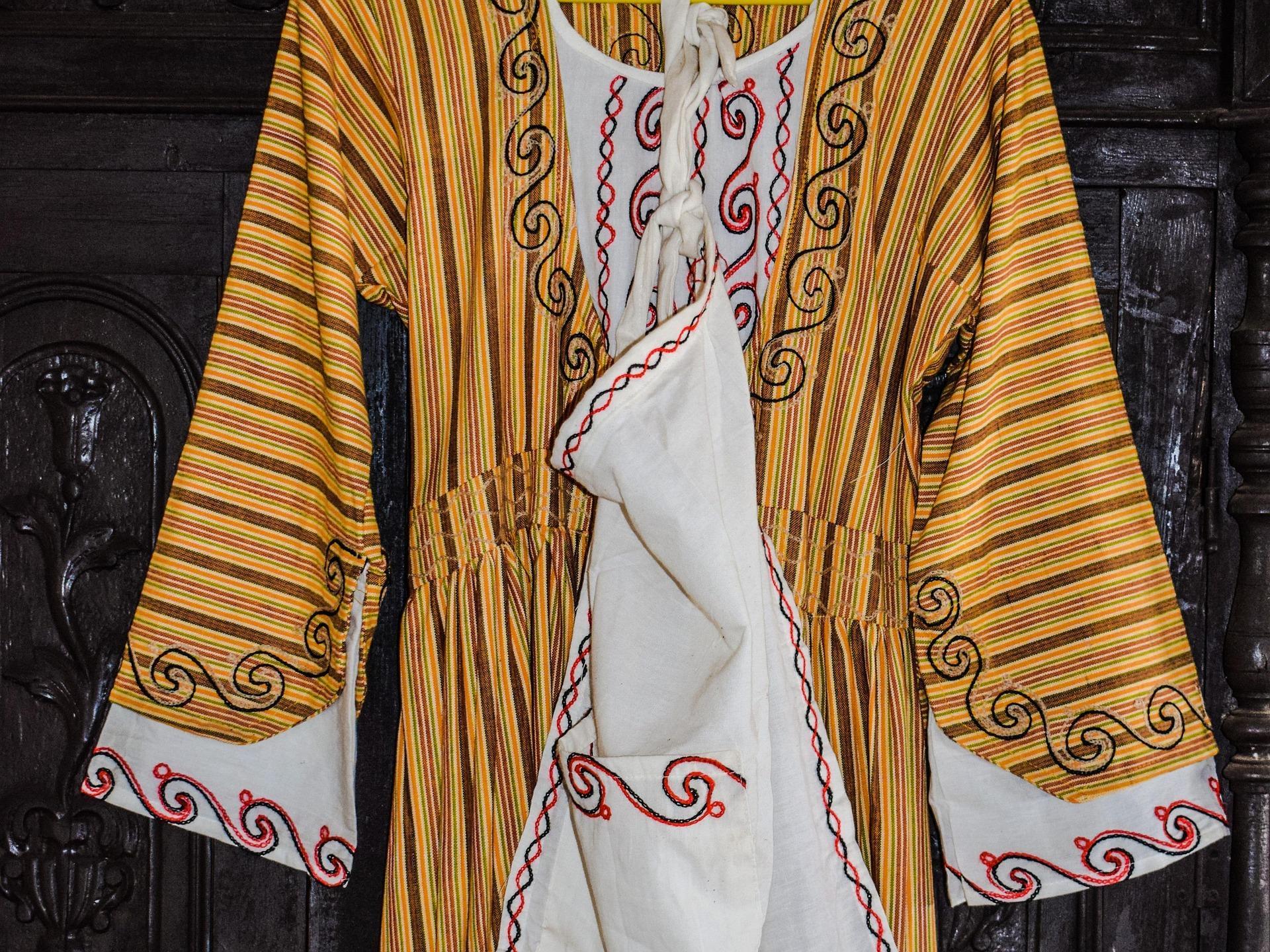
Traditional Cypriot garments were made of natural, mostly locally grown and produced fabrics, such as cotton, linen, silk and wool. For example, the undershirts, «poukamiso», were made from hand-woven and home-spun cotton or linen. Wool was derived from local sheep in the mountainous districts. Warm and versatile, wool was predominantly used for producing skirts, shawls, inner vests — «gilekki», and men's trousers «vraka». Whilst Cyprus had its own small-scale silk production, quite often the silks for garments were imported from the Middle East. In ancient times all fabrics were handmade and hand-dyed, which was a complex and time-consuming process.
The most common colours used for Cypriots garments were the following:
- Vivid crimson red hue, achieved by using cochineal or kermin insect dyes or madder root. Commonly worn by young maidens and brides, this particular shade was considered a symbol of life, fertility and prosperity. In the meantime, the darker red hue represented wealth and societal status.
- Dark blue, black or grey, which symbolised modesty, austerity, but also were practical for work and daily wear. Quite often worn by older women and working men, these colours were derived from walnut hulks, oak galls and iron mordant and indigo dye.
- A symbol of youthfulness — the green shade could not be easily obtained from natural dyes. Usually Cypriots would dye fabric yellow with turmeric and then add a little indigo, letting the colour mixing do its magic.
- Purple was one of the rarest shades to come by in the past and therefore was synonymous with royalty or aristocracy. In antiquity purple dye was derived from the secretion of the Murex shellfish, which was extremely scarce. So, in Cyprus they would normally use the double-dying technique — first dying fabric in indigo and then using cochineal or kermin to achieve the desired outcome.
- White colour symbolised purity — that's why traditional underdresses or undershirts remained undyed.
Common fabrics and weaving techniques
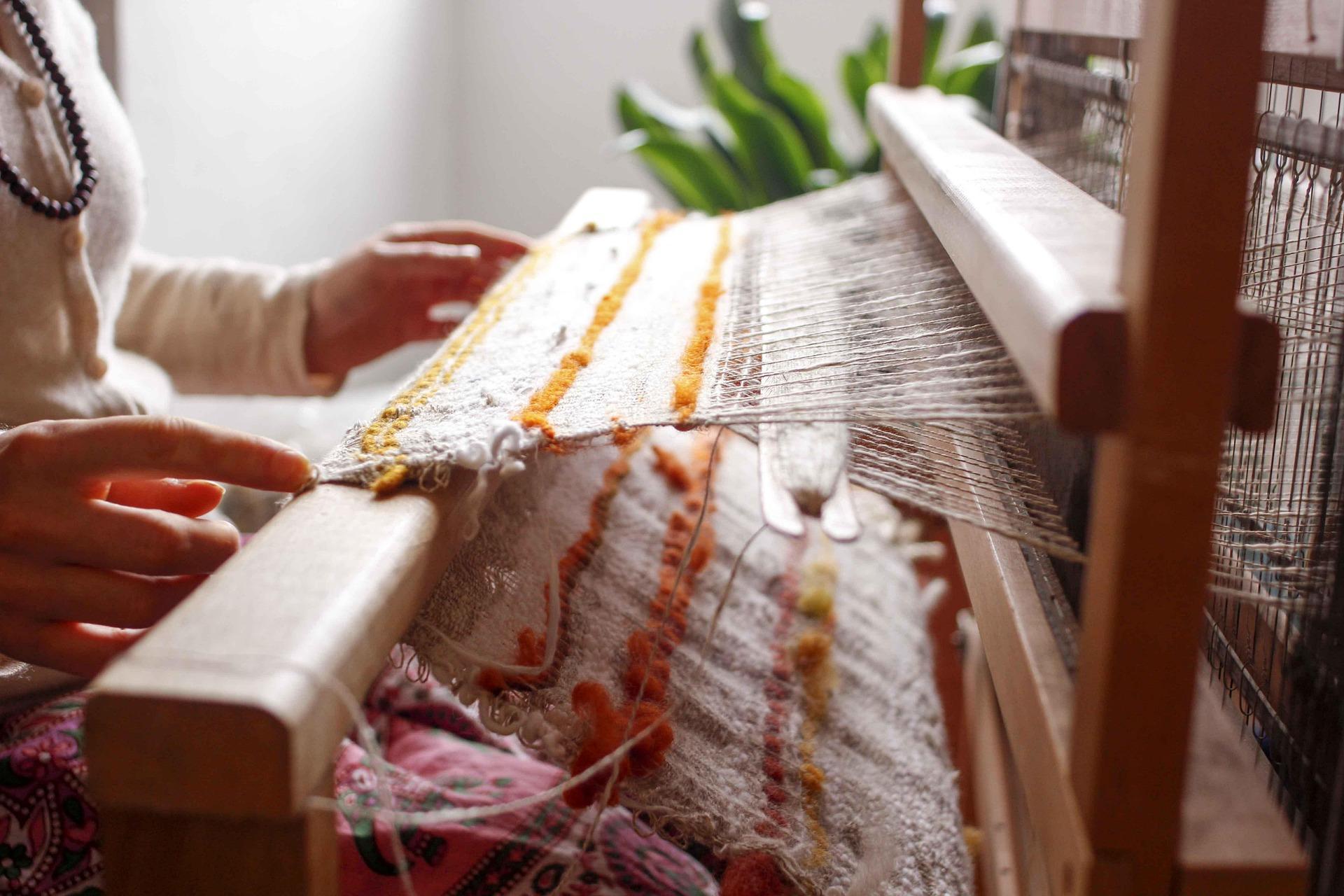
Weaving fabrics in ancient times was a very sophisticated and complex process. Without automation, everything was done entirely by hand, using basic, yet ingenious equipment: spindles and spinning wheels and looms, which look like a work of art in their own right. Considering the fact that every Cypriot «lady of the house» was responsible for creating her own textiles, it's hard not to marvel at the level of skill and ingenuity of the local women in the past. Here are some of the
most common weaving techniques for producing textiles for traditional garments:
- «Plain weave» technique was most commonly used for producing all types of fabrics: from linen and cotton to wool.
- «Weft pattern weave» (Fytiotika) — named after the village in Paphos, where it was created, this technique combines silky threads with cotton or wool, which creates a striking contrast.
- «Warp patterns» were quite commonly stripes and checks.
The meaning of colours and embroidery patterns
Traditional Cypriot decorative patterns present a fascinating array of Christian, Ottoman and pagan symbols. Here are some of the most common examples:
- The eternal knots, birds — traditional Byzantine patterns.
- Florals (roses, tulips, lilies) — symbolised love, divine grace and purity.
- Birds — were synonymous with good news, spirituality, love.
- «Kantaros» (staff) — protection against evil eye.
- «Asteria/elios» — star and sun motifs symbolized guidance, hope, cyclical nature of life.
- Interlocking keys and comb motifs — signified marriage and family ties.
- Cypress trees were used to indicate mourning, whilst vines meant life and happiness.
- Pomegranates — ancient symbol of prosperity, fertility and abundance.
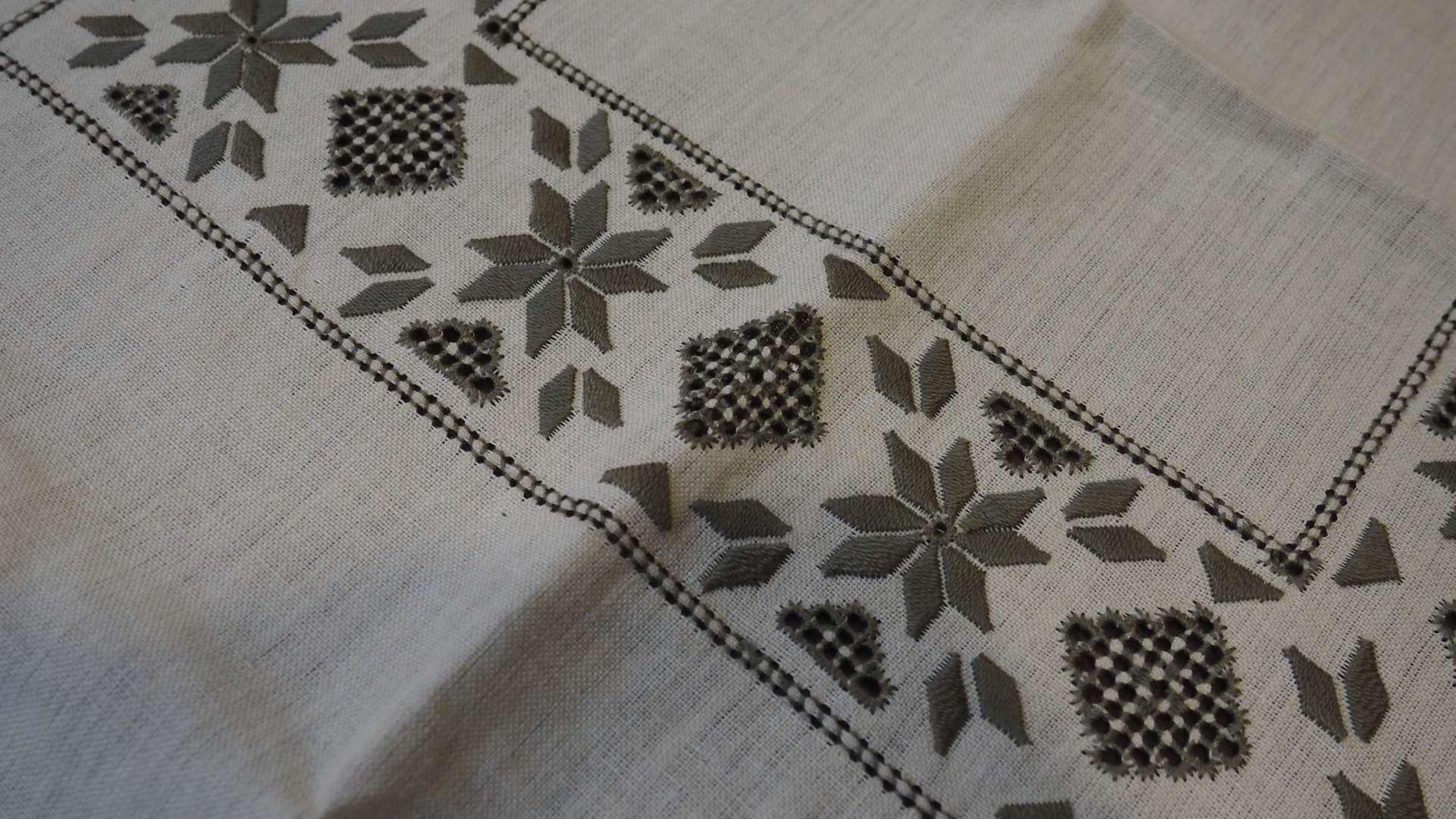
In addition, every region had its own set of unique embroidery styles and techniques. For example, the infamous «lefkaritika» lace featured geometric patterns, created using hemstitch and cutwork. «Mavroplouma» is the opposite of the «lefkaritika» technique, which was predominantly white-on-white. Essentially, «mavroplouma» is a black-on-black embroidery, consisting of a three-dimensional pattern, created using a silk thread on a velvet. There were other three-dimensional embroideries too. For instance, an appliqué with corded embellishment technique, or, a uniquely
Cypriot relief embroidery, called «ladario». Also, silver or gold-thread embroideries were quite common, especially on the outer vests and waistcoats.
The colour of the decorative motifs was also important: crimson red symbolised fertility and abundance; silver and gold — prosperity; white — purity and innocence; green — youthfulness; blue stood for truth, fidelity and stability, whilst black embroideries could symbolise maturity, trustworthiness, and, sometimes, mourning.
The artisans: preserving the living heritage
Despite the technological advances, the Cypriots are preserving the ancient crafts. And even today, you can find groups and cooperatives of local women who keep this tradition alive.
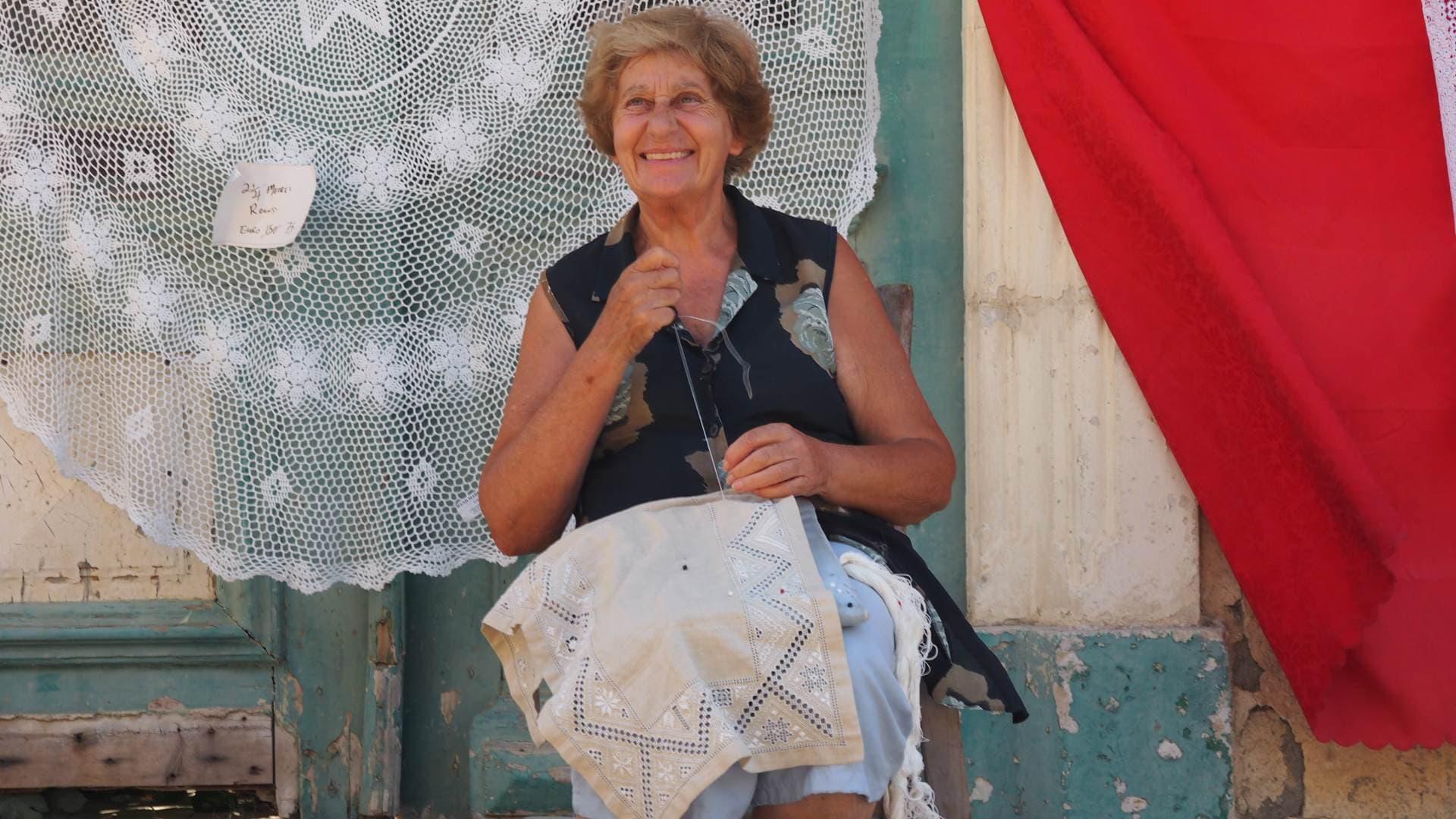
One such collective is Fytiotika Weavers — a group of elderly women from Fyti village continuing the legacy of their unique weaving styles. In addition, there are also government public workshops, conducted by skilled weavers, that are available for everyone interested to learn this ancient craft. In addition, small cooperatives and workshops can be found throughout Cyprus villages, each teaching its own unique technique. For example, if you visit Lefkara, you can observe local ladies sitting outside their houses and working on their «lefkaritika» lace. Also, many young local artists and designers are using traditional textiles and embroidery techniques as an inspiration in their works.
Traditional Cypriot clothing today
Where to see authentic costumes
Whilst fashions change like seasons, traditions stay intact. And, although you might not be able to see traditional attire in daily life, you can easily spot Cyprus traditional costumes during numerous local festivals and celebrations. In addition to national festivals, every village has its own festive events, where singers or dancers would be wearing traditional costumes.
There are also numerous museums where you can see the historical heirlooms: Cyprus Folk Art Museum, Cyprus Museum of Natural History and Leventis Foundation in Nicosia. Many local villages also have museums featuring traditional garments, such as Fyti Weaving Museum, as well as other beautiful Cypriot villages — Omodos, Lofou, Kalopanayiotis, just to name a few.
Influence on modern Cypriot fashion and design
Recently there's been a very positive trend on the island with young locals coming back to their roots and taking interest in traditional crafts and way of life. That's especially visible in the fashion industry with many young local designers reinterpreting the traditional costume in a refreshingly innovative way and giving it new life. Some prominent names to look out for are Efi Tsatsarou, Ioanna Irakleous, Eirini Georgiou, just to name a few. One of the interesting examples of sustainable fashion approach is Eleni Erakleous with her fashion label EREL, who collaborates directly with local «lefkaritika» artisans.
A guide to buying souvenirs and replicas
First of all research the regional variations and decide which style suits you best: an urban and sophisticated garment from Nicosia, an opulent fabric from Karpassia region or a rustic traditional costume from Paphos.
Secondly, consider whether you are prepared to invest in an antique piece, or prefer a contemporary copy.
For antique/vintage pieces search for antique dealers and auctions. Make sure to check if they have proper authenticity/provenance documentation. Sometimes, if you're lucky enough, you might find locals willing to sell their family heirloom pieces.
For a good quality replica it's a good idea to approach the Cyprus Handicraft Service, or local artisan villages and collectives.
And, finally, check the quality of the item. Don't be afraid to ask questions about which region the item came from, which textiles have been used and, also check whether the fabric is handwoven or not. Pay a special attention to the seams — are they hand-sewn or have a machine stitch? Be weary if the item price is too low for a handmade piece. Also, avoid synthetic fabrics.
Frequently asked questions (FAQs)
What's the national dress of Cyprus?
The national women's costume is very elaborate and consists of many pieces. The dress itself is called «sayia», which is essentially a long tunic with beautiful embroidery. It is usually worn with an apron, a belt and a waistcoat on top.
What is a «vraka»?
«Vraka» refers to the name for traditional men's pleated trousers with a distinctly Ottoman-style loose fit and baggy silhouette.
How did Cypriots dress in the past?
The Cypriot costume in the past was an entire ensemble, consisting of many layers — each serving its own purpose. The inner layers were plain and made out of cotton or linen, whilst outer layers were lavishly decorated with ornaments and embroidery.
Is traditional Cypriot clothing still worn today and where?
Even though Cypriots do not usually wear their traditional costumes in their daily life, you can still see those garments during festivals, fairs and events both in cities and local villages. Just keep track of the calendar to find events near
you.
What are the main differences between festive and everyday costumes?
Festive costumes are also more elaborately decorated and often feature more expensive fabrics, such as silk or velvet. Whilst the traditional everyday clothing was more simple in style and made out of sturdy fabrics, such as cotton and wool.
What materials are most commonly used?
Most traditional Cypriot garments were made out of locally sourced materials, such as linen, cotton and wool. At the same time some expensive imported fabrics, like fine silks and velvet were also used.
The enduring legacy of Cypriot attire
A Cypriot traditional costume is more than a fashion statement, it is a story of the island and its people. In the past, producing a garment was a time-consuming and laborious task: from the fields to the loop — all the fabrics were created entirely from scratch and hand-dyed using only natural pigments and plant dyes. Later, they were carefully embroidered using complex needlework techniques. A woman's outfit was not only an indication of her financial and societal status, but also a testimony to her prowess as a homemaker.
Today, as the interest in traditional roots and slow living grows, more and more local young people desire to learn about the island's textiles and crafts. And, the legacy of the national costume carries on throughout centuries, one thread at a time.
Read also: