The mountains of Cyprus tell a completely different story from the coastline with its hotels and crowds of curious tourists. In the forests of Troodos, ancient bridges still stand—once crossed by mules carrying copper. Today, Cyprus’s Venetian bridges look as if they have always been part of the natural landscape, even though they were originally built out of pure engineering necessity.
A trip to these bridges is a perfect excuse to escape the noise and rush and immerse yourself in history. It is quiet here—only birdsong, the sound of the river, and the wind moving through the crowns of towering trees. All of this lies ahead: mysterious crossings and routes that lead through centuries.
Traces of the “Camel Route”: Historical Background
During the Venetian period (late 15th century), trade flourished. To transport grain and ore across the mountains to the port of Paphos, ordinary paths were not enough—solid roads and bridges were required. This is how the network known as Kamilostrata, meaning “the camel road,” came into being. Every medieval bridge was built to be exceptionally strong, as heavily loaded caravans passed over them.
The structures were constructed from local stone, most often using a single-arch design. This allowed them to withstand strong water flow during floods. Remarkably, despite earthquakes and the passage of centuries, many Venetian bridges are still standing today and remain largely unchanged.
Tzelefos Bridge: The Star of the Forest Trails
The most famous, largest, and most accessible bridge in this group is Tzelefos Bridge (Kelefos) in the Paphos Forest. It spans the Diarizos River in a dense pine forest, not far from the villages of Agios Nikolaos and Fini.
This is a classic single-arch bridge with a span of over 10 meters. The stones are perfectly fitted together. The setting is distinctive: the Venetian Tzelefos Bridge stands in a damp, shaded area, so its masonry is covered in soft moss, and the air smells of wet earth and pine needles.
For photographers, this place is a real gem. Sunlight filtering through the treetops creates a mystical play of light on the old stonework. A parking area is located near the bridge, and in summer it is accessible by any passenger car. In winter, access can be more challenging: heavy rains cause the river to swell, and the old Venetian bridge looks far more dramatic against the rushing water.
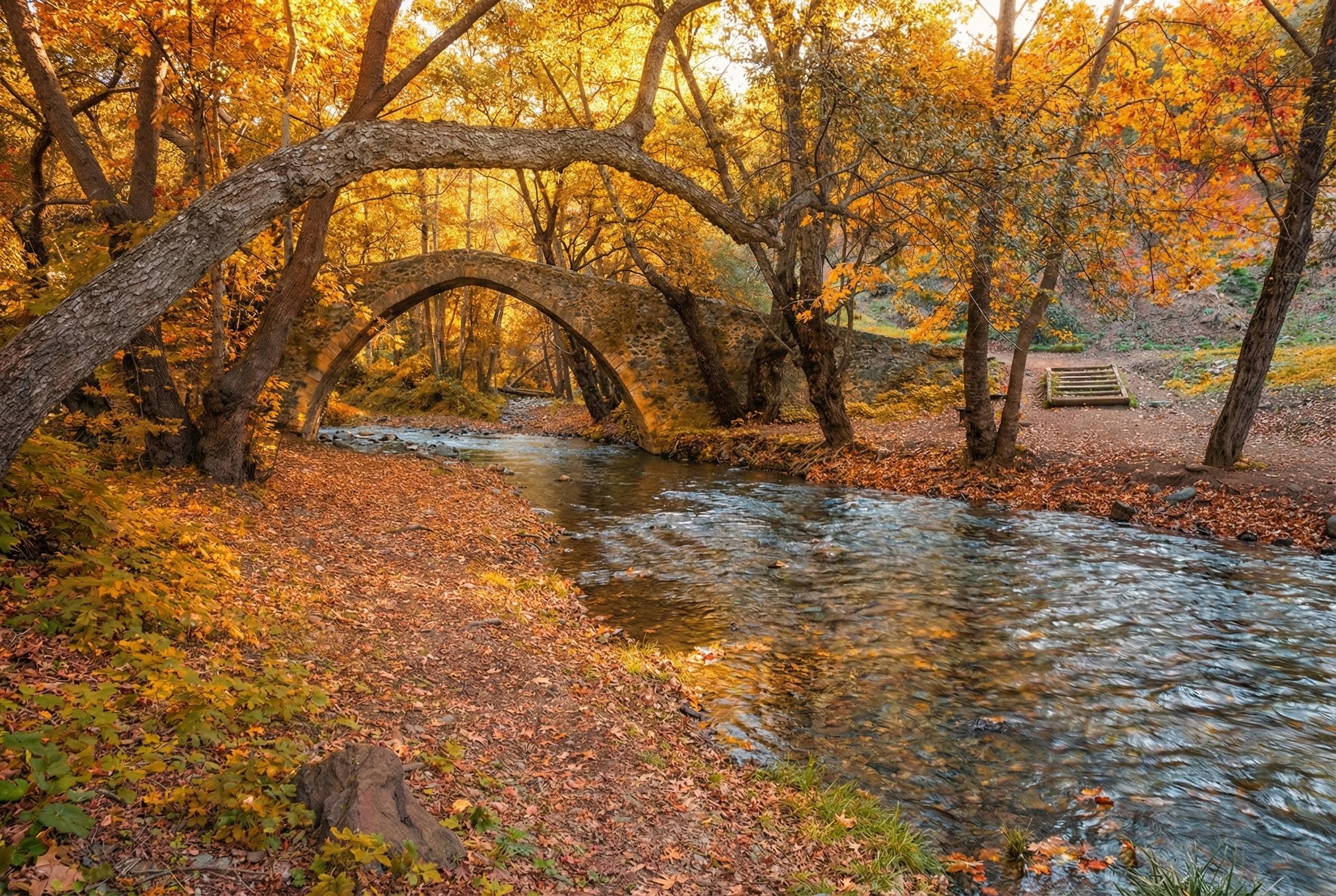
Elias Bridge: A Hidden Gem of the Diarizos Valley
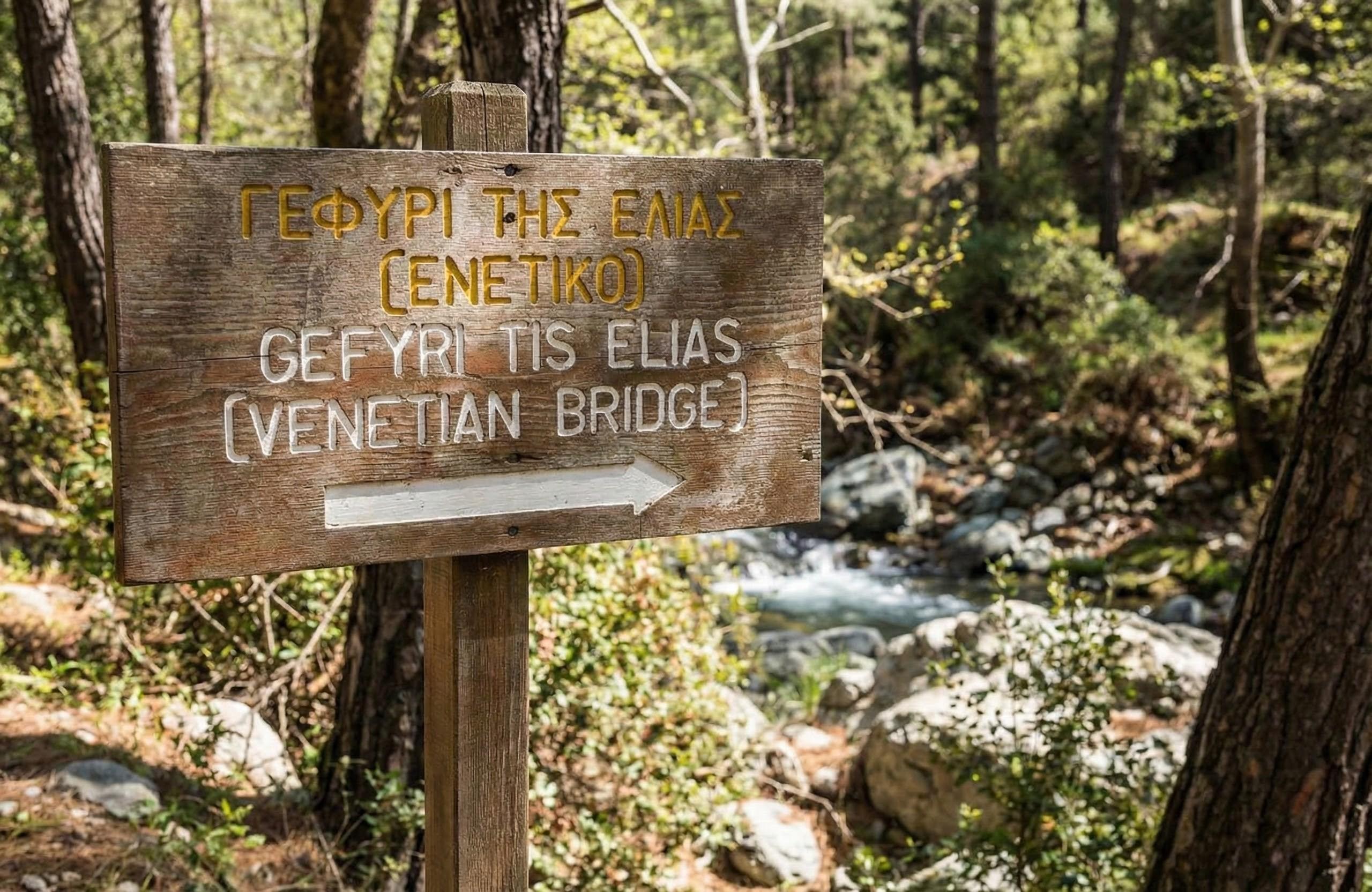
If you continue a little further along the river, you will find Elias Bridge (sometimes called Elia Bridge). It is only a couple of kilometers from Tzelefos, yet it is rarely visited. Its original name, Gefiri tis Elias, translates as “Olive Bridge.” It is believed that a prominent olive tree once served as a landmark for travelers.
Elias Bridge is easy to recognize by its relatively sharp, steeply rising arch. It is considered one of the oldest Venetian structures in the area.
Getting there is more difficult than reaching Tzelefos, but it is well worth the effort. Elias Bridge is literally immersed in greenery. Centuries-old plane trees intertwine their canopies over the water, forming a green tunnel. At first glance, the bridge appears thin and almost fragile, but this is an illusion—it has stood for around 500 years without collapsing.
Historians still debate the exact date of its construction, but the craftsmanship is undeniable. For the best photographs, walk down to the water: from below, Elias Bridge looks most impressive (in summer, the water there is quite shallow). Guidebooks often pair Elias Bridge with Tzelefos as a must-see stop on a scenic walk.
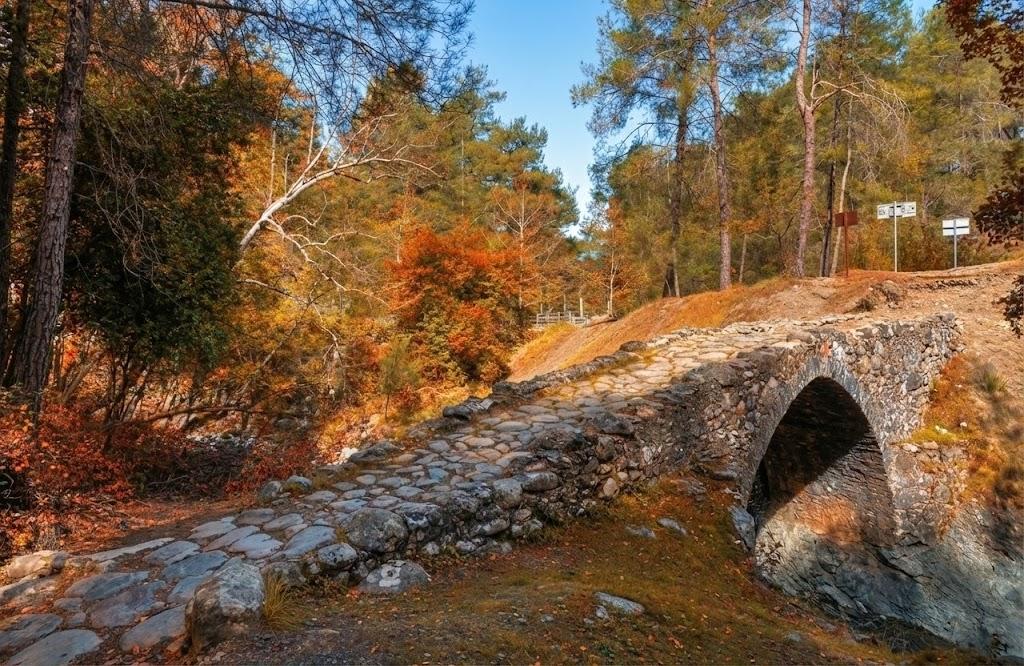
The Hard-to-Reach Roudia Bridge
The most “wild” and secluded of Troodos’s main crossings is Roudia Bridge. It lies deep within the Paphos Forest, near the village of Vretsia. Reaching it requires a vehicle with high ground clearance, as the route runs along a rocky dirt road.
This majestic bridge features an impressive arched span. The surrounding landscape feels untouched: rugged cliffs, dense undergrowth, and complete silence. Roudia Bridge is an ideal destination for those seeking solitude and wanting to see Cyprus much as it was 500 years ago.
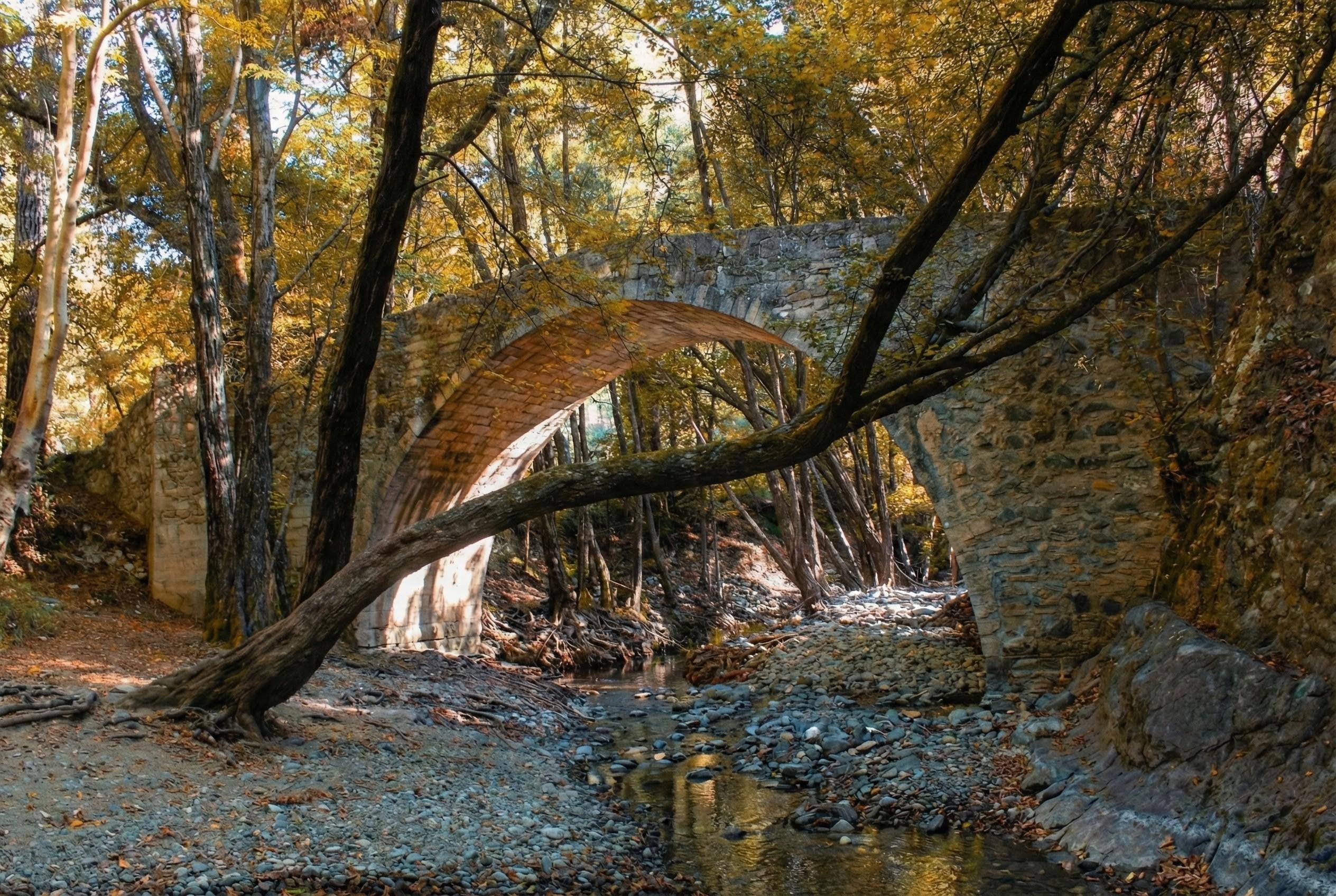
Skarfos Bridge: A Forgotten Legend
Another old bridge worthy of attention is located near the village of Simi and the settlement of Skarfos, between the small villages of Evretou and Sarama. This is Skarfos Bridge, dated to 1618, as confirmed by an inscription carved into the stone. It is the oldest dated bridge on the island.
Skarfos Bridge differs from its “counterparts” in architectural style. Its arch is more gently sloped, and the stonework appears rougher—yet no less sturdy. In the past, a road connecting Paphos and Polis ran through this crossing. Today, the riverbed has changed, and water does not always flow beneath the arch, but the structure has retained its unique charm.
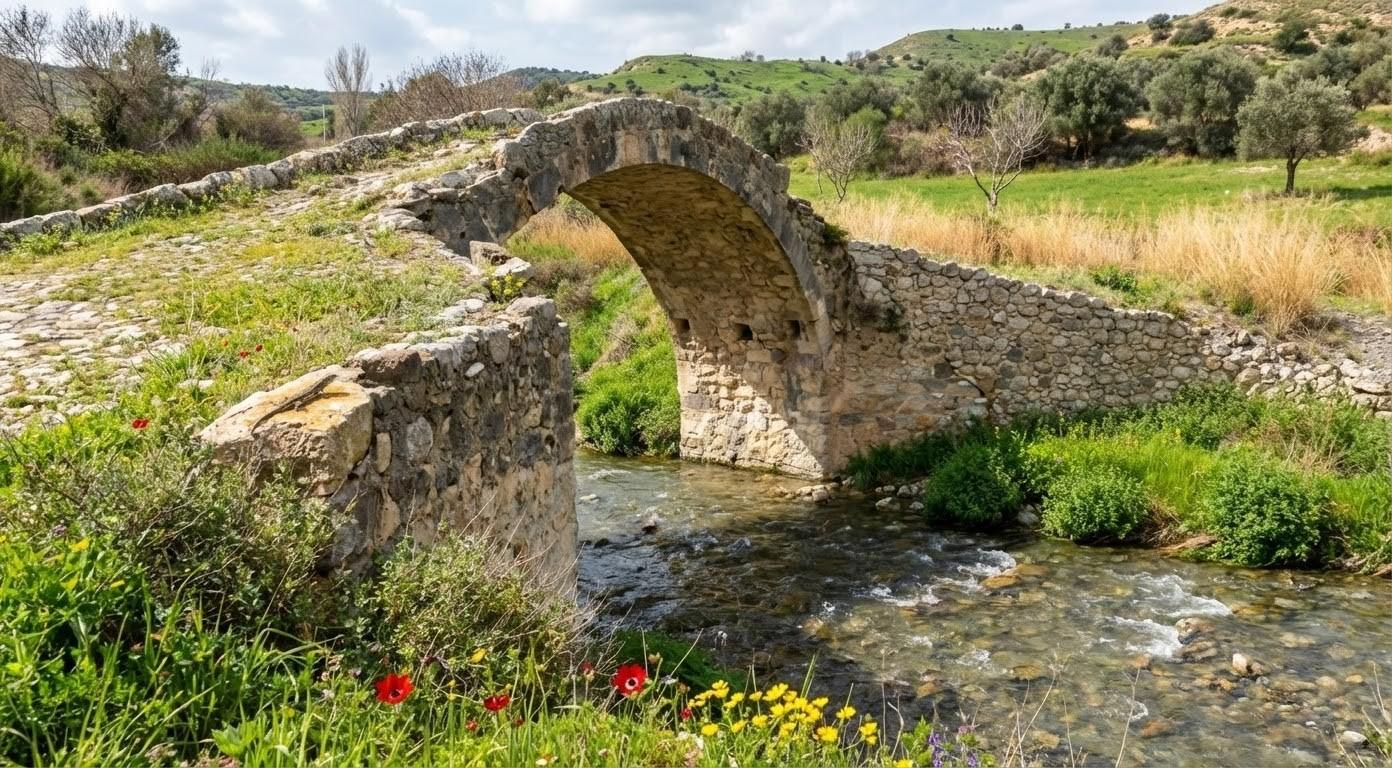
Akapnou Bridge: The Double Arch
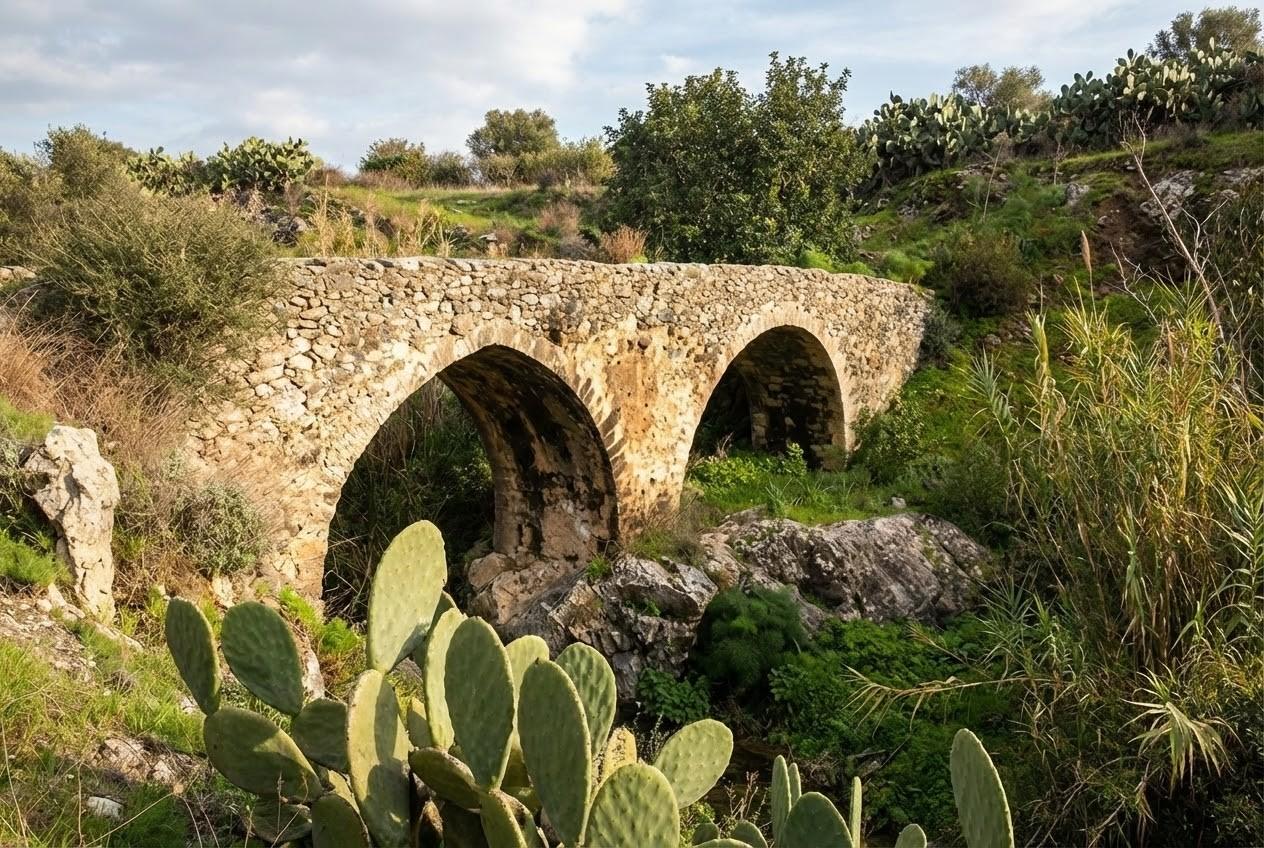
In the Limassol district, near the village of Akapnou, stands the unique Akapnou Bridge. Unlike most Venetian bridges, which typically feature a single arch, this structure is often described as a double bridge or a construction with two spans. While classical Venetian style usually favors a single arch, Akapnou stands out for both its structure and location.
The Akapnou Bridge lies away from popular tourist routes. This stone bridge served local residents for centuries, connecting them with the outside world. A visit here can easily be combined with a trip through the mountain villages of the region.
Practical Tips: When and How to Look for the Bridges
When planning your trip, it is important to consider seasonality. In summer, rivers often dry up, and the picturesque bridges appear against a backdrop of rocky riverbeds and greenery. In winter and early spring, the landscape changes dramatically: the riverbeds fill with water, creating powerful flows. However, during the rainy season, dirt roads may become impassable for standard passenger cars.
Transport. A regular car is sufficient to visit Tzelefos Bridge. To reach Roudias Bridge or to travel along the entire “Camel Route,” an SUV is strongly recommended. A full tank of fuel and appropriate insurance are also advisable.
Clothing. Footwear should be warm, comfortable, and non-slip. Stones near the water are often covered with moss and silt.
Navigation. Mobile reception in the mountains is unreliable. It is best to download offline maps in advance, marking the names and locations of the bridges.
Searching for Lesser-Known Locations
In addition to the famous trio, the island is home to many lesser-known bridges. Historians believe that five centuries ago the network was far denser, but earthquakes and modern road construction destroyed most of these structures. Today, experts identify around 13–15 historic bridges that have survived to varying degrees.
Such crossings are often hidden in reeds and dense vegetation near abandoned villages. For example, in the Xeros Valley or at the foothills of the Troodos Mountains, you may come across ruins that are not even marked in popular guidebooks. Searching for your first “found” bridge can become a real adventure, where the process of exploration itself is the reward.
Sometimes the original name of a structure has been lost to history, and locals simply call it an “old crossing.” When exploring Cyprus’s landmarks, pay attention to brown road signs that lead deep into forested areas.
Atmosphere and Photogenic Appeal
Why are travelers so drawn to these bridges? The answer lies in the blend of nature and history. Gray and ochre stone contrasts beautifully with emerald greenery and turquoise water (if you visit in the right season). A stone bridge is a ready-made setting for a striking photo shoot.
The imposing Tzelefos Bridge is especially beautiful at sunset, when shadows lengthen and the water takes on a golden hue. Elias Bridge looks particularly dramatic in overcast weather, when dense mist envelops the gorge, lending the place an air of mystery.
Each old Venetian bridge holds its own story. Whether it once carried a busy trade route or now serves as a quiet footpath, these structures remain silent witnesses to past eras.
A Route for the Soul
Traveling along ancient crossings is an alternative way to get to know the island more deeply. It is a chance to touch stonework that is 500 years old, sit by a mountain river, and enjoy the silence. Whether you choose the popular Tzelefos or venture into the forests in search of the remote Roudias, the Venetian bridges of Cyprus leave a lasting impression. These are the landmarks that reveal the island’s true, non-touristic soul.
When traveling through Cyprus’s cities, it is worth setting aside one day to head into the mountains, find a place that resonates with you, and see how the engineering achievements of the past coexist harmoniously with the wild nature of the present.
Read also: