It’s no secret that Cyprus is an ideal destination for seaside holidays at any time of the year. It is also a unique island that impresses with its natural diversity. And although, compared to tropical locations, Cyprus has virtually no large predators or truly deadly creatures, it is still wise to stay alert and become familiar with some of the island’s more surprising inhabitants. Let’s take a closer look at the potentially dangerous creatures that live on wild beaches or hide in the depths of the surrounding seas.
Jellyfish
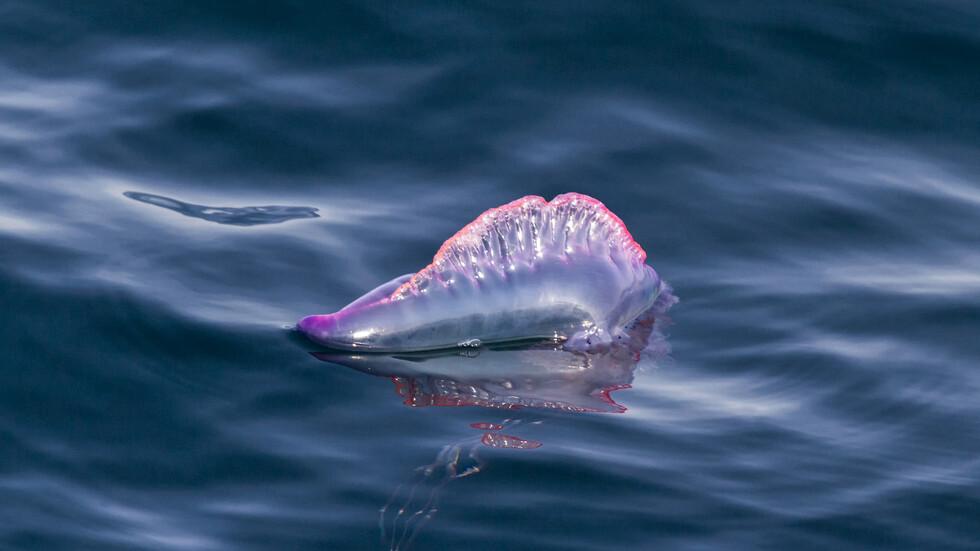
Several species of jellyfish inhabit the waters around Cyprus. Most of them pose little danger, but there is one species whose sting can be particularly unpleasant: the purple jellyfish (Pelagia noctiluca).
The bell of the purple jellyfish is about 12 cm in diameter, but its tentacles can extend for several meters. As its name suggests, it has a pink, purple, or reddish hue that can glow in the dark, and its bell is covered with raised spots. Its appearance alone seems to warn that contact may be dangerous.
Jellyfish do not actively attack humans, but even accidental contact can trigger the release of microscopic toxin-filled cells from their tentacles. The venom of the purple jellyfish causes intense burning and swelling and may also lead to severe allergic reactions, nausea, and fever.
Habitat
Purple jellyfish usually live in the open waters of the Mediterranean Sea, but warm currents often carry them closer to the Cypriot coastline. They can be encountered near many beaches, especially on the southeastern coast of the island. Their peak activity typically occurs during the warm months, from late spring to mid-summer.
A less toxic species is the compass jellyfish (Chrysaora hysoscella). This jellyfish has a bell measuring about 20–30 cm in diameter and long tentacles. Its coloration ranges from yellowish to light brown, and its bell is decorated with radial markings resembling a compass.
Its venom is milder than that of the purple jellyfish, though it can still cause pain, redness, and swelling. Unlike the purple jellyfish, the compass jellyfish prefers cooler waters and is a relatively rare visitor to Cypriot seas. It is most often found near rocky beaches or in open Mediterranean waters.
First Aid
If you are stung by a jellyfish, leave the water immediately and rinse the affected area. Only use seawater—freshwater can worsen the spread of the toxin. Carefully remove any remaining tentacles with tweezers or improvised tools. Vinegar can be used to help neutralize the toxin. If symptoms worsen, seek medical assistance.
Sea Urchins
With their bright colors and unusual shapes, sea urchins add beauty to the seabed and rocky reefs. However, behind their appearance lies a danger: their spines are extremely sharp and may contain toxins. Fortunately, not all sea urchins found around Cyprus are poisonous.
The most dangerous species in Cypriot waters is the long-spined sea urchin (Diadema setosum). This is an invasive species originally from the Red Sea, which has become increasingly common in the Mediterranean due to rising sea temperatures. Its venom is of moderate toxicity, but the main danger lies in its long, brittle spines, which can penetrate deep into the skin and easily break off inside it.
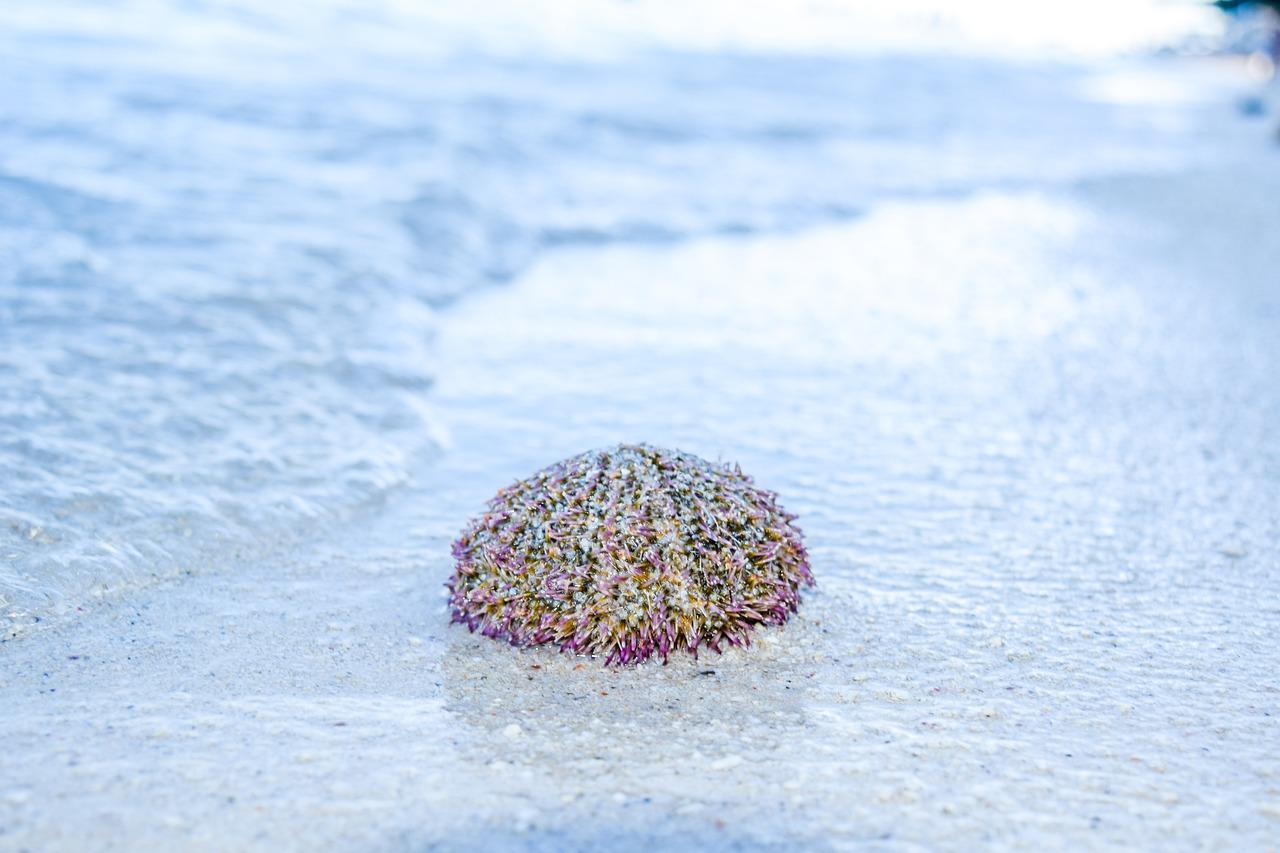
Another very common local species is the black sea urchin (Arbacia lixula). Despite its name, it may also appear dark purple. This species is not venomous, but its spines are extremely fragile and can easily snap off under the skin upon contact, sometimes leading to infection. The black sea urchin is one of the most frequently encountered species around Cyprus. Even in shallow water, it is easy to step on one without noticing it.
Another common local species is the purple sea urchin, whose color ranges from dark purple to brown or even green. It has shorter spines and can sometimes be mistaken for a rock or coral. This species is moderately venomous, and its sting causes pain and discomfort.
Habitat
Sea urchins are typically found on pebbly beaches, along rocky shores, in shallow waters, and near reefs. They often lodge themselves in crevices, on rocks, or under boulders, so it’s best not to touch underwater rocks with your hands.
They are most commonly encountered along the coasts of Peyia, Akamas, and Kissonerga in Paphos; Governor’s Beach and Ayios Tychonas in Limassol; Cape Greco and Konnos Bay near Ayia Napa; and the shores of Oroklini and Dhekelia in Larnaca.
First Aid
Do not rub the affected area or try to squeeze out the spines. Use tweezers or similar tools to remove them carefully. Soak the affected area in moderately hot water for 30 minutes to one hour. Disinfect the wound. If itching or discomfort occurs, antihistamines may help. If the spines are embedded too deeply to remove on your own, seek medical assistance.
Fireworms
In the waters around Cyprus, you may also encounter unusual creatures known as fireworms, scientifically called Hermodice carunculata. Reaching 10–30 cm in length, they are indeed relatives of worms that have adapted to marine life over the course of evolution. At first glance, fireworms look soft and harmless: their bodies are covered along the sides with numerous fine bristles that resemble fluffy fur. Their bright green, orange, and reddish hues immediately catch the eye.
However, do not let their cute, fuzzy appearance deceive you. If you touch these bristles, you will instantly feel a strong burning sensation, as countless microscopic spines penetrate the skin and begin releasing toxins. Although their venom is not life-threatening, it can cause significant discomfort, including pain, swelling, and redness that may last from several hours to several days.
Habitat
Fireworms typically hide in calm waters such as bays, lagoons, and reefs. They are most often spotted near rocky beaches and nature reserves around the Akamas Peninsula, Cape Greco, as well as wild beaches of Protaras, Paphos, and Larnaca. In contrast, popular sandy tourist beaches are far less attractive to these creatures. As a result, fireworms are mainly encountered by divers and snorkelers. Their most active period is during the warmer months, from spring through autumn.
First Aid
To remove microscopic spines, use adhesive tape: press it onto the affected area and gently peel it off. Rinse the area with seawater only. Do not use fresh water, as it may worsen the reaction.
Apply vinegar to help neutralize the toxin. If symptoms worsen, seek medical assistance.

Dangerous Fish
There are no fish in Cyprus that are deadly to humans. Even local sharks are relatively small and harmless. The only potentially dangerous species is the blue shark, but it usually lives in open waters and rarely approaches the Cypriot coast. Therefore, the likelihood of encountering a shark here is extremely low.
That said, there are a couple of fish species that may still cause problems:
If you enjoy diving or snorkeling, you may come across the weever fish (Trachinus). It has a sandy-colored body up to 20 cm long and a dark dorsal fin that releases venom. The weever fish often buries itself in the sand, leaving only its eyes and fin exposed—making it easy to accidentally step on.
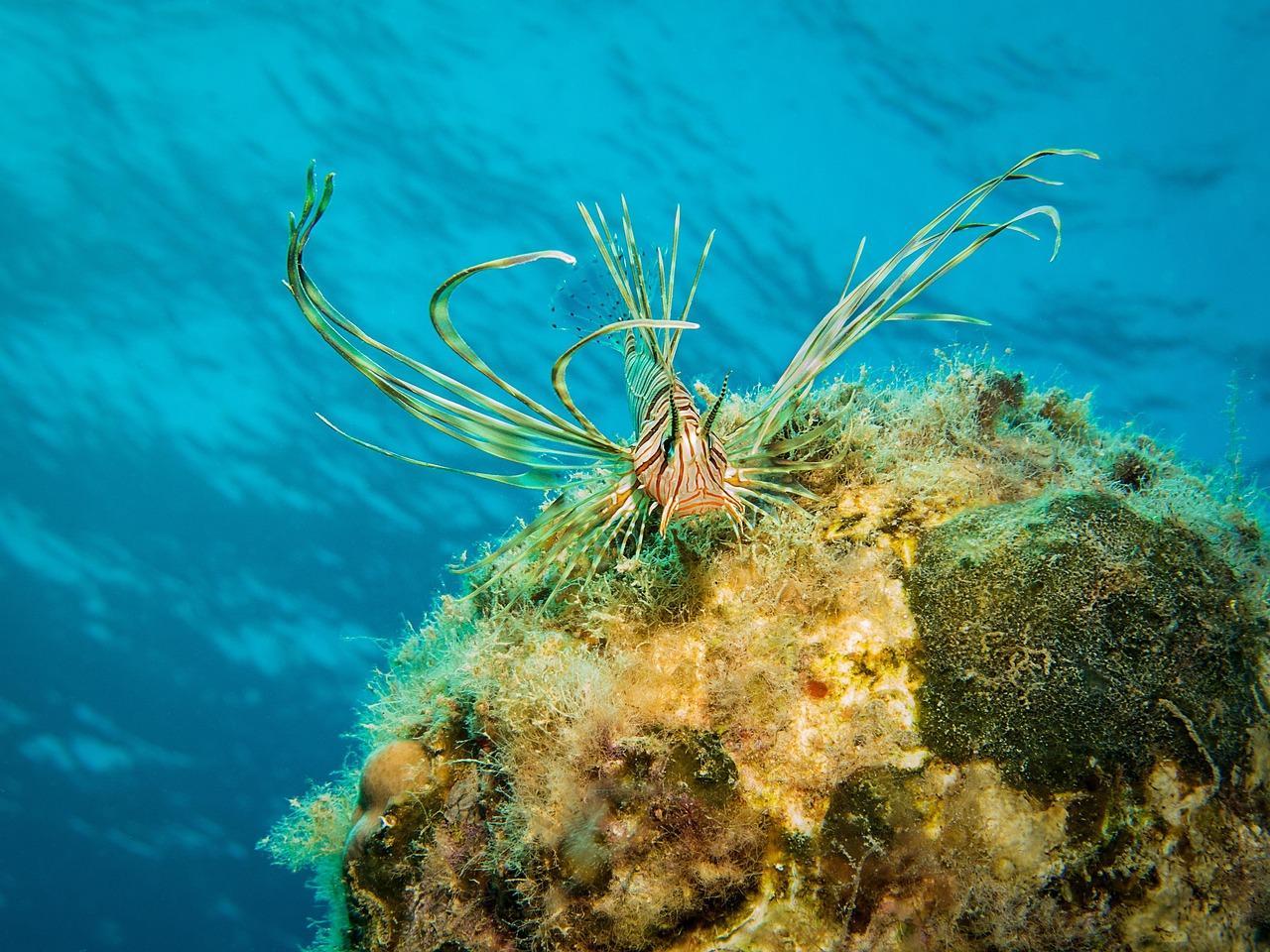
You should also be cautious of the lionfish (Pterois miles). It is visually striking, with bright white, brown, and orange stripes and a large spiny dorsal fin.
Habitat
Both species inhabit shallow waters, rocky beaches, reefs, and underwater rocks. You are unlikely to encounter them on sandy beaches, but extra caution is advised around pebbly shores and rocky lagoons.
First Aid
Exit the water immediately. Rinse the wound with seawater. Remove any spine fragments with tweezers if possible. Immerse the affected area in hot water (40–45°C / 104–113°F) for at least 30 minutes. Disinfect the wound and cover it with a bandage. Seek medical attention if symptoms worsen.
Snakes
On popular sandy beaches, the chance of encountering a snake is virtually zero. However, if you prefer wild rocky beaches, coastal nature reserves, or enjoy exploring cliffs and crevices, you should be prepared for possible encounters with reptiles.
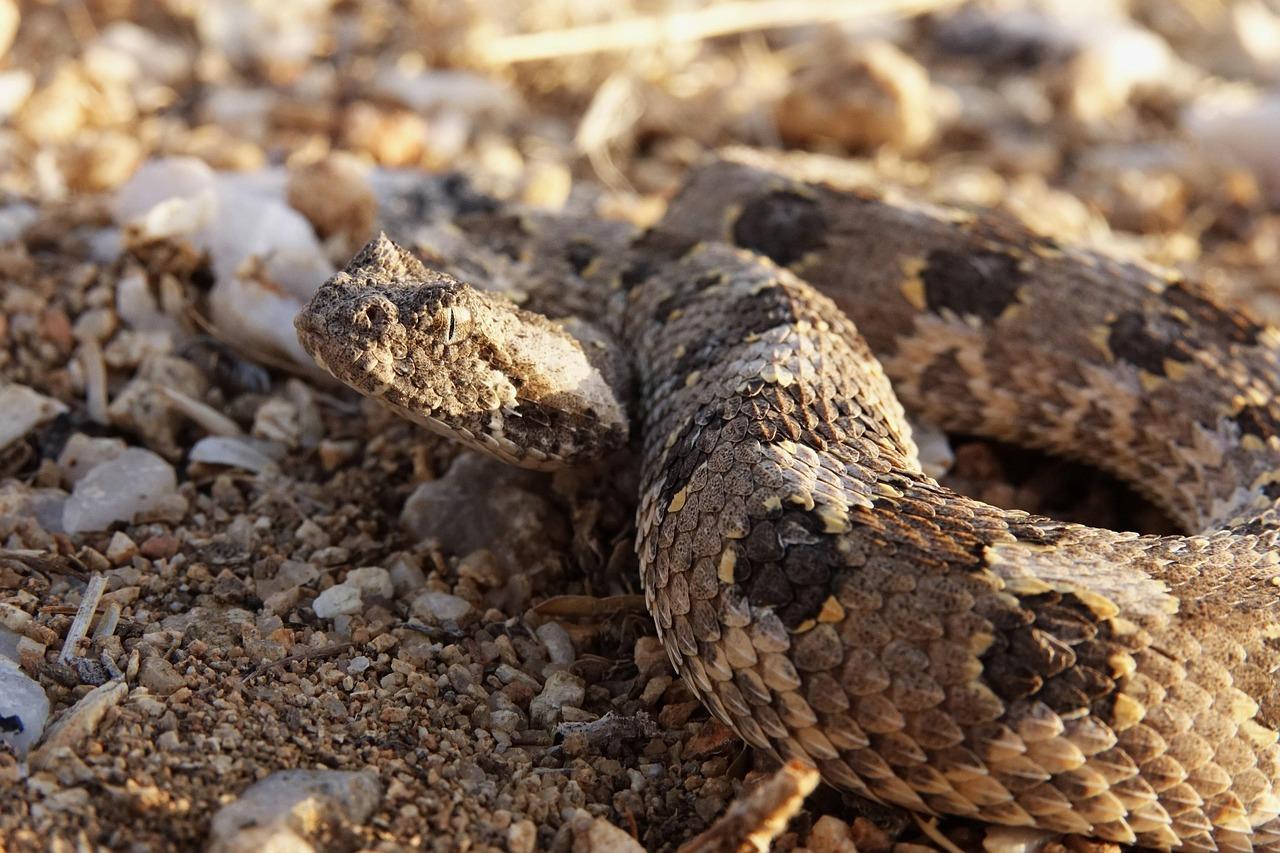
In fact, only one snake species in Cyprus is considered deadly: the blunt-nosed viper, also known as the Levant viper (Macrovipera lebetina). This is a large snake, reaching up to 1.5 meters in length. It has a thick body with a beige coloration and a distinctive diamond-shaped pattern along its back. Another identifying feature is its triangular head with a blunt snout.
The Levant viper is extremely venomous. Its bite can cause nausea, dizziness, low blood pressure, rapid heartbeat, and even internal bleeding.
Habitat
Fortunately, the Levant viper is rarely found along the coast, preferring mountainous regions. Still, caution is advised when hiking in nature reserves such as Akamas or Cape Greco. Snakes often hide among rocks and cliffs. Other snake species on the island are either mildly venomous or completely harmless—but this does not mean they should be approached or touched. Always keep a safe distance and watch your step on dirt paths or grassy areas.
First Aid
Call emergency services immediately (112). Immobilize the bitten limb. Do not attempt to suck out the venom or cut the wound. Do not apply a tourniquet or tie off the limb. Avoid alcohol and aspirin-based medications. Get to the nearest hospital as quickly as possible to receive antivenom.
Insects
In coastal rocks and crevices, local scorpions and spiders can occasionally be found. However, their bites are not life-threatening and usually cause only mild discomfort or irritation. As a rule, they do not attack unless they are accidentally disturbed.
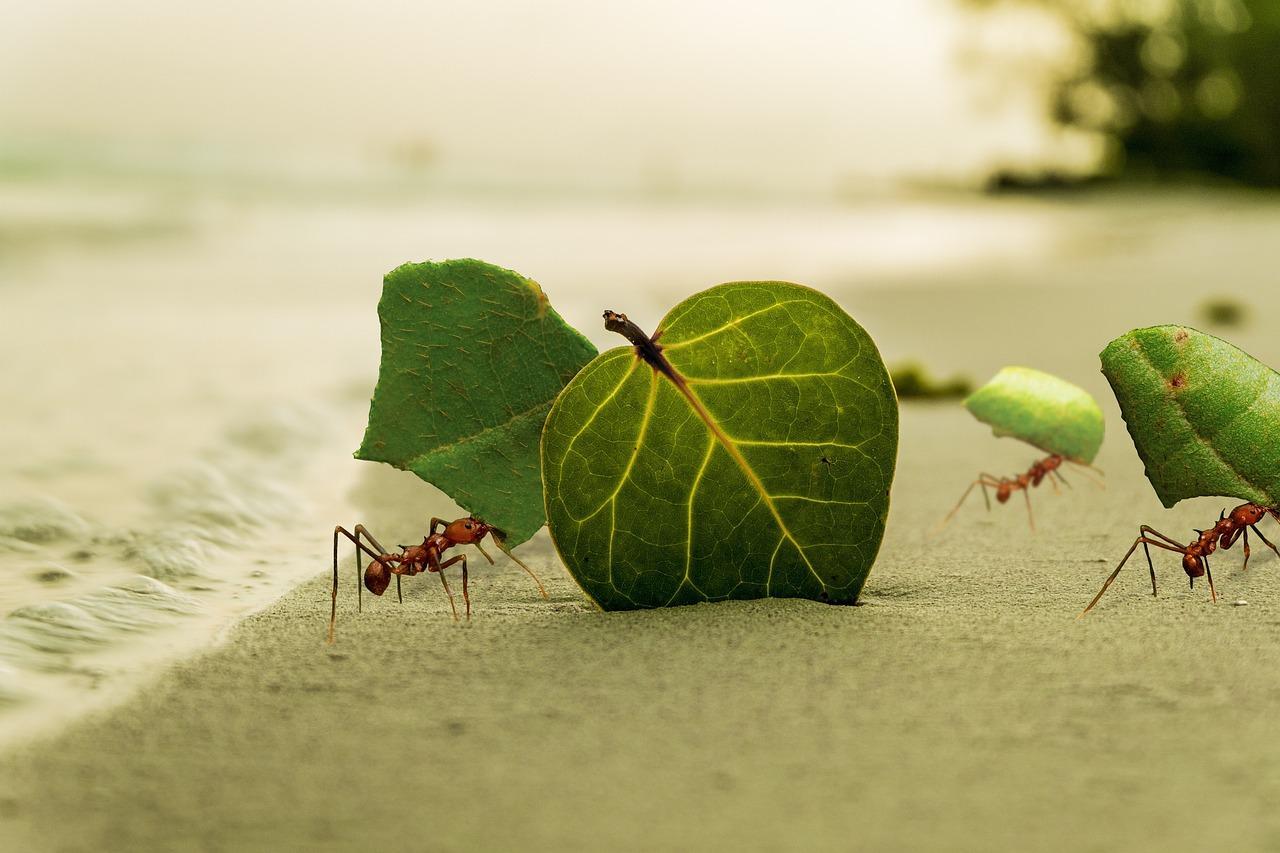
In addition, during seaside отдых you may encounter sand wasps, black sand ants, and horseflies, which tend to inhabit sand dunes and coastal areas. Their bites can be an unpleasant surprise, causing pain, itching, and skin irritation, but they do not pose a serious health risk.
While enjoying the beauty of Cyprus’s natural landscapes and relaxing on wild beaches, it’s important to remember that these places are not only recreational areas for visitors but also natural habitats for unique local species—fish, mollusks, jellyfish, and echinoderms. If treated with respect, even the most potentially dangerous marine creatures will not cause you harm.
We wish you a seaside holiday in Cyprus filled only with positive emotions, vivid impressions, and exciting discoveries!
Read also: