Cyprus is gradually becoming one of the most desirable destinations in Europe not only for tourists, but also for expats. It's not surprising — with consistently sunny weather, beautiful sea views, enchanting villages and modern cities, the island is attracting professionals, investors and students from around the world. In fact, after spending their vacation in Cyprus, many visitors end up considering staying on this beautiful Mediterranean island for good. But, whilst you might be head over heels for the prospect of moving to Cyprus, it is important to take care of the nitty gritty aspects of the move first, including the visas. With that in mind, some might wonder — which Cyprus residence permit to choose? Out of numerous visa options, a temporary residence permit is one of the most popular ways of staying in Cyprus for the long-term. So, let's explore what Cyprus temporary residence really entails, who is eligible and what will change in 2026. Stay tuned!
What's a «pink slip»?
The actual name «pink slip» refers to a temporary residency permit issued for a third-country national, who wishes to stay in Cyprus for longer than 90 days. The Cyprus pink slip can be obtained on the following conditions: employment, study, marriage or civil union with a Cypriot, or staying in Cyprus as a visitor for a prolonged period. Whilst each category has its own requirements and special conditions, the umbrella term — «pink slip» refers to any temporary residence permit in Cyprus.
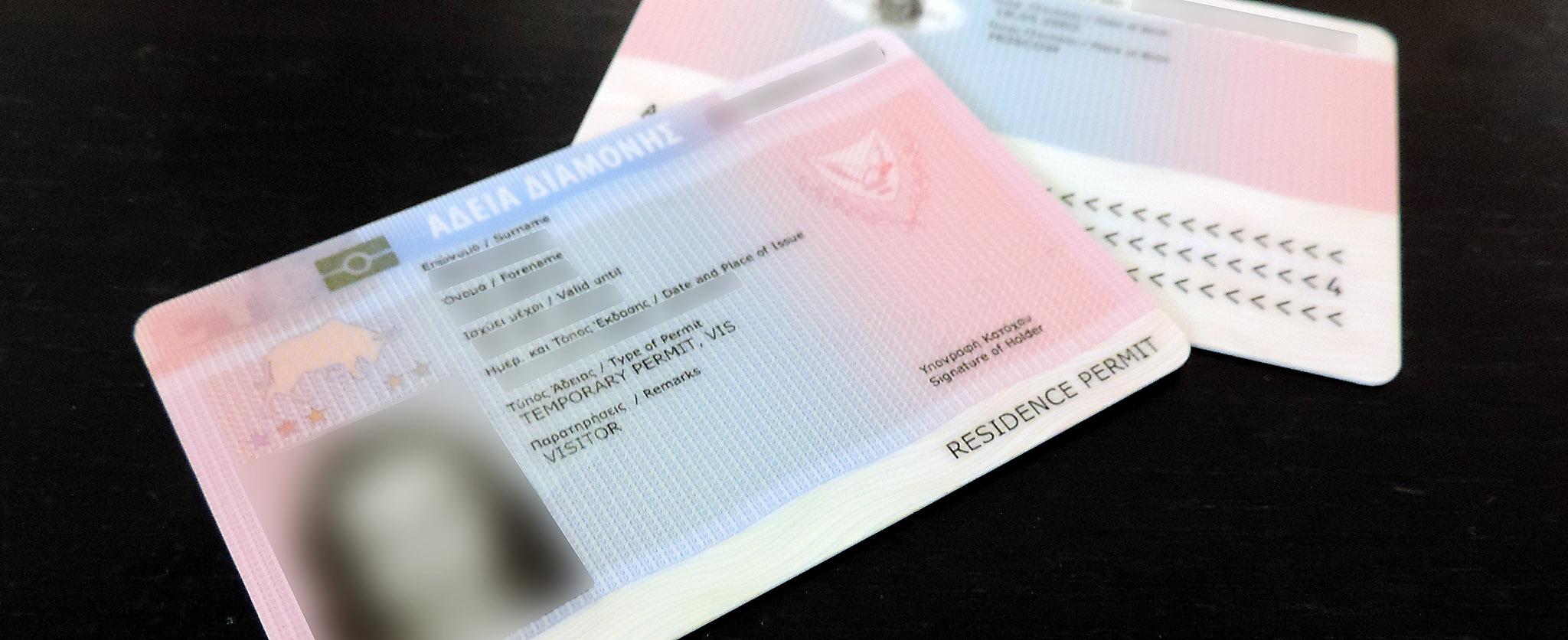
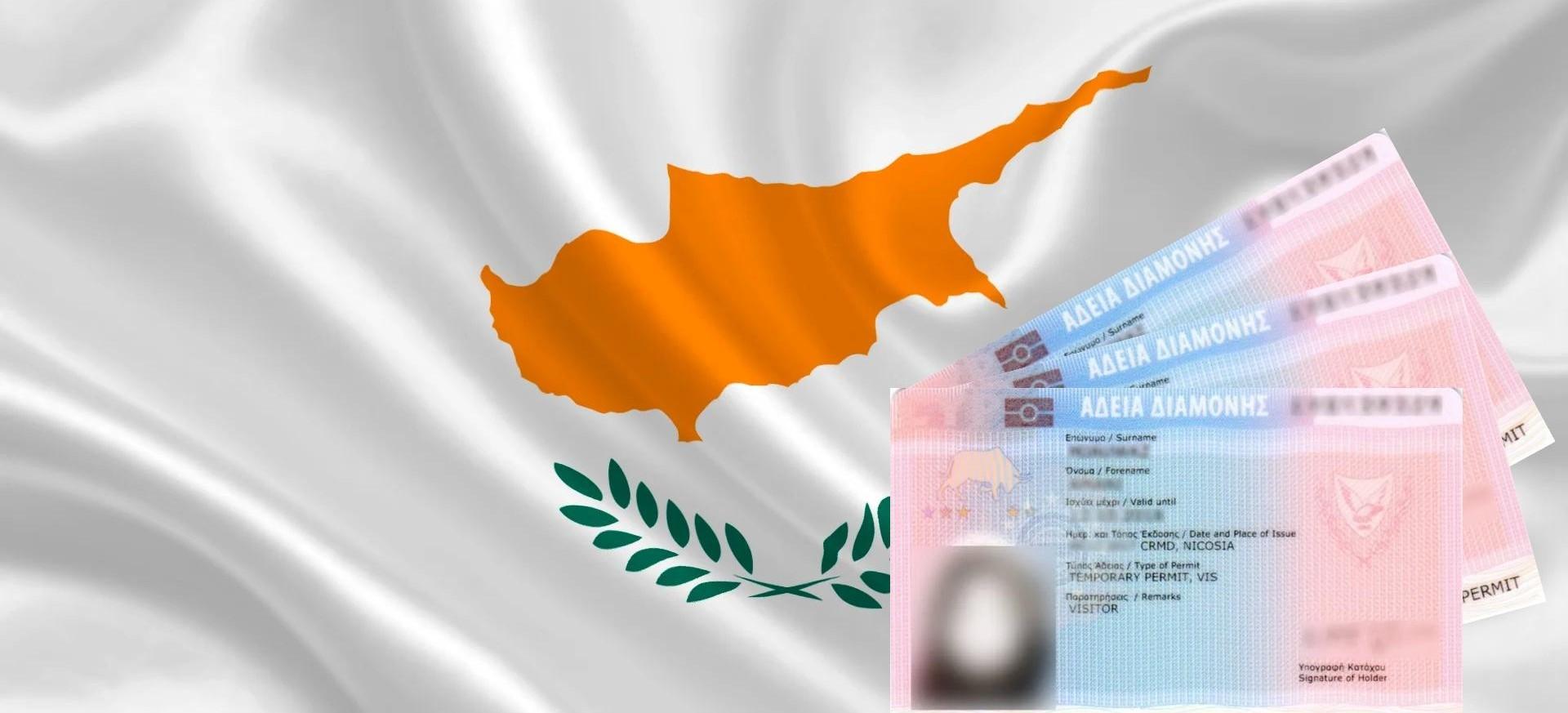
Once your visa application is approved you will receive a pink coloured residence permit card (hence the name). Initially, your first permit will be valid for 1 year, with a possibility of extension, based on your individual circumstances.
Benefits and limitations of a «pink slip»
Benefits
A holder of a temporary residence permit can enjoy the benefit of staying in Cyprus for the long-term, with the potential of obtaining a permanent residency, which in turn can be used as a stepping stone to Cyprus citizenship.
Some of the other Cyprus pink slip benefits are numerous tax cuts and exemptions. For example, when you reside in Cyprus for at least 183 days per year, which is one of the main temporary residence permit requirements, you are able to qualify for a tax residency in Cyprus. This taxation status will provide you with tax exemptions on your income from dividends or interest, gifts or inheritance, and you will also be exempt from the wealth tax. In addition, if you're employed in Cyprus with a salary of over 100,000 euro p/a and have not had tax residency in Cyprus before, you will get a 50% discount on your income tax for the first 10 years. With many tax benefits Cyprus offers, the island has become a true «taxation heaven» for many expats. And almost any Cyprus permit holder can take advantage of its favourable taxation climate.
Limitations
Despite the many benefits, there are some limitations on your pink slip that you need to be aware of.
For example, the temporary residence permit holder must stay in Cyprus for the period of not less than 183 days per year and should not be absent from the country for more than 90 consecutive days in a 180 days period.
Most temporary residence permits do not allow employment in Cyprus, unless the holder is on a work visa. Another category which allows partial employment is a student visa, which allows students to work for not more than 20 hours per week. Other categories, such as a visitor visa or family reunification visa, do not allow direct employment in Cyprus.

Temporary residence categories
Visitor
This temporary residence permit allows the holders to live in Cyprus for a prolonged period, provided they have sufficient income from overseas and accommodation in Cyprus. Here's a more detailed list of required documents:
- Application form
- Applicant’s passport
- Proof of sufficient income from overseas of no less than 24,000 euro p/a, plus an additional 20% for each dependent.
- Additionally, you must demonstrate at least 10,000 in your Cyprus bank account.
- A bank guarantee from a Cyprus bank to cover potential repatriation costs.
- Proof of health insurance
- A medical check
- Police clearance certificate
- Proof of accommodation — either a rental agreement or a title deed.
Student
A student visa allows its holder to reside in Cyprus and study at a local educational institution for the duration of the course.
It's important to keep in mind that it should be a full time study with a minimum of 12 credits per semester.
The requirements are very similar to the visitor visa with the addition of the following:
- A letter of acceptance from the educational institution.
- Proof of sufficient funds to cover tuition fees, living expenses and potential repatriation costs.
- Proof of accommodation (a rental agreement or letter from the university, if you will be staying at a student residence).
- Proof of English proficiency, if your course is in English.
Employment
If you possess the required skills and experience and have already secured an employment contract with one of the local or international companies based in Cyprus, you will be able to obtain a work permit. In fact, usually it's the employer who applies for it on your behalf. In addition to standard documents, you would need to provide the following in order to obtain a temporary work residence permit:
- A valid employment contract.
- Proof of your qualifications and work experience.
Establishing a business
Another option of acquiring the temporary residence is to establish a company of foreign interests.
Key requirements to keep in mind:
- Prior to lodging the residence application, the owner must register the company with the Registrar of Companies and Official Receiver.
- The owner must also register the business as a «Company of Foreign Interests» with the Business Facilitation Unit (BFU).
- The company must employ the minimum of 5 employees including the owner with the minimum monthly salary of 2,500 euros.
In Cyprus EU payment solutions, such as SEPA payments (Single Euro Payments Area) are becoming more common, making it easier for foreign company owners to facilitate their transactions throughout the EU.
On top of that, establishing a business in Cyprus is relatively easy and straightforward, if you use corporate service providers who offer comprehensive Cyprus substance solutions.
Start-up Scheme
Introduced by the Cyprus government in order to facilitate growth and innovation in the Republic, the Cyprus Start-up Scheme allows third-country nationals to establish and develop their start-up business in Cyprus. Applications for this current scheme will be accepted until December 2026. The start-up scheme is open for sole entrepreneurs as well as for small teams of up to 5 individuals.
Some of the key requirements are as follows:
- The applicant(s) must present an innovative idea with high growth potential together with a business plan.
- The applicant must demonstrate access to a minimum of 50,000 euros in funds.
- The applicant(s) must hold an undergraduate degree or equivalent.
Marriage
If you have met the love of your life in Cyprus and have solemnised your union, you will be able to apply for a spouse visa.
Required documents are as follows:
- A certified marriage certificate.
- Your spouse's Cypriot passport or ID card.
- Previous divorce certificates, if applicable.
- Proof of accommodation
- Proof of your spouse's financial means, such as employment contract or business ownership, bank statements and tax returns.
- A bank guarantee covering potential repatriation costs.
- Health insurance for the applicant
- Applicant's police records
How to apply
If you are currently outside of Cyprus, the first step for obtaining Cyprus temporary residence would be to apply for an entry permit from your local embassy of Cyprus.
Temporary entry permits differ from short-stay tourist visas — they allow third-country citizens to legally enter the Republic of Cyprus for purposes other than tourism.
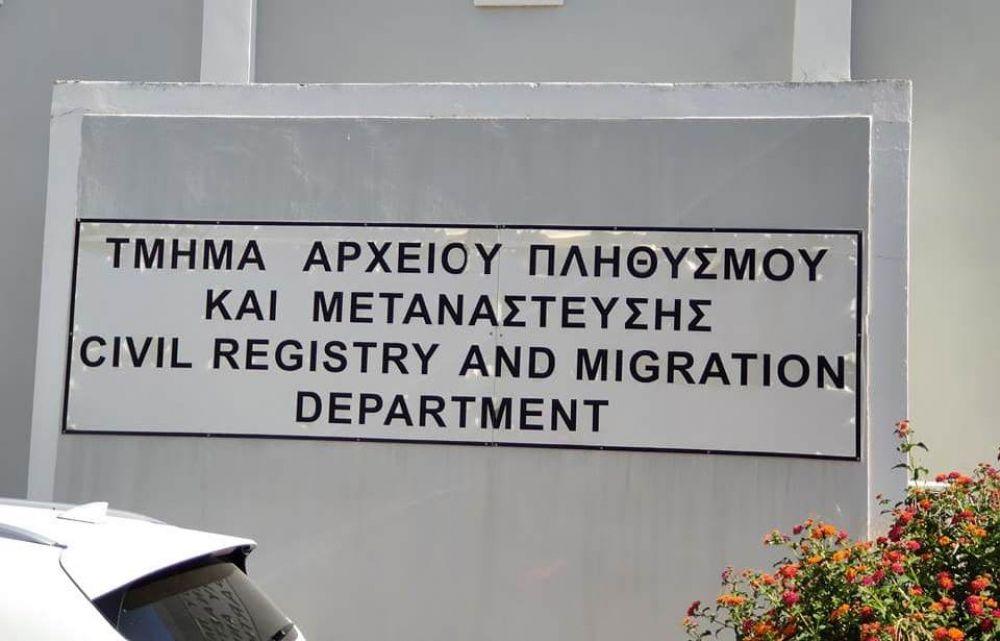
You must apply for your temporary residence permit within 7 to 10 days of your arrival in Cyprus and submit a completed application form for an appropriate category of Cyprus temporary residence in person at your local Civil Registry and Migration Department. Upon lodging your temporary permit application, the Cyprus immigration office will collect your biometric data, including your photograph, fingerprints and signature. You will also be required to pay the application fee on the spot and depending on your individual circumstances, the immigration officer might ask you to provide additional documents. The application fee for temporary residence is around 70 euros per person, plus an additional 70 euros paid as Cyprus government fees for a foreigner registry.
The application processing time for a Cyprus residence permit can take up to 3—6 months, but sometimes it may be shorter, depending on each individual case. Applicants will have a right to remain legally in Cyprus for the entire processing of their residence applications. If your Cyprus residence permit application is successful, you will be informed accordingly and invited to visit the Immigration office to collect your temporary residence card, otherwise known as a «pink slip».

Cyprus temporary residence vs permanent residence permit
Generally speaking, there are two main options for long-term residence in Cyprus — a temporary residence and a permanent one. Let’s take a closer look and see how they compare.
A Cyprus permanent residence allows its holders to reside in Cyprus for an unlimited period of time, whilst your permit card must be renewed every 5 years. Compared to the temporary residence permit that allows its holders a very limited absence time with less than 90 days outside Cyprus, for a permanent residency holder it is enough to visit Cyprus once every 2 years in order to keep their residency rights.
However, there are only two ways of obtaining a Cyprus permanent residence permit: permanent residency by investment, otherwise known as the «Cyprus Golden Visa» program, or, applying for a Cyprus permanent residence permit after legally residing on the island for over 5 years on a temporary visa. The first option is the fastest and by far the costliest way for securing permanent residence in Cyprus. It requires the applicant to spend at least 300,000 euros on their Cyprus purchase of real estate or invest a similar amount in a Cyprus company, as well as to demonstrate sufficient annual income that will cover the local living costs. A «Golden Visa» is also a fast-track option to Cyprus citizenship. The second option takes much longer to obtain Cyprus permanent residence, but at the same time, the initial investment is lower and there is no need to purchase the property right away — a rental agreement is enough to apply for a temporary residence permit.
So it's entirely up to you to decide which option best suits your needs. In fact, prior to making a permanent commitment, many expats choose a Cyprus temporary residence option. And, once they are certain that the life on the island is up to their standards, they move onto purchasing a property and applying for a Cyprus permanent residence permit. This way, a Cyprus temporary residence gives you more time to «soak in» the local culture and way of life in order to avoid future disappointment or culture shock.

Recent developments in 2026
— Cyprus is preparing to become a Schengen state in 2026, meaning that Cyprus residence holders will enjoy visa-free travel to other Schengen states without passport checks and border controls.
— For work visas, the employment contracts must now be for the minimum duration of 2 years.
— The minimum salary of highly-skilled employees in 2026 must be at least 2,500 euro p/month. Those, who have older contracts with the salaries of 2000 euro p/month, can renew their permits until December 31, 2026.
Useful tips
Check your passport validity dates — for most temporary residence permit applications the passport must be valid for at least 3—6 months. Carefully check the Cyprus immigration department website for all the requirements and new updates for your selected immigration permit category.
It is often important that you are able to demonstrate a legitimate banking track record of at least 12-months of consistent account balance and deposits. Avoid conducting any financial transactions through Northern Territories, as it is illegal. Do not use illegal entry points in the North when entering or exiting Cyprus, as it can result in your residency permit cancellation or application refusal.
If you have documents in languages other than English or Greek, make sure to provide an accurate translation, certified by an apostille. To fast-track your Cyprus pink slip application, you can use the services of a migration lawyer or firm. This will help eliminate many risks and quite often speed up the processing times.

Thanks to a rather straightforward procedure of acquiring a pink slip Cyprus has recently become a true immigration hotspot. In fact, with the most recent developments expected to take place in 2026, a Cyprus temporary permit is more than just a visa allowing you to live, work or study in Cyprus, it is also a getaway to unlimited travel around Europe and a stepping stone to acquiring permanent residency and a Cypriot citizenship.
Read also:
- Can you drink tap water in Cyprus — is it safe?
- The Cypriot pace of life — how the island teaches you to slow down and live in the moment
- Rainy day in Cyprus? The best activities and attractions!
- How to obtain a driver’s license in Cyprus — a complete guide
- Hair salons and beauty studios in Cyprus — where to go