
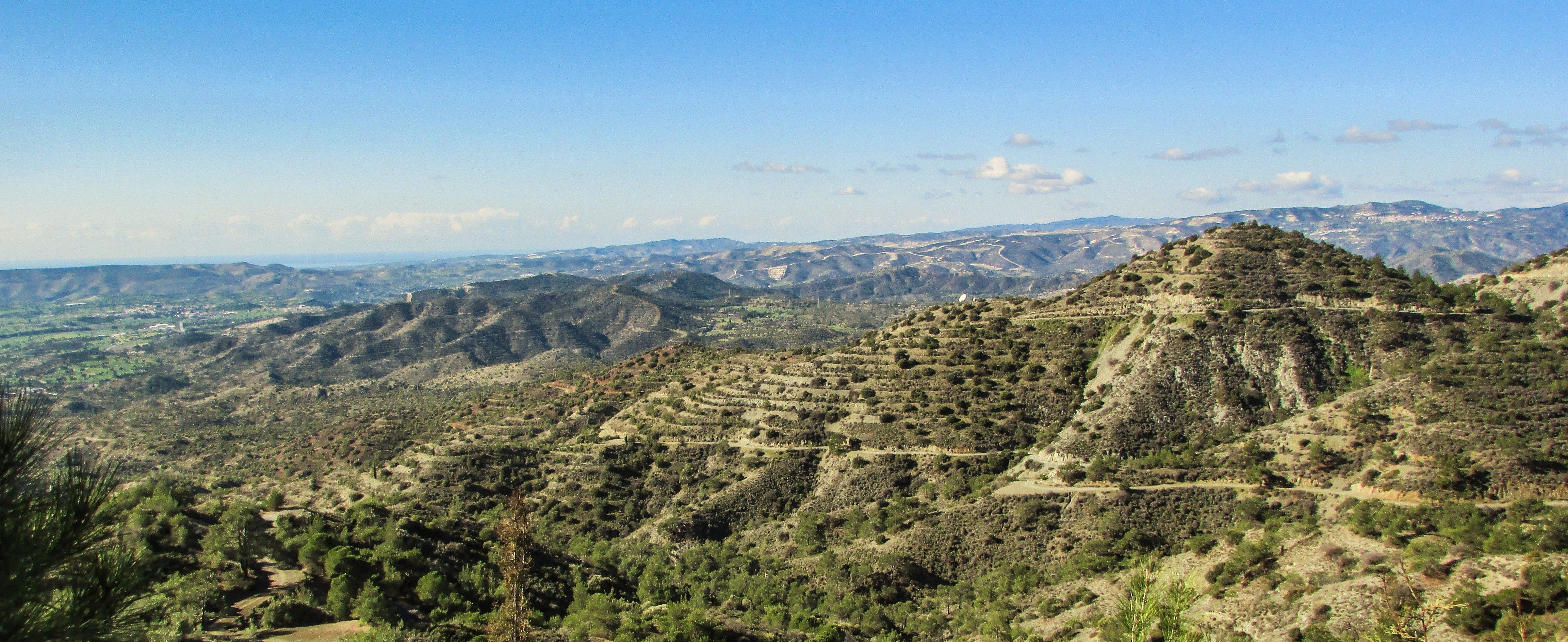
Spanning over a vast territory of 620 km2, Paphos Forest is one of Cyprus' most spectacular natural treasures. With numerous nature trails, waterfalls and panoramic views, it is truly a nature lover’s haven. However, there's more to it than meets the eye. It's also an important conservation area — home to more than 150 endemic botanic species as well as over 150 bird varieties, 6 of which are indigenous. Apart from natural wonders, Paphos Forest conceals the historical gems — Venetian bridges and spectacular monasteries of Kykkos and Chrysoroyiatissa. In fact, the area has something for everyone. Whether you are into a soothing hiking experience, adventurous buggy ride, bird watching, a religious pilgrimage or even a wine tour, you will surely find something you fancy. To help you get the most out of your trip, we have compiled this detailed forest guide, which includes activities, sample itineraries, safety tips and much more. So, let's get started!
Paphos Forest at a glance: top 3 experiences
Exploring the nature trails
Breath in the fresh mountain air, scented with pine and cedar and soak in the lush scenery by hiking through the island's most spectacular forest trails. Spot rare local birds, endemic flowers and trees. Don't miss the chance to visit Caledonian waterfalls and discover the mysterious origin of its name.
Visiting the monasteries
Explore the rich cultural heritage of the island and discover its Byzantine glory by visiting two of the island's most beautiful monasteries — Kykkos and Chrysoroyatissa. Learn about the miraculous icons, admire the stunning frescoes and mosaics, delve deeper into the island's Orthodox tradition and history.
Searching for the Venetian bridges
Embark on a scenic mountain drive along the forest road in search of the Venetian bridges. Discover the history of these medieval constructions and marvel at the mastery and craftsmanship of the Venetian artisans. Admire the beauty of Kelefos, Elias and Roudia bridges nestled in the midst of a lush forest.
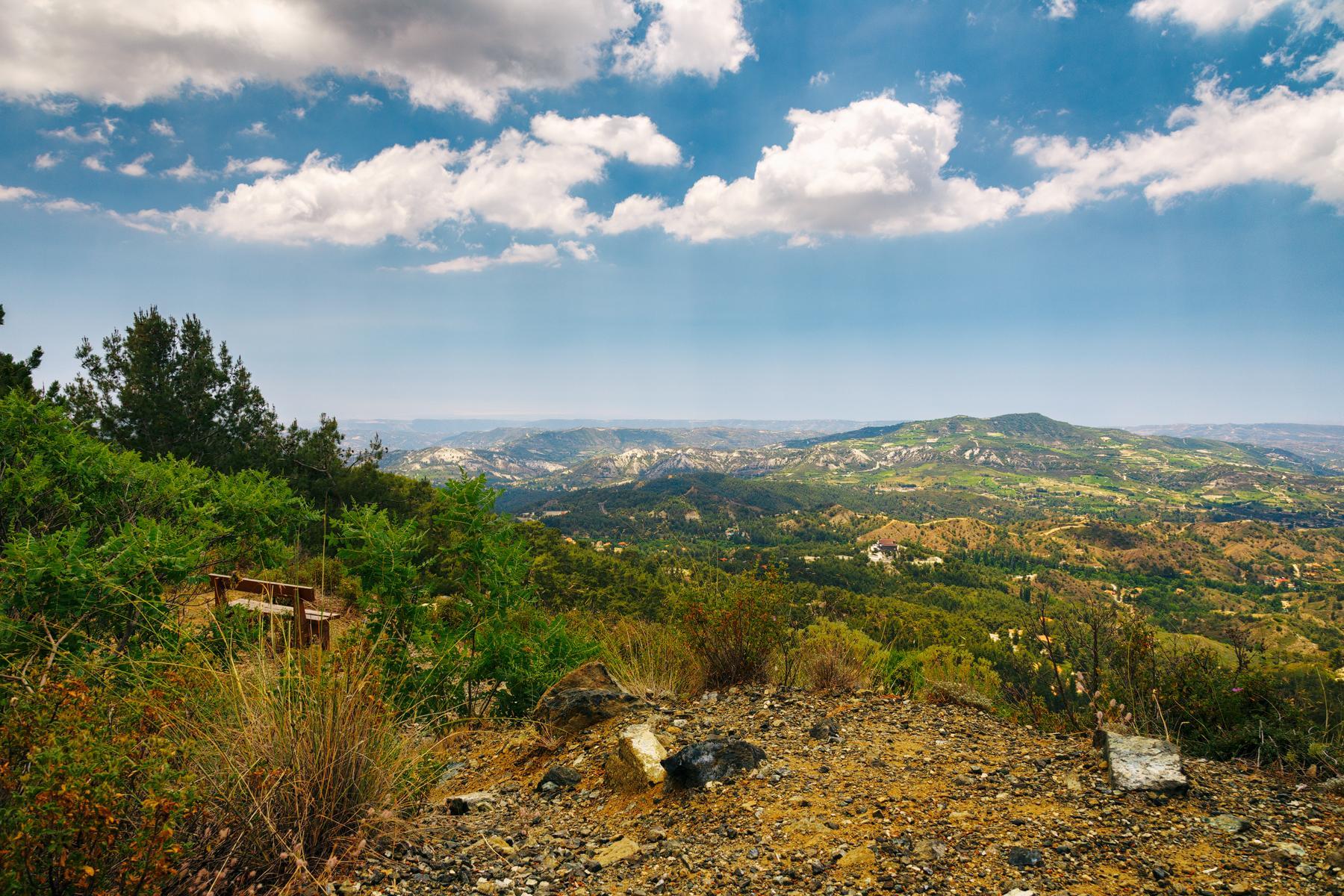
Planning your visit to Paphos forest: essential tips
How to get to Paphos Forest
From Paphos. Just take the A6 motorway and drive east towards the E601 road to Polis/Kathikas and follow the signs to Cedar Valley / Paphos Forest. The whole trip would take around 1 hour by car.
From Limassol. Drive west on the A6 motorway towards Paphos, then exit via road E601 to Polis and follow the signs to Cedar Valley / Paphos Forest. The journey takes around 1h 45 min.
From Nicosia. Take the A1 motorway from Nicosia and drive towards Limassol, then follow signs toward E601 to Polis, and after proceed towards Cedar Valley / Paphos Forest.
Best time to visit by season
Whilst the Troodos mountains are stunning in every season, the best time to fully enjoy the Paphos Forest would be around spring or autumn — when the temperatures are mild enough and the sun isn't blazing hot.
Spring. Springtime is when the forest comes to life with flowers — orchids, anemones, poppies. Rockrose bushes and almond trees are also in full bloom. Spring is a prime time for bird watching with plenty of Cyprus Warblers, Wheatears, Rollers and Bee-eaters. The temperatures are fairly mild, ranging from +15—25C, with warm days and cooler nights. Occasional showers are also possible, so the landscape is lush and green. It's a perfect time for hiking, bird-watching and photography.
Summer. Whilst it gets extremely hot in lowlands, the mountains offer a cool respite from the summer heat. With temperatures ranging from +22— 28°C, cool pine-scented air and plenty of shade, Paphos forest is a perfect summer escape. It's the best time to go visit the waterfalls and maybe have a dip in the cool waters of Krio Potamos.
Autumn. With pleasant temperatures of +20—28°C, autumn is the ideal season for enjoying the mountains. It's the time when it's still very warm, yet the sun is becoming less aggressive, making hiking enjoyable again. You can also spot many migratory birds, making a transit stop before heading to warmer shores. It's also a harvesting season for forest berries, fruits and, of course, mushrooms. If you want to do wine tasting, September would be the best month, as you can also observe and sometimes participate in seasonal harvesting and wine-making activities.
Winter. In winter the Troodos mountains totally transform. When it gets really cold, around -5 to 0C, the landscape becomes white with snow and the forest turns into a winter wonderland. Whilst during warmer days, when the temperatures hit +15°C and above, the forest comes to life with all imaginable shades of green — from emerald green moss to rich viridian hues of the foliage. So, you can still enjoy the hikes in winter, when the weather permits. Although rains are more frequent in this season and the rocky trails can get rather slippery.
What to pack and wear
It is important to wear good hiking boots or running shoes that have thick soles with a good grip. Pack plenty of water — at least 2—3 litres p/person should be enough. In summer, a long-sleeved shirt for daytime and a light cardigan for the evening would come in handy. Also, don't forget your sunscreen and a hat. In winter, make sure to wear extra layers and take a warmer wind-proof jacket as it is usually 10 degrees cooler in the mountains compared to lowlands.
It's important to take a fully charged phone and a power bank. And, because of limited internet coverage in remote mountain areas, have a physical map with a marked itinerary. Also, just in case, pack a first aid kit, a flashlight and some high energy snacks and you are good to go.
Safety and navigation tips
Road conditions. Most mountain roads are extremely winding — beware of narrow single-lane roads with blind curves. Always drive slowly and signal before making a turn. There is also a danger of rockfalls, especially after the rain. And, in the winter season the roads can get very slippery due to sleet or even ice. Be careful of very low visibility — after the rain it can get very foggy high up in the mountains. The best vehicle choice for mountain trips is an SUV or a hatchback. Make sure to travel with a full fuel tank as there are no petrol stations in the mountains.
Navigation tips. Download all your maps as the internet connection might not be consistent in remote areas. As a backup plan, take a physical paper map with you. In case you do get lost, don't panic and stick to the paved roads — avoid following unknown dirt tracks. If you continue driving downhill, the road will eventually lead you to a nearby village.
Precautions. Forest areas might have mosquitos and ticks, so it's best to wear long sleeves even in summer and to have an insect repellent on you. Always check yourself for ticks after the trip.
Snakes are also quite common in the mountain areas. Whilst there is only one venomous variety — a Blunt-nosed viper, it's important to be cautious whilst walking on rocky and grassy terrain.
Important contacts. Cyprus Emergency Services: 112. Forestry Department: +357 22805511.
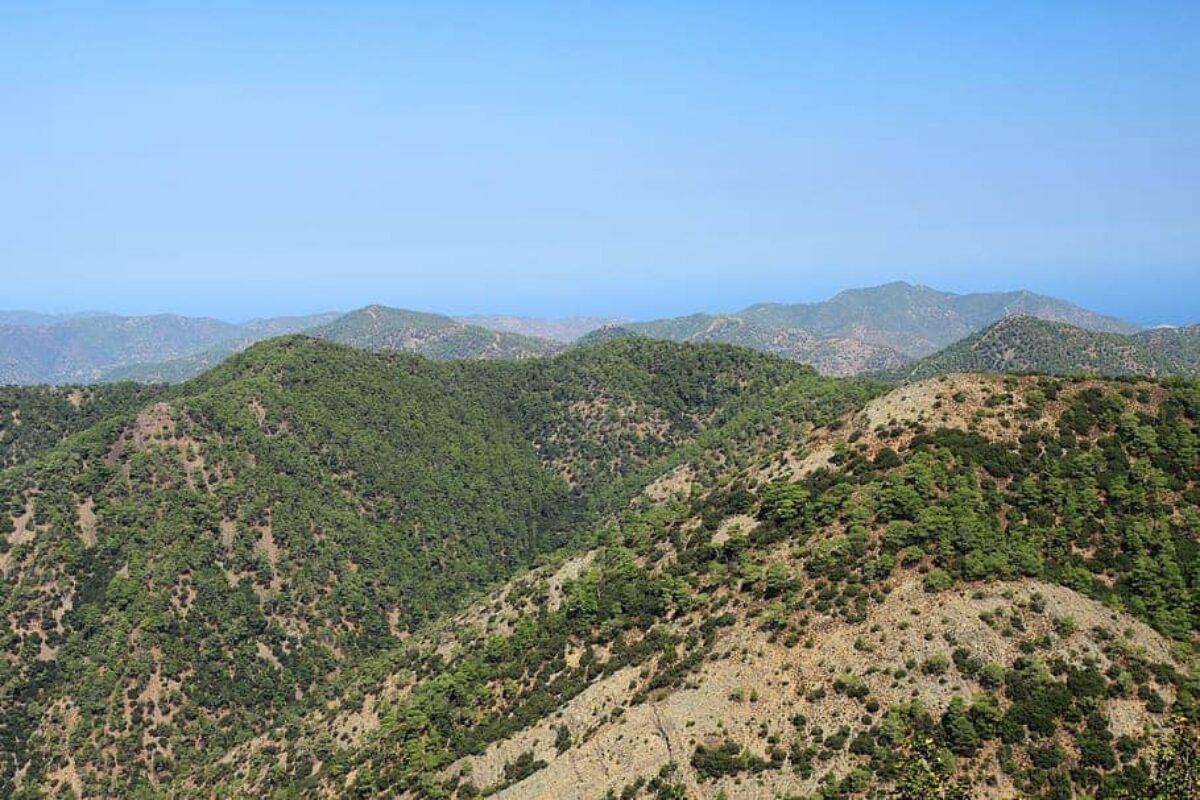
What to do in Paphos Forest: a guide to the top 10 activities and attractions
Hike through the majestic cedar valley
Located in the northwestern part of Paphos forest, the Cedar valley is a stunning natural hotspot and conservation area. Spanning over 300 hectares, it can be accessible via a scenic mountain road.
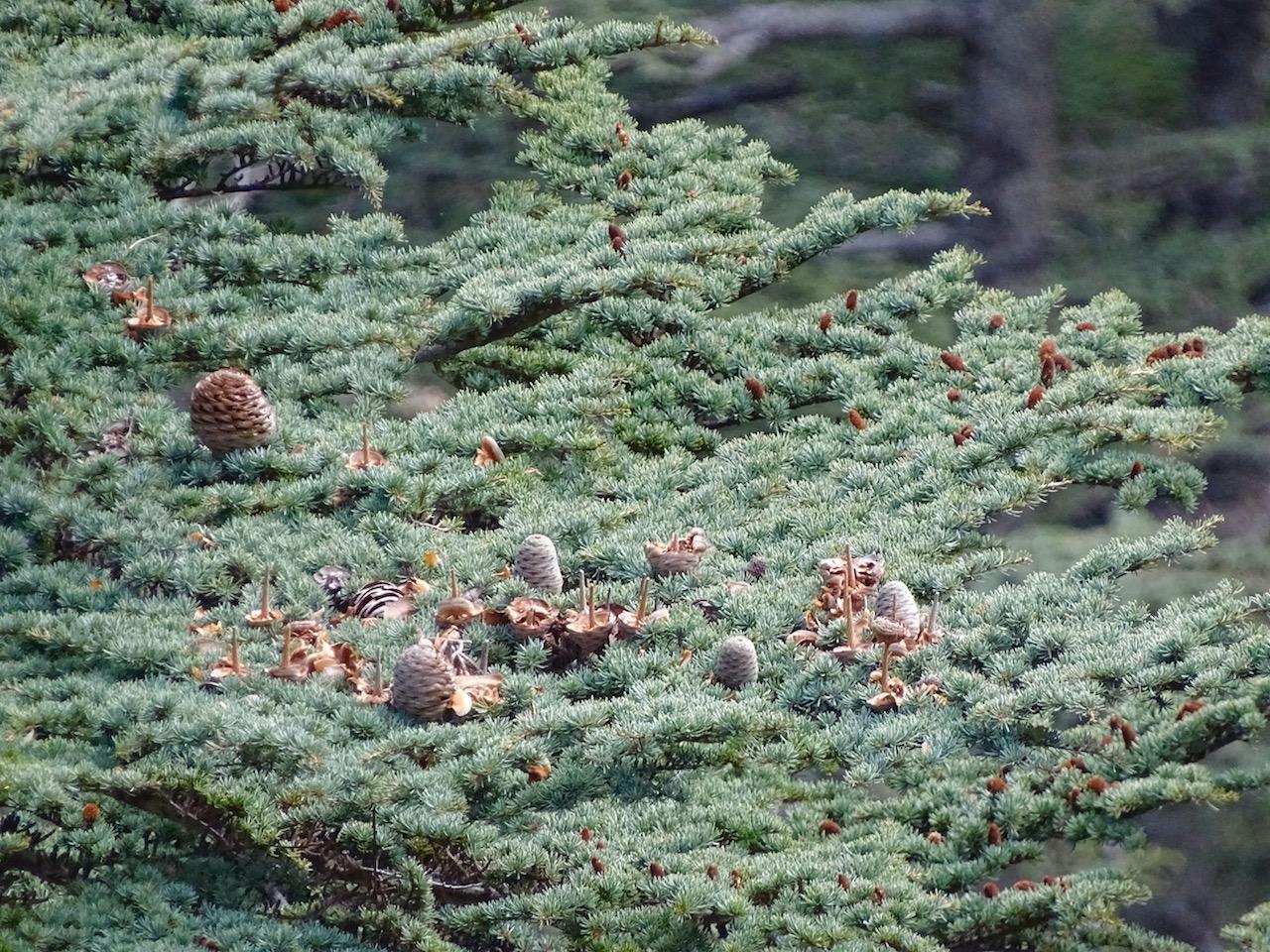
As the name suggests, it is home to the island's endemic species — Cyprus cedar (Cedrus brevifolia), which fills the air with an unmistakably soothing pine scent. There are also endemic shrubs: Cyprus Turpentine (Pistacia terebinthus), Mediterranean Buckthorn (Rhamnus alaternus), Kermes Oak (Quercus coccifera), amongst other types of local flora. And, in springtime, you can spot some rare flowers, like cyclamen cyprium, the Cyprus tulip and Loch’s glory-of-the-snow. The best way to enjoy the valley is by hiking through its scenic nature trail — this 2 km circular route takes around 1,5 hours to complete. The trail offers a chance to explore the valley at your own pace and soak in the panoramic views of the surrounding valleys and the Troodos mountains.
Discover the historic Kykkos and Chryssoroyatissa
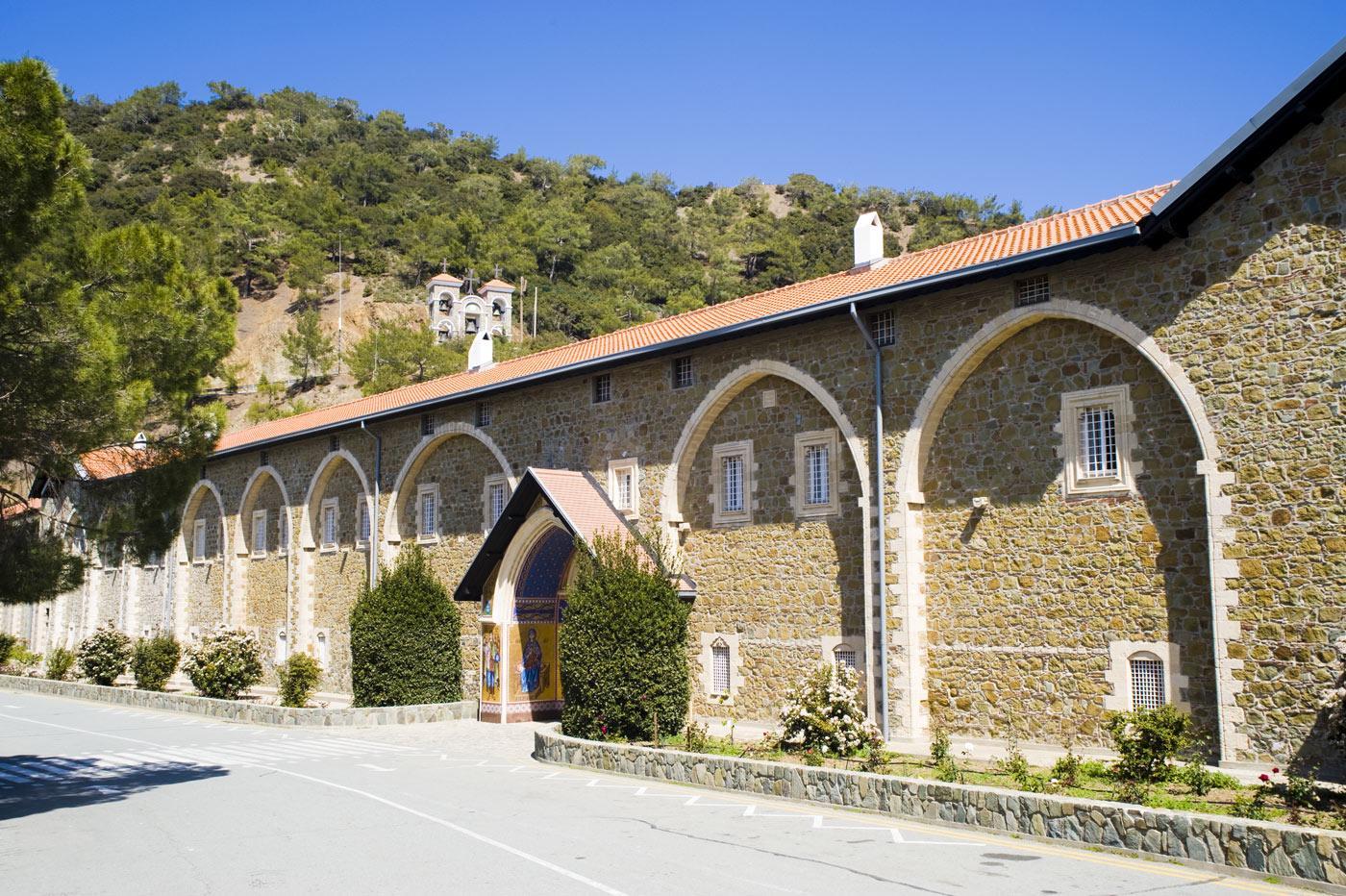
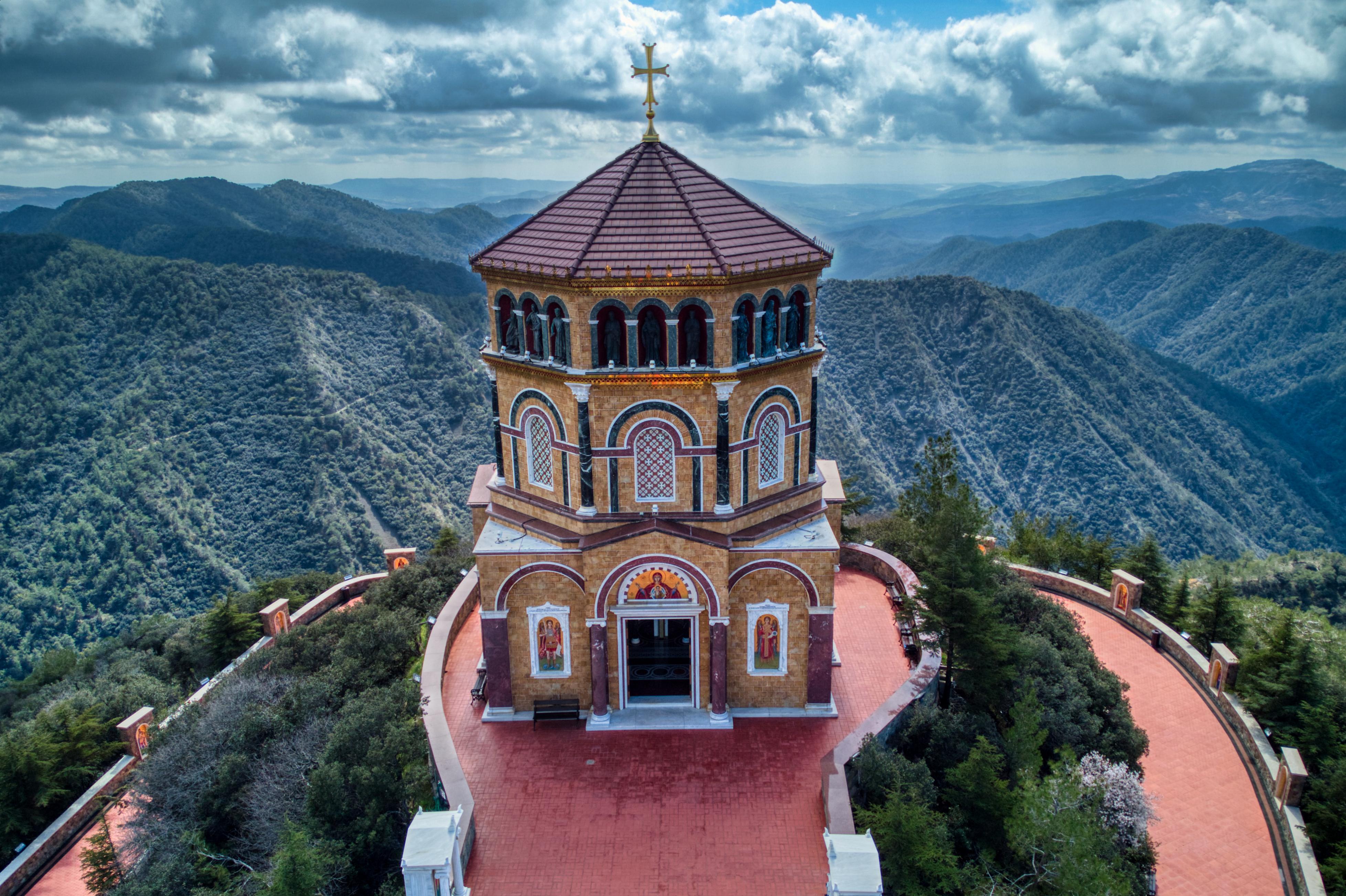
To the east of Paphos forest you will find one of the most majestic monasteries in Cyprus — Kykkos. It's also considered to be one of the richest, with striking decorative elements both inside the church and at the museum. However, its main treasure is the miraculous icon of Virgin Mary —«Kykkotissa», which is hidden from the human eye under a special veil. It is believed that the icon was written by the Apostle Luke himself while Virgin Mary was still alive on this earth. Set against a magnificent natural backdrop at 1,318 m above sea level, the monastery is surrounded by picturesque mountains, lush forests and scenic views. It's a perfect place to explore and enjoy the rich history and Byzantine grandeur, even if you're not religious. If the weather permits, take a walk to Throni at the very top of the mountain — just a 30 minute walk from the monastery. Alternatively, you can explore the surrounding mountain roads and trails.
At the forest’s southwestern side is another stunning Cyprus monastery — «Panagia Chryssoroyatissa». Named after an eponymous icon of the Mother of God, Chryssoroyatissa was first established back in the 12th century. The name of this miraculous icon translates as «the Lady of the golden pomegranate». It is to do with the vision of the 12th century monk — Ignatius, who was prompted by the divine revelation to build a monastery where he would find a golden pomegranate. The current church building dates back to the 18th century. However, its numerous icons, including the main miraculous icon — «Panagia Chrysoroyatissa» date as far back as the 12th century. Compared to Kykkos, this monastery boasts a more reserved and compact setting. It allows you to take time and explore the church and the Byzantine museum at your own pace. Located at 800 m above sea level, the area offers panoramic views of the surrounding valleys and vineyards. You can also visit the monastery winery and sample the delicious local varieties — «Maratheftiko» and «Xynisteri». The surrounding area is one of the island's best wine-producing regions, famous for top quality wines and boutique wineries.
Spot the Cyprus mouflon at Stavros tis Psokas
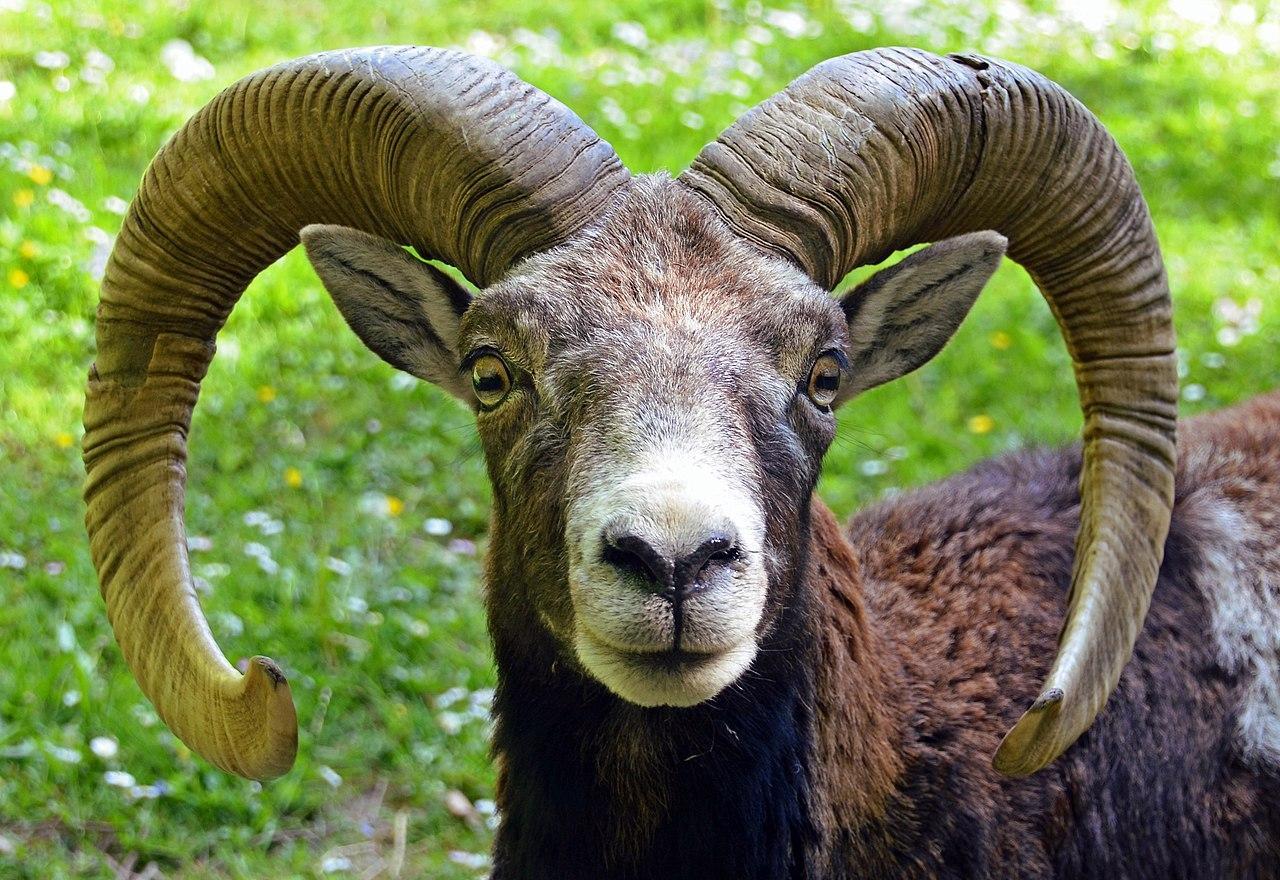
The best place to spot a legendary Cyprus mouflon is the island’s main forestry station, belonging to the Cyprus Paphos district — Stavros tis Psokas. Established back in the 1960s to combat the dwindling of the species, it now serves as a major mouflon conservation, breeding and viewing centre. Here the visitors can observe mouflons in their natural habitat — inside a spacious enclosure, where they can roam and graze freely. Even though today it is possible to spot mouflons in the wild practically anywhere in the Troodos range, it was not the case in the past. At some point, these endemic species were almost extinct prompting the government’s conservation efforts. Luckily, today the situation has turned around and the mouflon population is thriving. So, if you love mouflons, come here for a guaranteed encounter with these magnificent creatures. And, if you're into hiking, Stavros tis Psokas offers many nature trails and a cosy picnic spot so you can stop for lunch in the bosom of nature.
In addition, here you can find the only legal camping ground — the district Paphos Forest campsite. It is managed by the Cyprus Department of Forests and provides only basic facilities. Located right next to the mouflon enclosure, it's the spot where campers and nature can truly exist in harmony.
Cross the medieval Venetian bridges
Besides natural treasures in this mountain district, Paphos Forest hides historical manmade artefacts — the Venetian bridges. These medieval bridges were built by the Venetians for transportation of various goods, including copper ore, from the mountain regions to the coastal cities. Featuring classical arched shapes and Venetian construction techniques, they are true masterpieces of medieval prowess and ingenuity.
Kelefos Bridge. Built around 1500, Kelefos bridge is one of the oldest and the most beautiful bridges found in the area. Made from limestone blocks in the form of an elegant single arch, it measures 11 m in height and 16 m in length. Back in the day, it was a major logistics hub, helping to carry copper ore from mountainous copper mines, like Amiandos, to the Paphos Port. It is set in a magnificent setting, nestled amidst lush green vegetation with river rock pools underneath. The bridge is located in the Platys valley near the village of Pera Vassa. It crosses Diarizos river and can be accessed via an unpaved forestry road (F612) and then a short walk from the carpark. Just make sure to bring plenty of water and shoes with good grip as the rocks in the area are rather slippery.
Elias Bridge. A little further down the Diarizos river stream, there is another Venetian bridge. Its name, «Elias» means «olive tree» in Greek, referring to the abundant olive groves, growing here back in the day. Built somewhere between the 15th and 16th centuries, Elias is a much smaller single-arch bridge, compared to Kelefos. Once again, the location is extremely scenic and peaceful. You can access this bridge via forestry roads F612 and F308. It is quite close to the villages of Kannavia and Kaminaria.
Roudia bridge. Believed to be constructed in the late 14th century, this is the oldest bridge out of the three and the most remote one. The bridge is located in a secluded and breathtaking setting — inside the steep narrow gorge, amongst verdant vegetation. The deep rock pools underneath can be perfect for swimming in warmer months. It is accessible via the forest road near Arminou dam and a steep hiking path towards the end. Whilst reaching it requires a bit of an effort, the experience and the photogenic setting are totally worth it. Although, comfortable walking shoes or hiking boots are recommended.
Go off-roading: quad/buggy safaris and scenic drives
For those with an adventurous streak there's an option to explore the forest’s surroundings in a quad or a buggy. There are plenty of specialised tours available. Typically, there's a choice between ATV quads for authentically gritty rides and 2 or 4-seater buggy vehicles, which are more comfortable. Make sure to book only from a licensed operator and always check their reviews and ratings. It's also important to keep in mind that vehicles are not permitted to enter the protected inner forest areas and trails. So, a typical safari route would go around the forest, along the rugged dirt tracks, agricultural roads, and rocky valleys in the foothills, offering spectacular panoramic mountain views. Most tours include stops along the way at major viewpoints and local villages, like Kathikas, Amargeti and Statos-Agios Fotios. It's also possible to grab some lunch at a local taverna or, sometimes, take a dip in the cool mountain stream.
Follow the Caledonia Falls trail
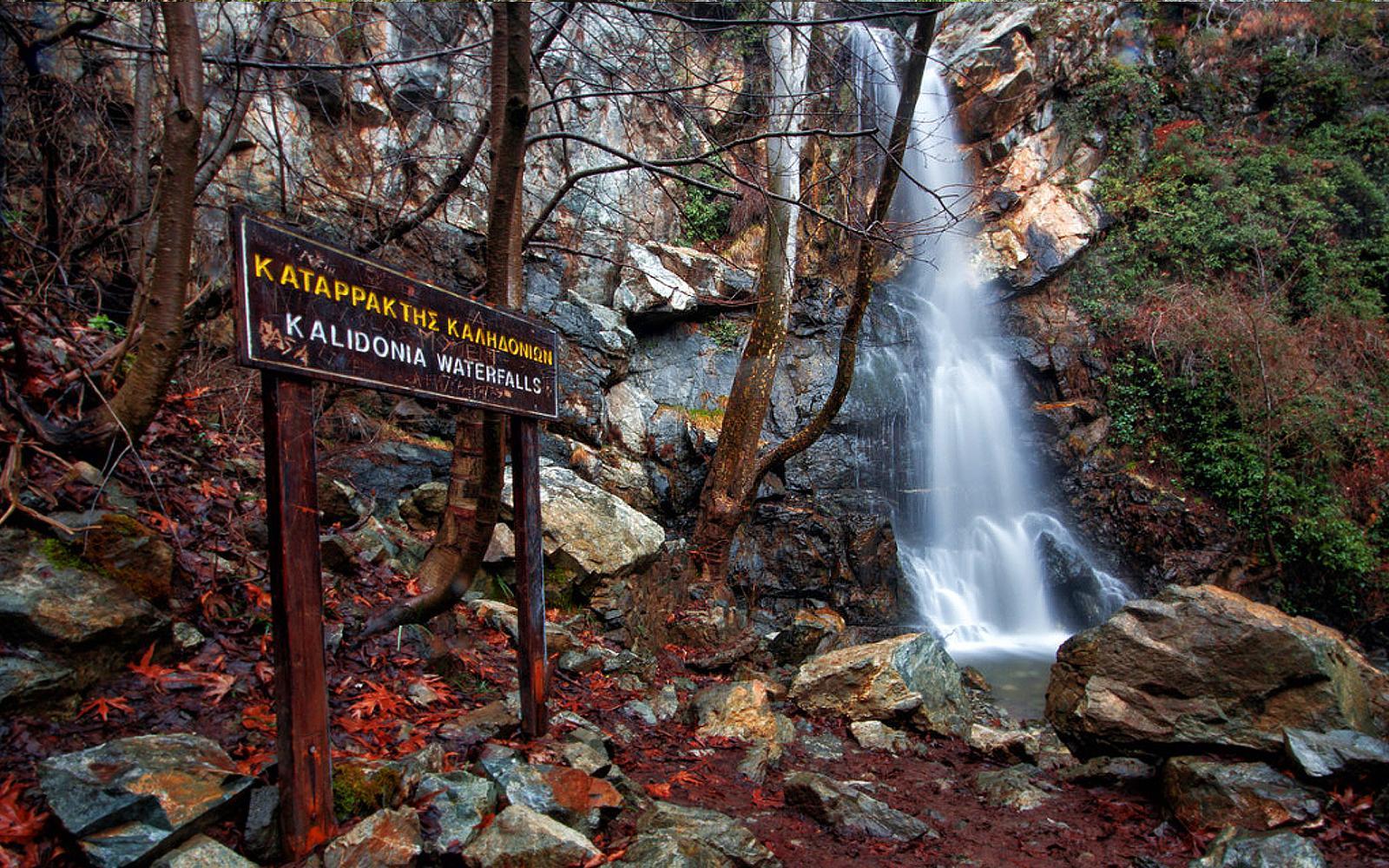
One of the most scenic and popular forest trails in the area is the Caledonia falls trail. Starting at Psilo Dentro trout farm it follows the Kryos Potamos stream and leads up to the stunning Caledonia waterfalls. Set amongst the dense canopy of lush vegetation, this picturesque forest trail is a part of Natural 2000 network. There are many unique and endemic local flora and fauna species to be found along the way, including ancient Oriental Plane Trees with massive roots protruding from the ground. It almost feels like an enchanted forest from a fairy tale. And, it’s not surprising that it was named Caledonia by the 19th century Scottish soldier, as it had evoked the coolness and the lush greenery of his homeland.
Interesting fact: «Caledonia» is an ancient Roman name of Scotland.
The Caledonia waterfall is truly impressive. First, it descends along a series of rocky steps, resulting in a single 12 m tall cascade. There are two ways to reach the waterfall.The first option is an upward trail starting at Psilo Dentro. The trail represents a rooted path, meandering along a series of bouldering mossy rocks amidst the lush greenery. The trail stretches for over 1,5 km and might take around 1 hour to complete. The second option is a shorter downward path, which begins at the Caledonia Falls parking lot and descends towards the waterfall. It is less strenuous and very well-marked so it shouldn't take more than 30 minutes to reach the waterfall.
Enjoy a picnic at Platania site
After a busy day of exploring the natural beauty of the area, it's a good idea to stop for a picnic at Platania. Situated along the scenic Krio Potamos river bank, Platania site offers all the necessary picnic facilities, like comfortable wooden benches and tables, BBQ grills, drinking water taps, and a large carpark — all in a pristine forest setting. You can enjoy your lunch whilst listening to the soothing sounds of trickling water and chirping birds under the shade of ancient Platanus trees. The Platania site can be easily reached via F825 road. It is also a starting point for many natural trails in the surrounding area. So, after having this scenic pitstop, you can continue exploring.
Explore the abandoned village of Vretsia
Near the villages of Kathikas and Arodhes lies a rather unconventional point of interest — a deserted village of Vretsia. Once a thriving mixed Cypriot community, it was completely abandoned after the tragic events of 1974. Since then it was never repopulated and the village houses, shops and communal buildings have been gradually reclaimed by nature, with trees and plants protruding through fallen roofs and wall crevices
Today it looks like a ghost village, slowly dissipating into the surrounding landscape.
It is a beautiful, yet somewhat eerie spot, perfect for atmospheric photography and quiet reflection. It is ideal for those who enjoy unique, off the beaten path experiences, rather than touristy attractions. The village is accessible via a steep narrow road, so driving with caution is highly advised. Avoid entering the dilapidated buildings — they are very fragile and can collapse at any time, presenting a structural hazard.
Go bird-watching for endemic species
Visiting Paphos Forest is a rich sensory experience, filled with vividly coloured birds and chirping sounds. Being the island's major conservation area and a breeding ground for many endemic and migratory varieties, it is a true paradise for bird-watchers. Watch out for the endemic and extremely rare Cyprus jay (Garullus glaszneri), as well as Coal Tit (Periparus ater cypriotes) and Crossbill (Loxia curvirostra). All of these birds are usually hiding in the pines and feeding on pine nuts. Whilst in scrublands and rocky areas there's a good chance to spot the iconic Cyprus Warbler (Curruca melanothorax) and Cyprus Wheatear (Oenanthe cypriaca).
There are also plenty of owls and night birds in the area, including a rarely seen Cyprus Scops Owl (Otus cyprius), as well as Nightjar and Wryneck varieties. Whilst you might not be able to actually see them, you will certainly hear them at dusk and at nighttime. It is also home to striking predator birds, like the legendary and rare Griffon Vulture (Gyps fulvus), which can only be found in this area. You can also spot gorgeous, but rarely seen Bonelli's Eagle (Aquila fasciata) and Peregrine Falcon (Falco peregrinus).
In spring and autumn you can find a plethora of migratory birds who stop here for feeding: Rollers, Bee-eaters, Hoopoes, Flycatchers, Warblers and Pipits, just to name a few.
The best time to spot endemics would be from late April till June. As for migratory birds, the busiest periods tend to be from March till May, and from September till October. It's important to keep in mind that birds are most active at dawn and at dusk, especially in summer when it gets extremely hot during the day. There are also some specialised «bird watching» tours available, giving you the advantage of an experienced guide who knows all the best spots for each season and species. Just don't forget your binoculars, plenty of water and sturdy footwear. If going alone, getting your hands on the good book guide might be helpful, such as «Birds of Cyprus» by Porter & Christensen, for example. You might also want to download a «bird song» app for distinguishing bird sounds. It's very important to be mindful and respectful of the birds’ habitat — please avoid disturbing the birds and approaching their nests during the breeding season.
Taste local wine and halloumi
In Cyprus, it is possible to get the best of both worlds by sampling the island's authentic produce whilst enjoying the beautiful mountain scenery. This part of the Troodos range is particularly famous for its quality wines and award winning boutique wineries. You can find plenty of specialty wine-tasting Cyprus tours, covering the Laona-Akamas and Vouni Panayias wine regions. And, of course, you can map out your own wine itinerary for an independent trip. Some of the best villages of the Paphos wine route are: Kathikas, Pano Panagia, Lemona and Statos-Agios Fotios. Make sure to try the unique local wine varieties:
- Red wines — fragrant and well-rounded «Maratheftiko», rich and spicy Yiannoudi, and rustic Mavro
- White — bold and crisp «Xynisteri» and aromatic «Promara»
And, of course, why not pair them with local cheese? For example, with a quintessentially Cypriot halloumi cheese, made from sheep and goat milk and sprinkled with mint on top. It has a unique flavour profile and is one of the rare cheeses that can be fried or grilled without altering the texture. In fact, most wineries offer food platters with their wine tastings, featuring olives, bread, dips and grilled halloumi cheese — all the unique Cypriot flavours concentrated on one plate!

Sample Paphos Forest itineraries
With so many things to do and see in thePaphos Forest, it's easy to get spoiled for choice. In order to make it easier, we have created these sample itineraries as a guide. However, you can always create your own, or customize the ones below as you wish.
The half-day nature escape
- Early morning (around 8:00am) — Arriving at the Platania picnic site. Hiking to Caledonia falls and back.
- Around 9:30 am — A drive to Venetian bridges via F825/F822 roads towards Pano Panagia.
- 10:15 am — Exploring the Elias Venetian bridge and then driving to Kelefos bridge.
- 12.00 — A drive to Platania picnic site
- 12.30 pm — Heading back to Paphos with an optional stop at picturesque Kathikas village for lunch on the way back.
The full-day nature and adventure
- 8:30 am — Arrival at Platania Picnic site parking area and a hike to Caledonian waterfall.
- Around 10:00 am — Start driving towards Kykkos monastery on F825/822 and then turn onto a E909 scenic mountain road.
- 11:00 am — Arrive at Kykkos monastery and explore its inner treasures, visit the monastery museum and drive or hike towards Throni on top of the mountain and enjoy breathtaking panoramic views.
- 12:30 — Head towards Pedoulas village for lunch and visit the nearby UNESCO-heritage church of Archangel Michael.
- 14:20 — Head towards Caminaria village via E908/709 roads. Stop over to see the Venetian bridges — Kelefos and Elia.
- 15:45 — Drive towards the village of Panagia and enjoy the mountain views and a visit to Vouni Panagia winery.
- 16:30 — Start heading back to Paphos via F617 and B7 roads.
Frequently asked questions (FAQs)
Do I need a 4x4 to drive in Paphos Forest?
You don't necessarily need a 4x4, if you plan to stick only to driving on major paved roads. However, a 4x4 or AWD SUV might come in handy if you plan on exploring the less touristy tracks, including unpaved forest roads. Such vehicles will give you extra control and peace of mind whilst driving on curved, gritty roads or steep inclinations.
Is Paphos Forest suitable for families with children?
Yes, absolutely. But, only if you plan well and make sure the trip is not too long or physically exhausting for the kids. It's also important to consider their ages. There are plenty of family friendly activities, such as a picnic at Platania Picnic site, wildlife watching, visiting the mouflon enclosure at Stavros tis Psokas or an easy (short) hiking trail to Caledonian falls.
Are there places to eat inside the forest?
The choice of dining venues at the actual forest are limited only to a trout farm restaurant at Psilo Dentro and a taverna at Stavros tis Psokas. It's best to call them in advance to confirm if they will be open. For other options, you might need to drive for about an hour until you reach the nearest villages. So, it's always a good idea to pack some picnic supplies, just in case, so you can enjoy your lunch at a gorgeous Platania Picnic site.
Are there any entrance fees to enter the Paphos Forest?
Entering the forest is entirely free, however you might need to pay a small fee for visiting some tourist attractions along the way. For example, Byzantine museums at the monasteries and a parking area at Platania Picnic site would incur a 5 euro fee.
Paphos Forest never ceases to amaze: its natural beauty delights the senses, fresh pine-scented air invigorates and soothes the mind, and the historical monuments inspire curiosity. One day is simply not enough to experience it all. We are sure that after visiting it once you would want to return and explore it at a new angle, in another season, or even at a different time of the day. So, mark a date in your diary and make a plan to visit this beautiful place. Whether it's just a day trip or a full-blown weekend escape, you’ll love every moment of it!
Read also: