
The Larnaca District Local Government Organisation (EOA) has presented the results of its work for July, and the figures are impressive. The authority broke its own record for issuing planning and building permits. During the month, it processed more applications than it received, helping to reduce the backlog of older cases.
Record results for permits
In particular, the authority processed 267 planning permit applications, while 256 new applications were submitted during the month. This corresponds to a processing rate of 104% — the highest result among all District Local Government Organisations in Cyprus.
The situation was even stronger for Category I building permits. During the month, 420 applications were processed, while 339 new ones were submitted. The processing rate reached 124%, also the best result in the country. High efficiency was also recorded for Category II building permits, with 142 cases processed against 133 new applications, corresponding to a processing rate of 107%. However, the figure for Category II planning permits was lower: 114 permits were completed compared with 138 new applications, equivalent to 83%.
Overall, in three of the four categories, the number of processed cases exceeded the number of new applications. This indicates that the Larnaca EOA managed not only to keep up with the current flow of documents, but also to reduce its accumulated backlog.
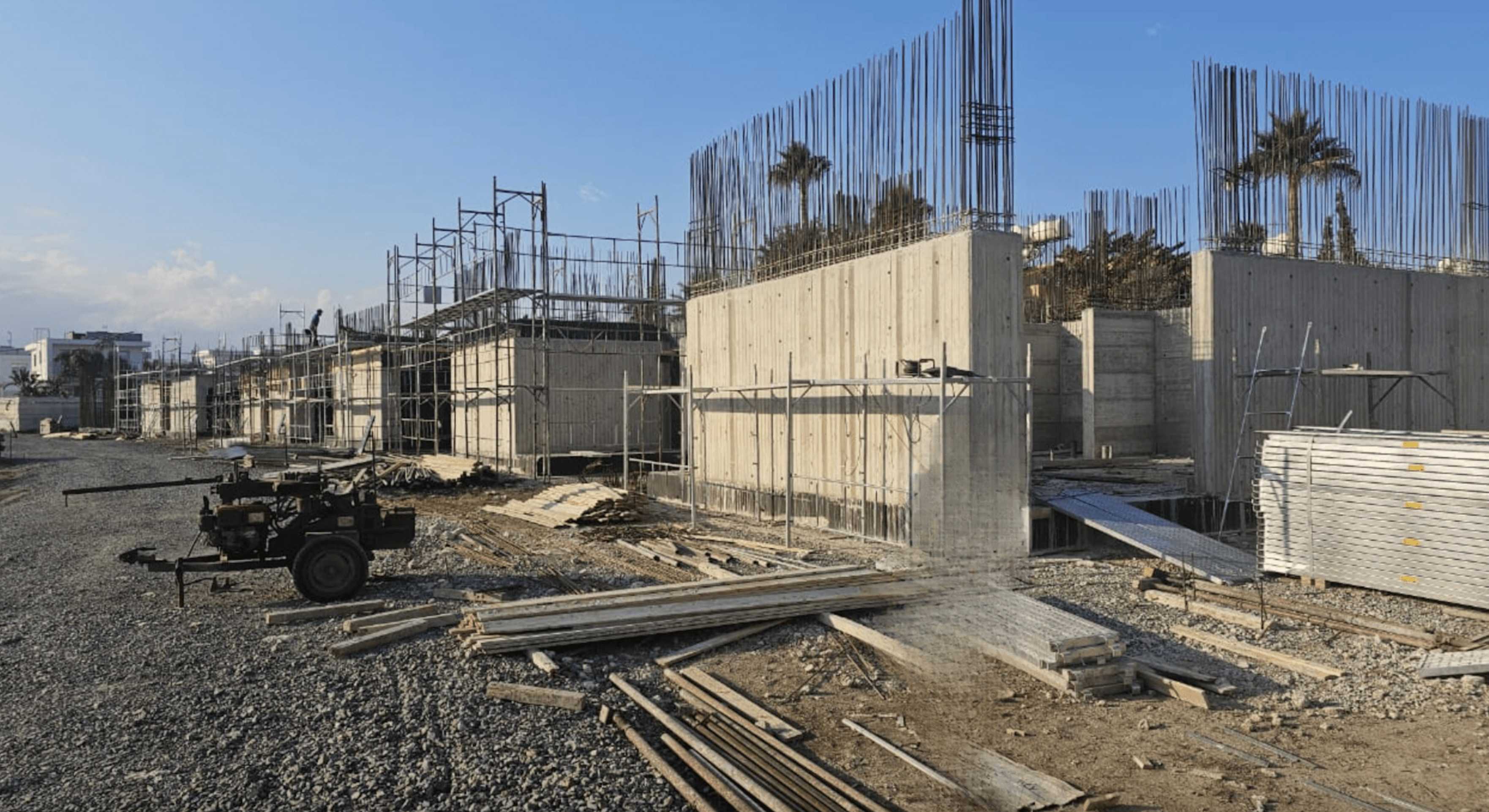
Faster licensing is becoming an advantage for developers
For the property market, the speed of obtaining permits is highly important. The faster projects are reviewed, the sooner developers can move from design and approvals to actual construction. The Larnaca EOA notes that its objective is not simply to achieve strong statistical results. The main goal is to reduce waiting times and make the licensing process faster and more efficient for residents, designers, architects, engineers and representatives of the construction sector.
The organisation continues working to clear the backlog and speed up the processing of new applications. Against the backdrop of growing property market activity, this could become an additional factor making Larnaca more attractive to developers and investors.
Larnaca property market shows strong growth
Alongside improvements in administrative procedures, Larnaca is strengthening its position in the property market. According to the RICS Cyprus Property Price Index with KPMG in Cyprus for the second quarter of 2026, apartments in Larnaca recorded some of the strongest overall growth among Cyprus districts. A positive trend was also observed in the other regions. The house market also showed broad growth. Larnaca and Paphos led in terms of momentum, while growth in the government-controlled areas of Famagusta was minimal.
The increase in holiday property prices was particularly notable. In Larnaca, prices rose in the second quarter of 2026 by:
- 3.85% — for holiday apartments;
- 3.10% — for holiday houses.
These were the highest quarterly growth rates in the respective segments. By comparison, holiday apartment prices in the government-controlled areas of Famagusta increased by only 0.63%.
Larnaca is also becoming more attractive for commercial property
The increase in activity is not limited to the residential sector. In the second quarter of 2026, Larnaca recorded the strongest growth in office property prices in Cyprus. In Limassol and Paphos, the increase was more moderate, Nicosia recorded slight growth, while office prices in the government-controlled areas of Famagusta remained unchanged.
Warehouses are another promising segment. Larnaca also recorded the strongest momentum here, followed by Paphos. As a result, Larnaca is strengthening its position across several areas at once: accelerating the issuance of permits, attracting new construction projects and recording rising values in residential, holiday and commercial property.
This combination could become an important factor in the city’s further development. For investors, it means a more active market, while for local residents it means new projects and infrastructure. At the same time, sustained price growth also raises concerns about property affordability, especially for buyers focused on the local market.