
A new residential complex worth approximately 16 million euros is planned for the Peyia area in Paphos. The project is owned by Leptos Calypso Hotel and calls for the construction of 25 detached two-story villas.
The Cyprus Department of Environmental Protection recently issued a permit, subject to certain conditions. This allows the approval process to proceed. However, all other licenses required by law must be obtained before construction can begin.
The total area of the two plots of land on which the complex is planned to be built is 25,047 m². According to preliminary estimates, construction will take about six years after the necessary permits are obtained.
Project Details
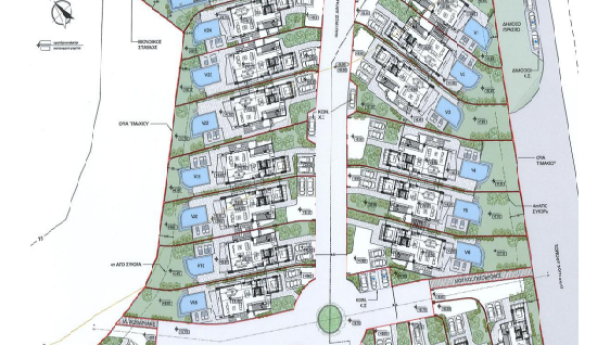
The project calls for the construction of 25 detached four-bedroom villas. Each home will feature a basement, a private pool, and its own outdoor space. The complex itself will include:
a biological wastewater treatment plant;
57 parking spaces, including 2 spaces for people with disabilities and 2 public parking spaces;
an internal road network;
walkways;
green spaces.
A dedicated underground tertiary biological wastewater treatment plant is planned to treat domestic wastewater. Its design capacity will be 42.5 m³ per day. The treated water is planned to be used for irrigation in compliance with the requirements of the relevant permit.
In addition, the project calls for the installation of solar panels. It is estimated that they will be able to cover at least 25% of the buildings’ primary energy consumption.
Location
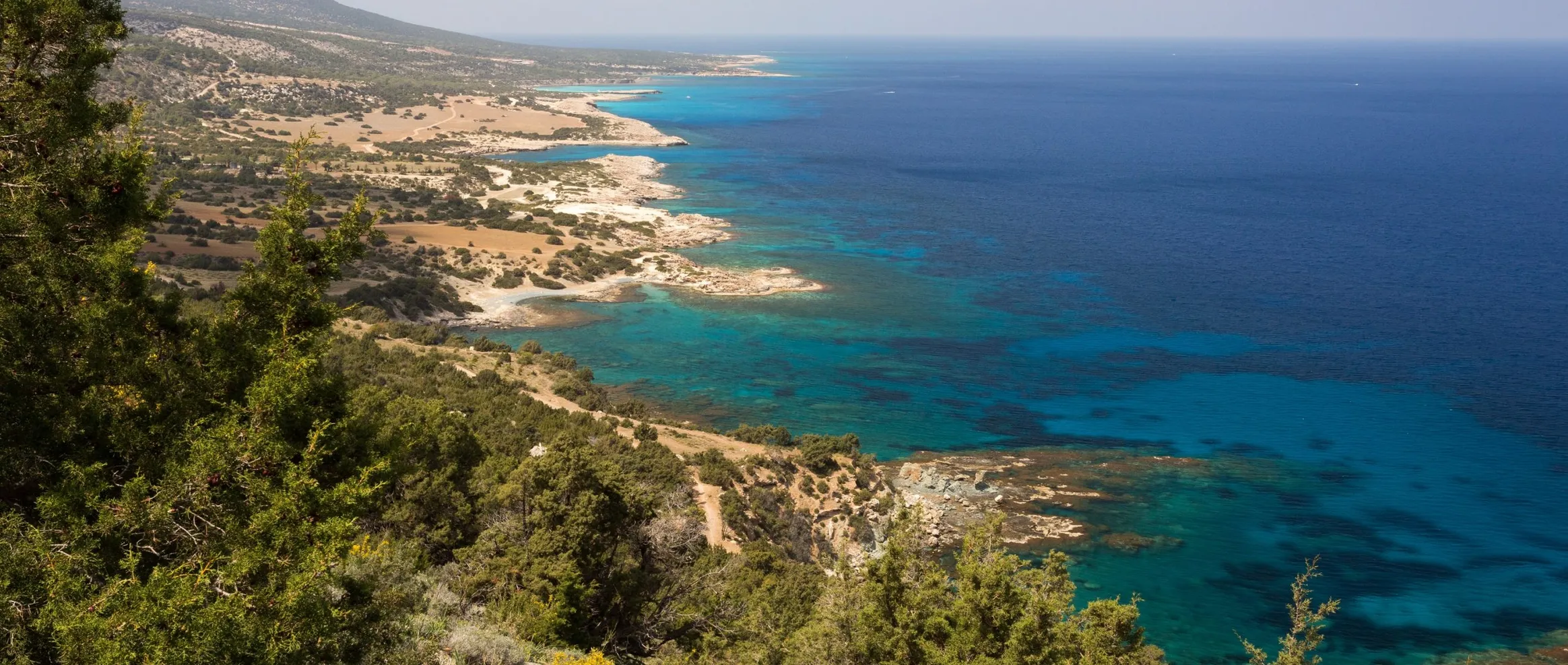
One of the key issues in reviewing the project is its location near the natural areas of the Akamas Peninsula. The site is located approximately 500 m southeast of two protected areas within the Natura 2000 network:
the “Akamas Peninsula” Special Protection Area—CY4000010;
the “Akamas Peninsula” Special Protection Area — CY4000023.
Additionally, about 12% of one of the plots falls within the Z1 coastal protection zone. Any construction or placement of complex facilities is prohibited in this area. The nearest organized swimming beach is located approximately 685 m from the plot.
The department paid special attention to the rare plant Taraxacum aphrogenes, which is listed in the Red Book of Cypriot Flora. The nearest known location of this plant is approximately 20 m south of the future complex’s site. Therefore, construction work and the movement of heavy equipment must be organized in such a way as to avoid damaging the plant and the surrounding environment.
The site itself is located in an area already dominated by residential and resort development. Residential buildings are located to the northeast and northwest of the future complex.
What environmental requirements must the developer meet?
A positive decision from the Cyprus Department of Environmental Protection is accompanied by a number of mandatory conditions. These relate to the protection of soil, groundwater, surface water, the coastal zone, and local flora.
In particular, it is prohibited to discharge pollutants into the soil, groundwater, surface water, or coastal waters.
Domestic wastewater from the 25 villas and liquid waste from pool filter backwashing must be directed to the project’s own treatment plant. Discharging them into absorption pits or ditches is prohibited.
Before commissioning the treatment plant, the developer must obtain a discharge permit in accordance with Cypriot legislation on the protection of water from pollution. Packaging waste must be sent for recycling or disposal in accordance with applicable regulations. All other waste generated during the operation and maintenance of equipment must be transferred to licensed companies.
Separate requirements apply to noise. To reduce noise, the following measures must be taken:
provide sound insulation for buildings and isolate noise sources;
use low-noise equipment;
install noise barriers as necessary if outdoor equipment exceeds permissible noise levels or causes complaints from residents.
Thus, the €16 million project will be yet another major residential investment in the Akamas region. However, its implementation will depend not only on obtaining building permits but also on compliance with environmental requirements, especially given the proximity of protected natural areas.