When talking about wine, places like France or Italy usually come to mind. However, not many people are aware that Cyprus has been an important centre of viticulture since ancient times. In fact, it is home to one of the world's oldest wines — Commandaria. So, locals certainly know a thing or two about good wine. Today they are using this knowledge to produce sophisticated wines that win international awards. New boutique wineries constantly pop up across the island and the local whites and reds are making waves amongst international critics.
So, if you're a wine connoisseur or enthusiast, Cyprus has a rich and vibrant viticulture scene to explore.
In this article you will learn all you need to know about indigenous wine varieties and their food pairings, explore some of the most scenic wine routes and most innovative boutique wineries Cyprus has on offer. We will also help you plan the wine-tasting itinerary and share useful tips on purchasing, transporting and storing your wine. Let's uncork the journey!
Cypriot Wine Beyond Commandaria
Ask any tourist about Cyprus wine and they'll probably say Commandaria — it's the name that gets around. But it's really just the tip of the iceberg. Cyprus is home to a handful of indigenous grape varieties that produce some genuinely exquisite wines that can rival their famous counterparts — Pinot Noir, Pinot Grigio or Sauvignon Blanc. Let's sample a few of these hidden gems.
Xynisteri and Other White Varieties
Xynisteri is the island's signature white with a crisp, fruity flavour and lively acidity, offset by notes of citrus, green apple, peach, white flowers and herbs. Depending on how it's made, it can lean light and zesty or take on a richer and oakier character. Pour it alongside grilled white fish, prawns, calamari or octopus, fresh oysters and shellfish, grilled halloumi, or a simple summer salad.
Some of the lesser known local white varieties are Promara and Spourtiko.
They're pretty rare, and until recently you'd only ever find them tucked into blends. Now though, a handful of wineries have started bottling them on their own, so you can actually taste what makes each one distinct. Promara leans floral and citrusy, often with tropical fruit and a hint of honey coming through — good with roasted or grilled chicken, creamy pasta, and richer seafood dishes. Spourtiko, on the other hand, is crisp and zesty, showing lemon, green apple and white blossom — the kind of wine that loves fresh oysters, shrimp, crab, grilled squid or lighter fish.
Maratheftiko, Yiannoudi and Local Reds
Maratheftiko is the island's flagship red — and its story is almost as compelling as its flavour. Once teetering on the edge of extinction, today it is going through an unprecedented revival and becoming the island's most celebrated native red. It is rich and deep wine, layered with blackberry, black cherry, plum, violet, black pepper and warm spice.
It's a natural match for grilled or slow-roasted lamb, steaks, Cypriot moussaka, or a board of aged cheeses — think mature halloumi, kefalotyri, or firm sheep's milk varieties.
Yiannoudi is a more rare indigenous red variety.
It is somewhat softer, compared to Maratheftiko, with notes of blackberry, dark cherry and blueberry alongside spice tones of cinnamon, clove and star anise. Thanks to its good acidity and structure, many local winemakers consider it one of Cyprus's most promising grapes. It's also versatile — perfect with grilled meats and with pasta as well as grilled vegetables or medium-aged cheeses.
Another indigenous variety is Mavro. It is the island's most widespread red grape variety. It produces lighter wines with red cherry, raspberry, strawberry and dried herb notes. Also, Mavro is often used in the production of Commandaria wines and Zivania spirits.
Mavro goes really well with most traditional Cypriot dishes, including meze, souvlaki, loukanika (traditional sausages), as well as lentil and bean dishes.
Ofthalmo is the oldest indigenous red grape variety, known from ancient times. Today it is quite rare — only found in some boutique winery blends. Ofthalmo can even be served chilled and it is a nice accompaniment for grilled pork or chicken, tomato-based pasta dishes, meze with grilled vegetables as well as semi-hard cheeses.

Wine Routes Near Paphos
Paphos has long been one of Cyprus's most beloved wine regions — a place where centuries-old winemaking traditions blend harmoniously with a new wave of boutique wineries. Drive through some of the most beautiful Cyprus wine routes with mountain villages and sweeping sea views, and you'll find some of the island's best indigenous wines.
Laona–Akamas
This is one of the most scenic Cyprus wine routes running from the hills above Paphos out toward the Akamas Peninsula. It passes through the villages of Kathikas, Drouseia and Ineia — each one offering its own charm.
What makes the wine here special is the sea itself. Cool breezes drifting up from the coast create crisp, lively Xynisteri whites and richer, more structured Maratheftiko reds.
Some of the most famous local boutique wineries are:
- Vasilikon Winery Cyprus— this family owned winery is one of the oldest and well-regarded on the island. It produces excellent indigenous wines using sustainable viticulture principles.
- Sterna Winery & Wine Museum— another famous boutique winery located in Kathikas. It boasts a 3,000 year-old natural limestone cave cellar and a wine museum with historical artifacts.
Vouni Panagias–Ambelitis
This equally beautiful wine route lies high up in the mountains — at about 800m above sea level and is surrounded by lush pine forests.
There's something about the altitude here that gives the wine its edge — the cooler air slows down ripening, so you end up with wines that have real acidity, freshness, and layers of complexity you don't always find lower down.
It's prime ground for Xynisteri, Maratheftiko, Mavro and Cabernet Sauvignon. If you only manage one winery visit, make it the one at Panagia Chrysorrogiatissa Monastery — it's steeped in history and remains one of the oldest wine-producing monasteries in Cyprus still going today.
Amongst some of the boutique wineries worthy of mention are:
- Vouni Panayia Winery— founded in 1989, it produces award-winning wines, using only indigenous grape varieties;
- Kolios Wineryis one of the most well-regarded Cypriot wineries, located near Statos-Agios Fotios at an elevation of 900 m above sea level;
- Avacas Winery— located at an altitude of 1000 m above sea level, this boutique winery focuses on indigenous, including rare varieties, such as Ofthalmo.
Diarizos Valley
This route runs east of Paphos, following the Diarizos River, passing through 14 traditional villages that offer a glimpse into authentic Cypriot rural life.
The wines here have a different character, too — most vineyards sit at lower altitudes and the warmer climate creates rich, full-bodied and expressive wines.
Some of the artisan wineries to pay attention to are:
- Nelion Winery— a boutique family winery, focusing on organic viticulture and indigenous grapes;
- Lagria Wineryis a well established family winery, located in the picturesque village of Salamiou;
- Kalamos Winery is an award-winning family owned winery, famous for its limited edition wines from indigenous grapes.
Wine Routes Near Limassol
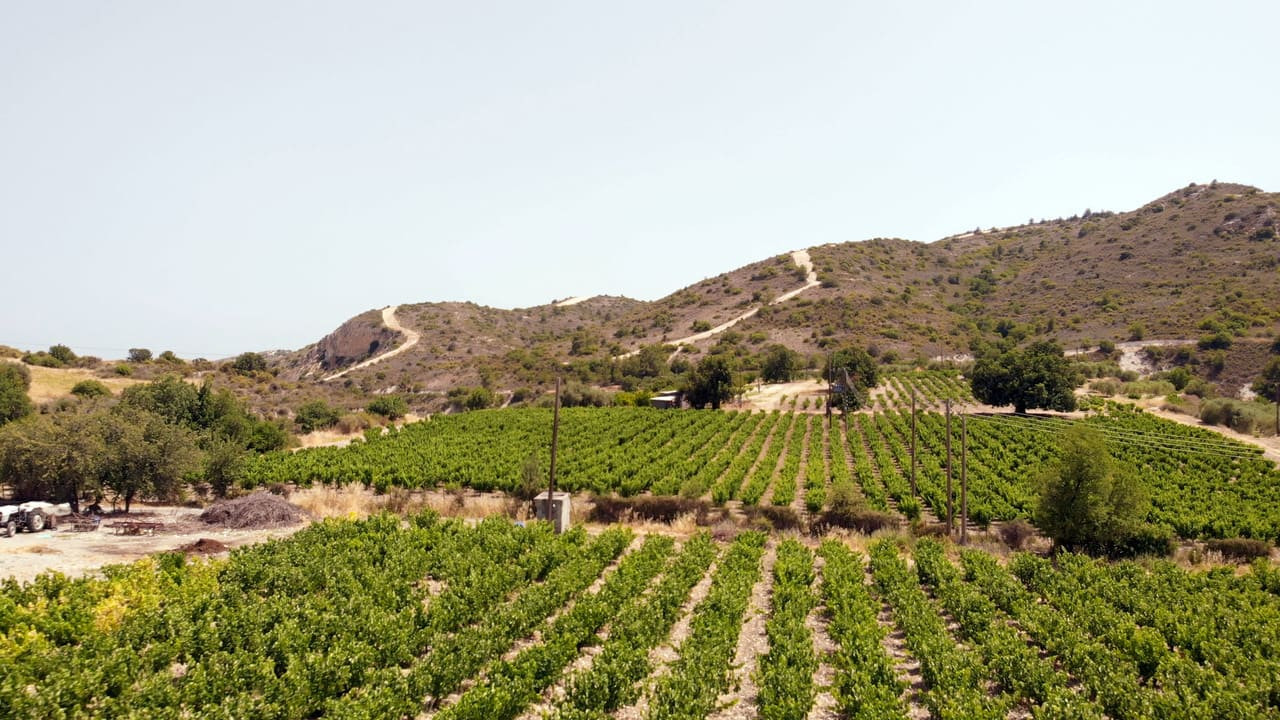
Areas surrounding Limassol have been well-known centres of viticulture from ancient times. The region's lush undulating valleys provide ideal temperatures and just the right amount of elevation to produce the most well-balanced wines. It's not surprising that «krasochoria» — the island’s «wine villages» are all located here.
Krasochoria Wine Villages
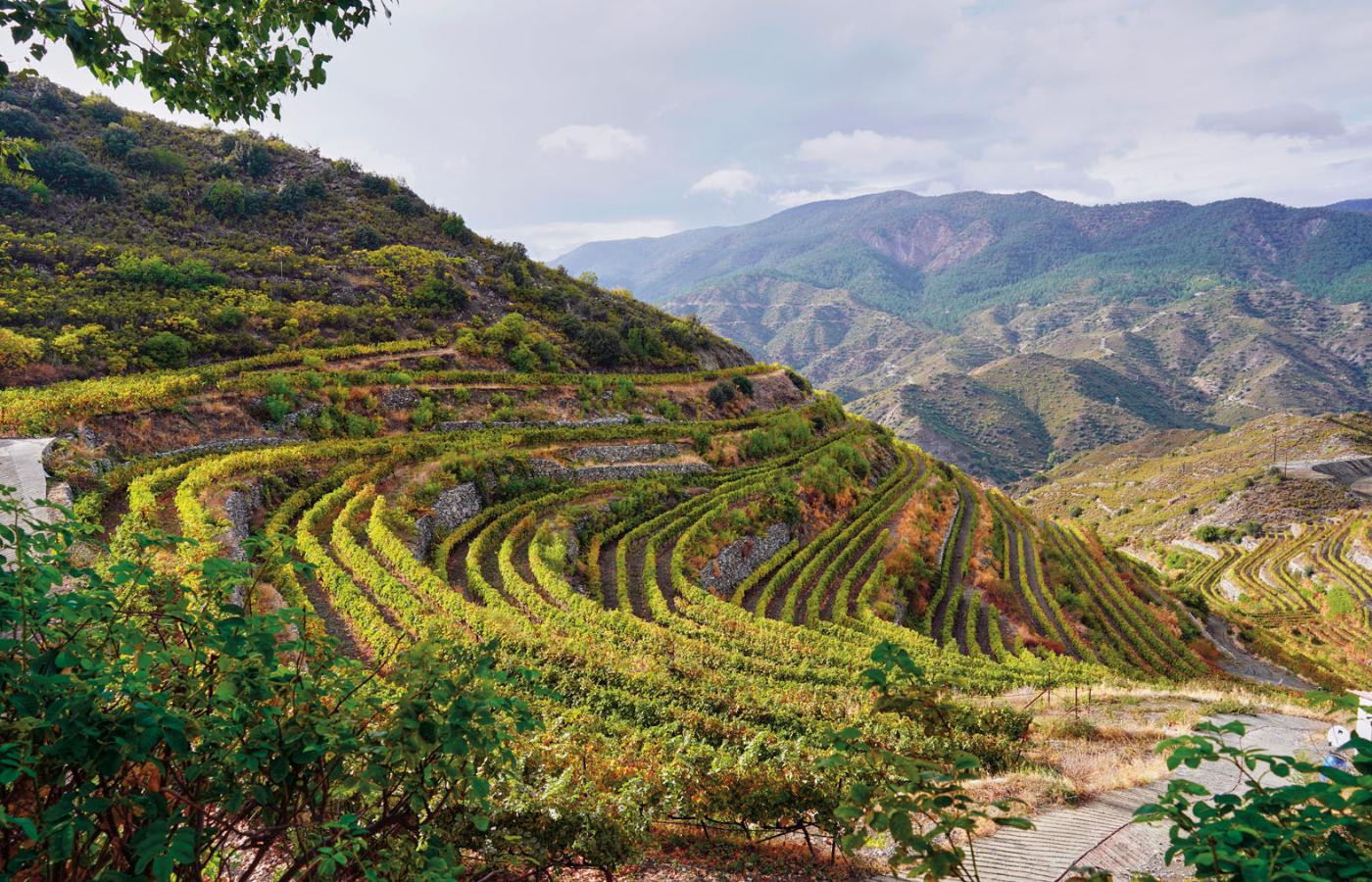
If you're chasing the biggest cluster of wineries on the island, head for the krasochoria — Cyprus's wine villages. There is a total of 20 such villages scattered across the southern slopes of Troodos, including Omodos, Koilani, Vouni, Arsos, Vasa, Lofou, Pachna, and Malia. This stretch is one of the most popular wine routes in Cyprus. And it's not surprising — the terraced hillsides look like they were carved specifically for growing vines.
Drive through and you'll pass more than 16 wineries, many tucked away at 500 to 1,000 metres up. Up here, the days are hot and dry but the nights are cool, giving the grapes their acidity instead of turning flabby. Add in the stony, well-draining soil, and you've got vines that are more concentrated, more expressive wine in the glass.
As for wine tasting, Cyprus wine villages will leave you spoilt for choice. Here you'll find rare indigenous grapes like Ofthalmo alongside international varieties — Cabernet Sauvignon, Syrah, Merlot, Grenache, Chardonnay, Sauvignon Blanc — all within reach of each other. If unexpected, experimental blends are your thing, this is the route to put on your map.
It's also a great choice if you'd rather not choose between wine and culture. Authentic villages, old monasteries and churches dot the route, including the Monastery of the Holy Cross in Omodos.
Amongst the must-visit wineries are:
- Zambartas — it is well-known for organic viticulture and indigenous grapes;
- Vlassides — a contemporary winery and one of the island's premium flagship producers, located near the wine village of Koikani;
- Ayia Mavri — a family owned winery that combines tradition with innovation;
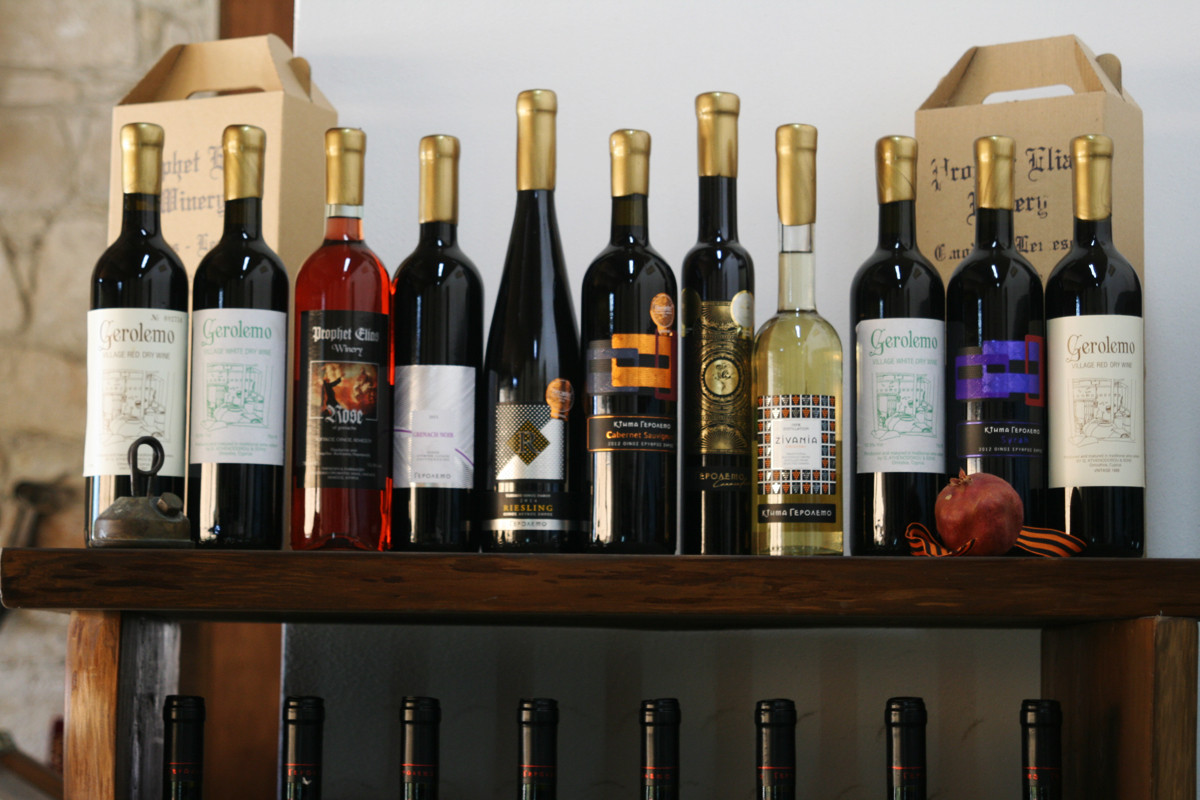
- Ktima Gerolemo — a small boutique winery, famous for authentic local wines and Zivania.
Pitsilia
Pitsilia is Cyprus's highest wine region, stretching around the mountains of Madari, Papoutsa and Machairas. In fact, it boasts some of the highest vineyards in Europe, sitting at an elevation of 900 to 1,400 m above sea level. Thanks to such high altitudes and much cooler climate, Pitsilia is home to sophisticated vines with higher acidity. Here you will find indigenous wines, like Xynisteri and Maratheftiko, as well as international varieties — Cabernet Sauvignon, Merlot, Chardonnay, Sauvignon Blanc and Syrah.
This is also one of the most scenic high-altitude Cyprus wine routes, as it passes through pine-covered mountains, verdant valleys, traditional stone villages and breathtaking viewpoints. You can also stop by a stunning monastery of Macheras on the way.
Some of the best local wineries you shouldn't miss are:
- Tsiakkas Winery — one of the pioneers of modern Cypriot winemaking and producer of award-winning wines;
- Pittali Winery — a small boutique winery in the high altitude village of Agios Theodoros Pitsilias, offering expressive wines;
- Kyperounda Winery — one of the highest-altitude wineries Cyprus has to offer. It's renowned for elegant whites and premium reds;
- Tsangarides Winery — a family winery producing excellent indigenous varieties and known for sustainable viticulture.
Mountainous Larnaca and Nicosia Route
This is probably the island’s most underrated and off-the-beaten-path wine route.
That said, what it lacks in fame it makes up for in authenticity. The road heads inland through the mountain villages between Nicosia and Larnaca, passing through ten villages and a handful of boutique wineries along the way. It's ideal for travelers happy to slow down and take their time.
Villages and Boutique Wineries
Each village you'll encounter along the way has its own character. Lefkara is probably best known for its handmade lace (Lefkaritika), silverwork and beautiful old houses. Just next door is Kato Dris — quieter, less touristy, but just as charming.
Not far off, you will find Vavla — another quaint village, surrounded by vineyards and orchards. As you approach Nicosia district, you will stop by Fikardou — a restored heritage village and home to one of Cyprus's oldest traditional wine presses. Next to Fikardou lie two small mountain communities of Gourri and Farmakas with traditional houses and taverns.
Boutique wineries thrive in this high altitude region. Sitting between 500 and 900 metres above sea level, the cooler climate produces wines with more crispness, concentration and pronounced character. Elegant whites like Xynisteri, Chardonnay and Sauvignon Blanc share the spotlight with a strong selection of reds — indigenous Maratheftiko and Yiannoudi, along with international varieties such as Cabernet Sauvignon, Merlot and Syrah.
This route is excellent for those who prefer an unrushed wine experience coupled with immersion in local culture.
There are also some excellent contemporary eateries where you can sample traditional local dishes with a twist accompanied with the best local wines.
Some of the noteworthy boutique wineries include:
- Ktima Dafermou — one of the best-known wineries on the route, producing both indigenous and international varieties;
- Aes Ambelis Winery — a family-run boutique winery near Kalo Chorio, known for elegant small-batch wines;
- Santa Irene Winery — a modern boutique winery, where visitors can enjoy intimate tastings and interact directly from the winemakers.
How Winery Tastings Work in Cyprus
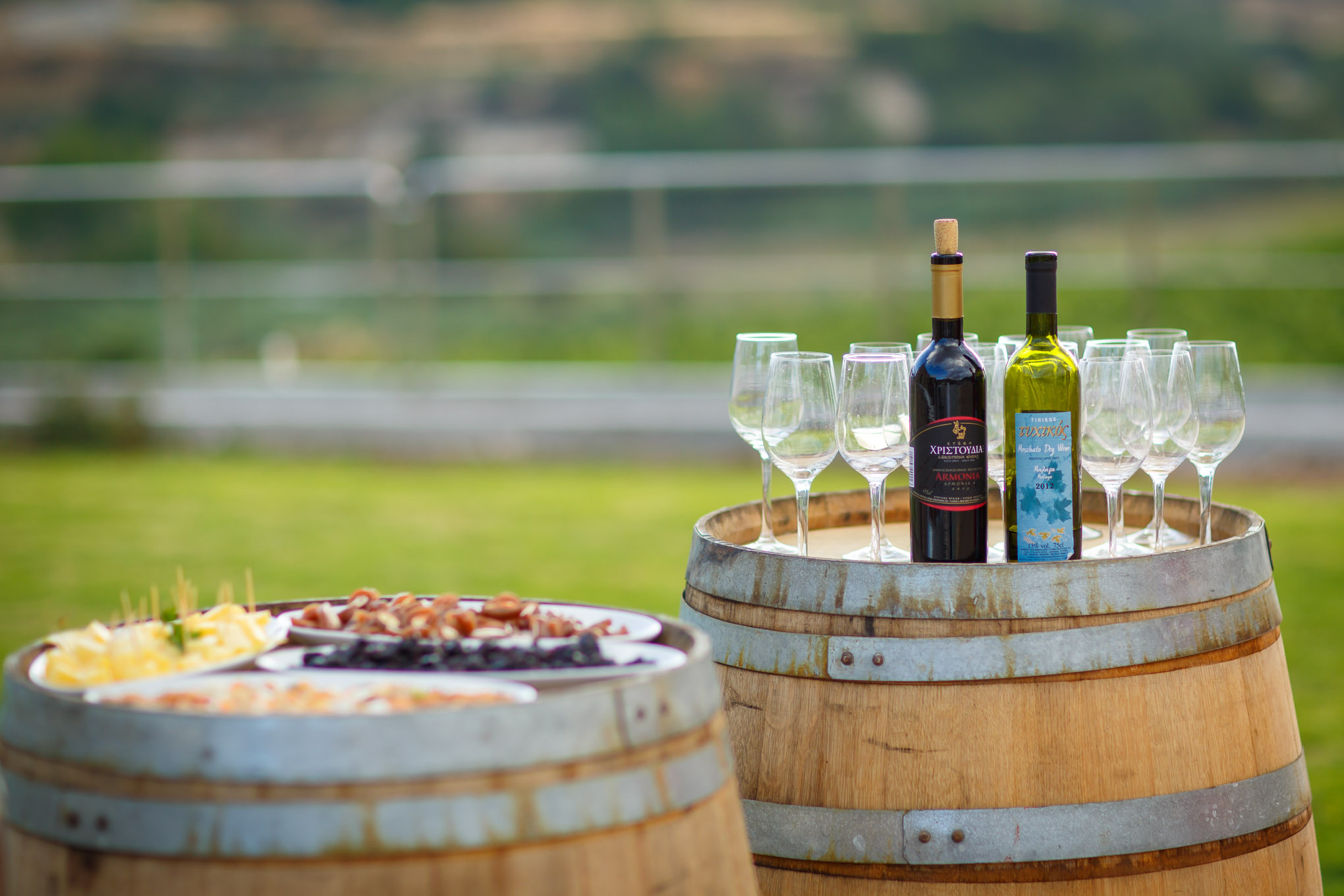
When it comes to wine tasting, Cyprus wineries really lead the way with relaxed and homely atmosphere. With that said, it is still recommended to book a tasting in advance, especially if you are visiting in a group. This way, you can avoid overcrowding , especially during high season. Plus, the winery can prepare a perfect lineup of wines in advance so you wouldn't have to wait.
Reservations and Opening Hours
Most wineries open Monday to Saturday, usually somewhere between 10am and 5pm, and some also open on Sundays once the tourist season picks up. The smaller boutique places can be a bit less predictable though — they sometimes only open a few days a week, or ask you to book ahead.
As a rule, it's worth booking in advance, especially if you're travelling as a group or want a proper tour. During busier months like July and August, aim to book 5-7 days ahead. And if you've got your heart set on a popular winery, or you want a private tasting or guided tour, give it 1-2 weeks to be safe.
Tasting Fees and Winery Tours
A standard tasting usually costs 8—20 euro p/person, depending on the winery and the wines served.
A typical visit usually includes 4 to 8 wines to try. Besides, many wineries also offer something more — premium tastings of limited-production wines, or food pairings with local cheeses, olives, bread, lountza, nuts. Some also offer guided tours where you can see the winemaking process up close. A few even run vineyard walks, though it's worth checking ahead, since not every winery offers one.
Children and Non-Drinking Visitors
Typically, Cypriot wineries, especially family-owned ones, are pretty laid back when it comes to bringing children with you, as long as they are supervised at all times. Some wineries might also offer grape juice or soft drinks as well as snacks.
The same goes for non-drinking visitors — they are welcome to come and learn all about the winemaking process and enjoy the surrounding scenery. They can also participate in the tasting, especially if it's a food pairing one. They can just enjoy local aperitives and substitute wine with soft drinks. Some wineries charge a reduced fee for tour-only visitors, while others may waive the tasting portion, so it's best to confirm before booking.
Planning a Wine Route
For the best experience, it's worth planning your itinerary so that in addition to wine tasting, Cyprus sights can also be included. It's always better to savour the moment than rush through it — so rather than trying to see everything, focus on just a couple of good quality wineries. Factor in the logistics and driving times, and consider arranging a designated driver so everyone can relax and enjoy a fun, safe trip.
Driving Times and Road Conditions
A good rule of thumb is to visit no more than 2 to 4 wineries in a day.
That way, you can slow down and really enjoy the wine and the atmosphere instead of racing through tastings like it's a competition. It's also worth heading out early — that gives you room to stop for the views, grab lunch at a local tavern, and wander through a village or two along the way.
Bellow are the approximate driving times from Cyprus's most popular destinations:
- from Limassol to Krasochoria: 30—45 min;
- from Limassol to Pitsilia: 45—60 min;
- from Paphos to Vouni Panagias: 45—60 min;
- from Paphos to Diarizos Valley: 30—45 min;
- from Larnaca to Lefkara/Vavla: 35—45 min.
- from Larnaca to Fikardou/Gourri: 1—1,2 hours.
Road conditions are another thing to keep in mind. Cyprus's mountain routes twist and climb, so give yourself a bit more time and drive with care. Some wineries sit at the end of steep, narrow lanes, which makes a sturdy vehicle — an SUV is ideal — well worth considering.
Designated Drivers and Organised Tours
Hoping to visit more than one winery in a day? A designated driver is usually your safest bet. If you'd rather skip the driving altogether, an organised wine tour is a solid alternative — transport, a planned route and guided tastings are typically all included, leaving you free to simply enjoy the ride and the wine.
Buying Wine at the Winery
Part of the fun of visiting in person is discovering limited-edition or exclusive bottles you simply won't find in shops. And since boutique wineries often sell direct, without a distributor or retailer in the mix, you'll frequently find better prices too.
For example, you can find:
- everyday wines for 8—15 euro per bottle;
- quality local varieties / boutique blends for 15—25 euro;
- premium reds, aged wines, limited editions for 25 euro and above.
If you are an avid wine lover or collector, you might consider buying a case, which usually consists of 6 to 12 bottles.
It is a perfect way to stock up on your favourite variety or to explore different Cyprus wines, as most wineries offer mixed cases as well.
While most wineries offer local deliveries, if you want your wine delivered to an overseas destination, shipping will depend on the winery policies and your destination and can be rather expensive.
If you are planning on taking your wine with you on a flight, first check the airline’s limits and baggage rules to avoid last-minute surprises.
Storage During Hot Weather
If you're visiting in August, you already know how brutal Cyprus summers can get — and heat is wine's worst enemy. Even a short stint in a hot car can throw off the taste for good. So keep your bottles up front with the AC, not in the boot, and whatever you do, don't leave them sitting in a parked car under the sun.
At home, you must ensure a stable temperature regime for your wine
by storing it in the air-conditioned room, or inside a dark cupboard away from sunlight. Ideally, the temperature should not exceed +12—18C.
Harvest Season and Wine Events
August is an exciting time when the whole island comes to live with a plethora of festivals, grape harvesting activities and winemaking experiences that everyone is welcome to be a part of.
Grape Harvest Experiences
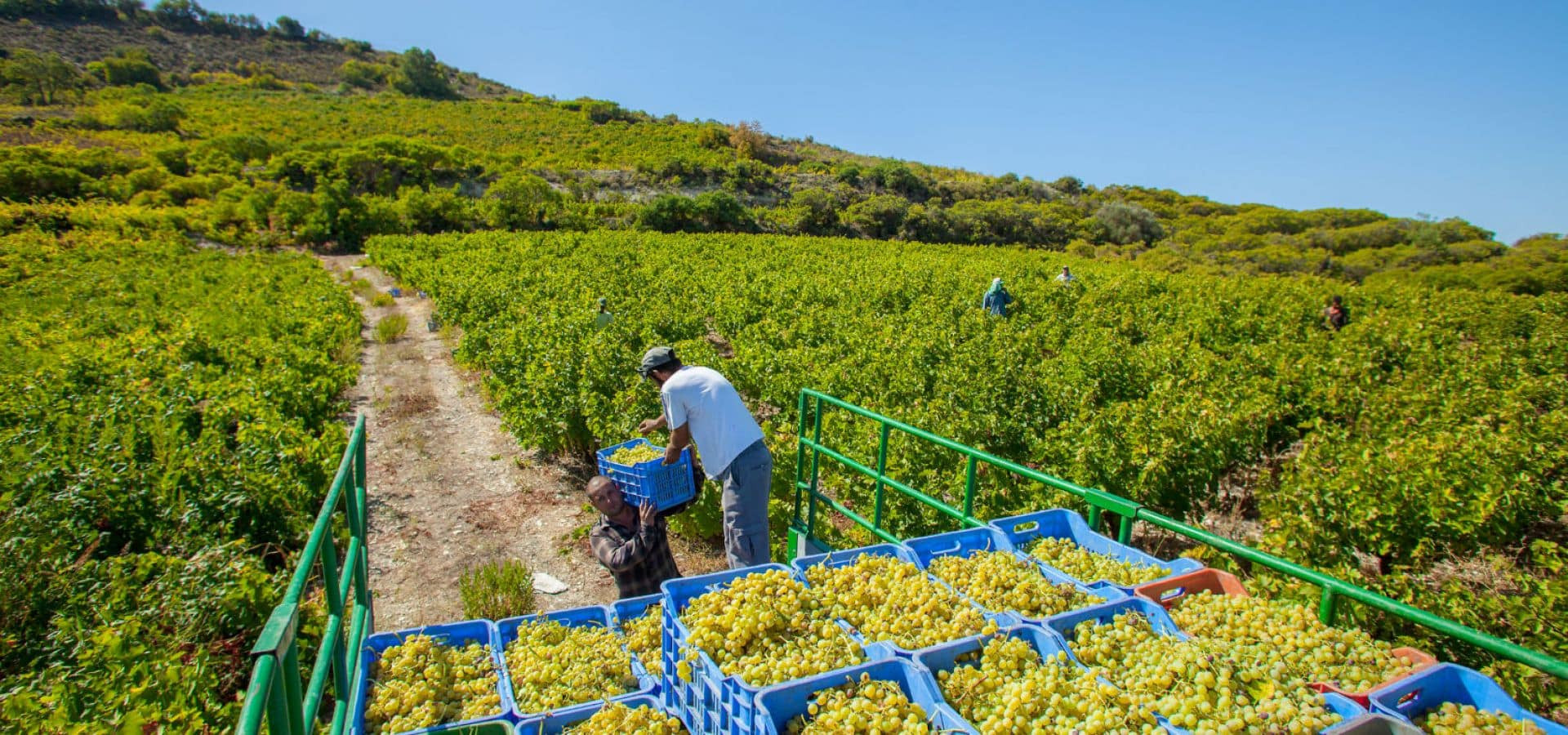
If you visit during the harvest season you will see a boutique winery at its liveliest. This is when you can watch grapes being sorted, crushed and carried off to begin their journey into wine.
And, if you time it right, you might even get to taste the juice fresh off the press. Many wineries also put on seasonal tastings, paired with local cheeses, bread, olives, and other Cypriot delights.
A few go a step further and host harvest days, where you can try picking the grapes yourself — a great hands-on way to feel part of the process. Just be aware these spots fill up fast, so it's worth booking early and keeping an eye on your favourite winery's website for dates.
Village Festivals and Wine Celebrations
Echoing the ancient celebrations, Cyprus’s wine festivals are a great way not only to taste some of the local wines, but also to immerse yourself in rich local culture and traditions.
One of Cyprus’s largest and best known wine events is The Limassol Wine Festival, held in late August or early September at Limassol Municipal Gardens. The festival showcases the island's best wineries and offers tastings, cultural performances, concerts, and exhibitions celebrating Cyprus's long winemaking tradition. From September through to October many regional festivals also take place, including:
- Afamia Festival (Koilani) – One of the island's largest village wine festivals, celebrating the end of the harvest with wine tastings, traditional food, folk dancing, music, and cultural performances.
- Vasa Koilaniou Grape Festival features local wines, grape products, demonstrations of traditional sweet-making, and entertainment.
- Arsos Grape Festival is a lively celebration highlighting one of Cyprus's best-known wine villages.
- Vouni Grape Festival showcases local wineries, traditional cuisine, crafts, and folk performances.
August is the perfect time to plan your wine tasting Cyprus tour. When the heat becomes too much, escaping into the mountains is a welcome relief — cooler, pine-scented air, charming traditional villages, and some of the best local wines waiting to be discovered. Whether you're drawn to a crisp, fruity Xynisteri, an earthy Maratheftiko, or one of the more sophisticated modern blends, we're confident these indigenous wines will win you over.
And, if you fall in love with Cyprus wines, consider renting an apartment so you can explore local wineries at your own pace. You can find listings both in Limassol and Paphos — just a stone's throw away from the breathtaking Troodos wine routes and charming villages.